
Are home and garden shows worth it for pool builders?
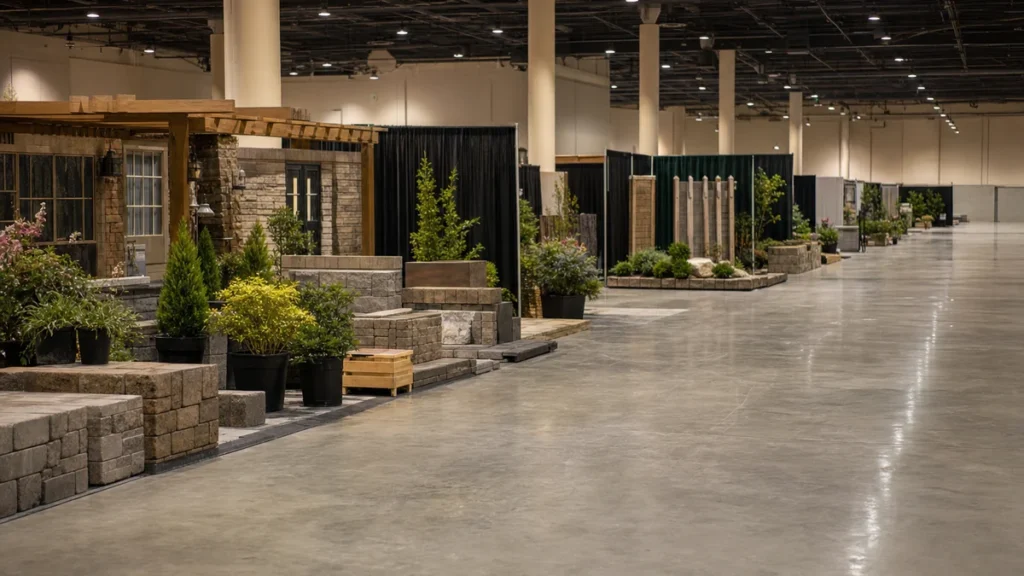
- Is a booth at a home and garden show worth the money for a pool company?
- When is a home and garden show worth it for a pool builder?
- How do I work out what a show really costs?
- How many signed contracts does a show need to pay off?
- Which home shows are worth a booth?
- What should a pool builder bring to the booth?
- How do I capture booth leads I can actually follow up?
- Should I sign pool contracts at the show?
- How fast should I follow up on home show leads?
- How do I track whether a show paid off?
- What else could I do with the same money?
- What's different about home shows for pool builders
- A worked example: the break-even math for one home show
- Frequently asked questions
- Key takeaways
- More in this section
- Sources
The short version
- A show pays off only if it draws homeowners from your service area and you follow up fast and for months.
- Count the full cost: booth fee, display, staff time, materials and the days your best people aren't in the field.
- Work out how many signed contracts the show needs to match your cost per contract from other channels.
- Tag every booth lead with the show's name and judge the result in signed contracts, months later.
For pool builders weighing a booth at the next home show against the same money spent on ads, follow-up or their own website.
Get a free visibility audit · Book a growth call
Is a booth at a home and garden show worth the money for a pool company?
A home and garden show is worth it for a pool builder when the show draws homeowners from the towns you build in, you can staff the booth with someone who can actually design and sell, and you have a follow-up plan ready before the doors open. Judge it by cost per signed contract, not by the number of sign-ups: add up the full cost of the booth, staff time and materials, and compare it with what a signed contract costs you from your other marketing. Because pools close slowly, give a show months before you decide whether it paid off, and track every booth lead to the contract.
We judge every channel for a pool builder the same way, by what a signed contract costs, and a booth at a home show is no exception. Our packages combine local SEO, Google Ads, follow-up and reporting with call, web and form tracking, which is what lets you compare a show with everything else you spend on. The pool builder marketing page shows how those pieces fit a long, seasonal sales cycle, and the rest of the pool builder marketing questions library takes the other channels one at a time.
When is a home and garden show worth it for a pool builder?
In our view, a show is worth a booth when most of these are true:
- The crowd is local to you. Most attendees live in or near the towns you build in, not across the metro or the state.
- The timing fits your season. The show lands while homeowners are planning, early enough that a consultation booked there can still turn into a build for the coming season.
- You can staff it properly. Someone who can talk design, process and budget ranges is at the booth the whole time, not a temp handing out brochures.
- You can follow up. There’s a person and a plan for calling every booth lead within a day or two and nurturing the rest for months.
- You can track it. Every lead from the show gets tagged so you can see, later, whether it signed.
If two or more of these are missing, the same money usually works harder somewhere you can measure, such as ads or follow-up on leads you already have. That’s judgement, not a rule, and the math below is how to check it for your own shows.
How do I work out what a show really costs?
Add up everything, not just the booth fee. The full cost of a show usually includes:
- The booth or space fee, plus any electricity, carpet or furniture rental the organizer charges for.
- The display itself: printed graphics, a screen for build videos, sample materials such as tile, coping and finishes.
- Printed handouts and any giveaway.
- Staff time for setup, every show hour and teardown, at what those people would otherwise be worth to the business.
- The cost of your best salesperson or designer being away from consultations and job sites for a few days.
That last line is the one owners skip, and in our view it’s often the biggest. If the person staffing the booth would otherwise be closing contracts, the show has to beat that, too.
How many signed contracts does a show need to pay off?
Divide the full cost of the show by what a signed contract costs you from your other marketing. That’s the number of contracts the show needs to bring in just to match what you already do.
To get your current cost per signed contract, take what you spent on marketing over a period and divide it by the contracts you signed from that marketing in the same period. If you don’t know that number yet, start there before buying a booth; it’s the yardstick for every channel. Tracking which marketing produces signed contracts shows how to set it up.
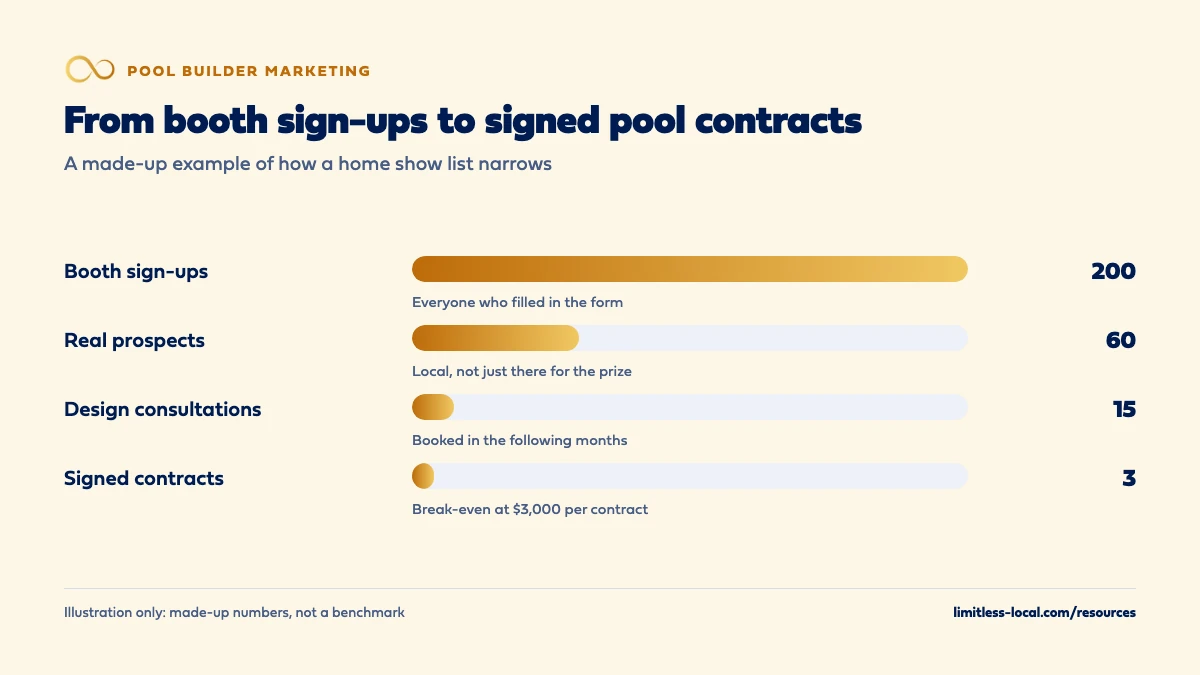
Then be honest about the gap between sign-ups and contracts. A full sign-up sheet feels like success at the end of a long weekend. But many show visitors are browsing, some live outside your area, and a share of the rest are years from building. The worked example below shows how quickly a big list narrows.
Which home shows are worth a booth?
Ask the organizer questions before you pay, and treat the attendance total with care. A big number across a whole metro may hide a small number from your towns. Useful questions:
- Where do attendees live? Ask for ZIP code or town data if they collect it at the door or online.
- How many pool and outdoor-living exhibitors were there last year, and did they come back?
- When does the show run, and does it fall in your design season?
- Is it focused on home improvement and outdoor living, or a general consumer show?
Talk to a past exhibitor in a trade next to yours, such as a landscaper or a deck builder, if you can. In our view, whether past exhibitors rebook is a better signal than any attendance figure.
Curious what your marketing is actually booking?
Get a free visibility audit — no obligation, no sales pitch.
What should a pool builder bring to the booth?
Proof of your work and a way to book the next step. A pool is bought partly on trust in the builder’s work, and a booth is a small space to earn it:
- Finished builds from the towns the show draws from, on large prints or a looping video. How to use project photos and videos covers what to shoot.
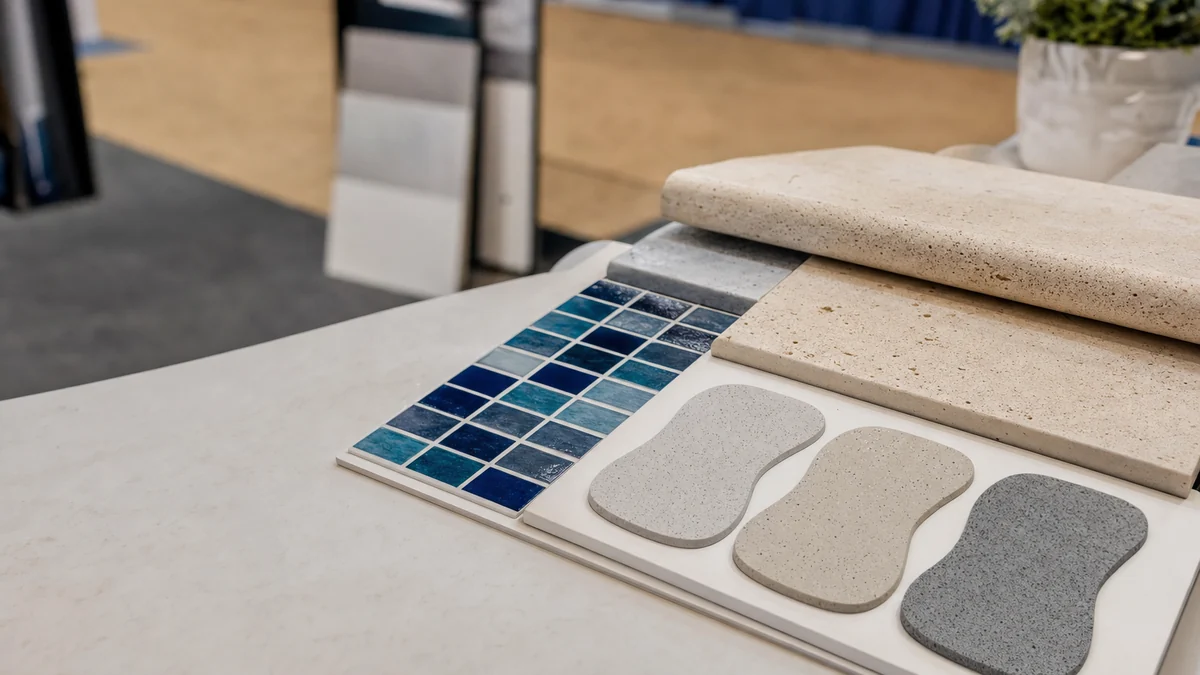
- Material samples people can touch: tile, coping, finishes.
- A person who can design. Homeowners at a show want to talk about their backyard, not take a brochure.
- A way to book a consultation on the spot, with real open dates.
What usually matters less, in our view, is an expensive booth build. A clean space with strong photos and the right person in it beats a showy display staffed by someone who can’t answer design questions.
How do I capture booth leads I can actually follow up?
Use a short form, on a tablet or on paper, that captures what you need to follow up and nothing more:
- Name, phone, email and the town they live in.
- When they’d like to be swimming: this season, next year, just looking.
- New pool or renovation.
- How they’d like to be contacted, with a clear consent box for texts.
The consent part matters. The FCC’s guide to unwanted robocalls and texts says commercial texts require written consent, and the FTC’s CAN-SPAM compliance guide says commercial email needs a clear opt-out and your physical postal address, with opt-outs honored within 10 business days. This is general information, not legal advice. A prize drawing can grow the list fast, but in our view it fills it with people who wanted the prize, not a pool, so keep entries separate from real prospects.
Get every lead into your CRM the same day, with the show recorded as the lead source. Housecall Pro’s lead source field, for example, tracks where each customer found your business.
Should I sign pool contracts at the show?
You can, but know the cancellation rule first. The FTC’s Cooling-Off Rule gives buyers three days to cancel certain sales made at a seller’s temporary location, such as a convention center or fairground, and doesn’t cover sales under $130 made at temporary locations. Under the rule’s text in 16 CFR Part 429, the seller has to give the buyer a dated contract or receipt with a cancellation statement, two copies of a notice of cancellation, and tell the buyer about the right to cancel orally at signing.
This is general information, not legal advice, and state rules may also apply. Check with your attorney before you take contracts or deposits at a show. In practice, in our view, a show is better for booking design consultations than for signing contracts: a pool design that hasn’t seen the backyard rarely survives the site visit unchanged anyway.
How fast should I follow up on home show leads?
Within a day or two of the show closing, while the homeowner still remembers your booth. Every other pool builder at the show has the same list of names, and many homeowners talked to several of you. How fast a pool builder should respond to a new lead covers why that first contact matters.
Sort the list first, using the timing question from your form:
- This season: call personally and offer a consultation date.
- Next year: call or text to thank them, then move them into a slower nurture plan. Nurturing leads who plan to build next year lays one out.
- Just looking: an email with finished builds and how your process works, then occasional updates if they opted in.
How do I track whether a show paid off?
Give the show its own tracking, then wait long enough to judge it. Two simple ways to keep show leads separate:
- A tracking number for the show. CallRail’s source tracking basics describes using a unique tracking phone number for each marketing campaign you want to track, each forwarding to your main line. Put the show’s number on your handouts and booth graphics.
- A lead source in your CRM. Tag every lead from the booth, the show’s number and the show’s landing page with the show’s name.
Then count signed contracts from that tag, not sign-ups. Because a pool sale takes months, in our view a first look a few months after the show and a second look a year after it are fairer than a verdict the week after.
What else could I do with the same money?
Compare the show with the channels you can measure more precisely. The same budget could run search ads aimed at homeowners actively looking for a pool builder (see whether Google Ads are worth it for pool builders), fund remarketing to people who already visited your site, or pay for better follow-up on the leads you already have.
That doesn’t make shows a bad idea. A good show in the right town can put you face to face with homeowners in a way ads don’t. It means a show should earn its place on the same cost-per-contract terms as everything else, and if it doesn’t after a fair test, the money goes back into what does.
Not sure which of these is costing you jobs?
A free visibility audit checks the Google profile, reviews, site and tracking, and shows what to fix first.
What's different about home shows for pool builders
The sale outlives the show. Most trades at a home show sell something a homeowner can decide on soon. A pool takes design, financing, permits and a build slot, so the show starts a sales cycle rather than closing one.
Timing against the season matters more. A show in your design season feeds the coming build calendar. A show too late in the year mostly feeds next year’s.
Visual proof does the selling. Homeowners can’t see a pool in a booth, so finished builds, video and samples carry the weight that a product demo would for other exhibitors.
Renovation and new-build visitors want different things. An owner with a tired pool wants resurfacing or equipment options and a quick answer. Someone with an empty backyard wants a design conversation. Your form and your follow-up should split them.
A worked example: the break-even math for one home show
These numbers are made up to show the math, not a benchmark for your market or any show. Say the full cost of a weekend show, including the booth fee, display, materials and staff time, comes to $9,000. And say your records show that a signed contract from your other marketing costs you $3,000.
The show needs 3 signed contracts just to match what you already do ($9,000 / $3,000). Now follow the made-up list: 200 sign-ups at the booth. After removing prize-drawing entries, people outside your area and duplicates, 60 are real prospects. Of those, 15 book a design consultation in the following months, and 3 sign. The show broke even, and only because the follow-up ran for months.
If only 2 had signed, the cost per contract from the show would be $4,500, worse than your other marketing. That’s the comparison to make before you rebook. On our side, every package includes call, web and form tracking and a real-time dashboard, so show leads can be measured on the same terms as ads and SEO.
Frequently asked questions
Is a bigger booth worth the extra cost at a home show?
In our view, rarely for a pool builder. Strong photos of finished builds, material samples and a person who can design matter more than square footage. Spend extra only if a past show proved the space itself brought more consultations.
Should I run a prize drawing at my pool booth?
It grows the sign-up list, but often with people who wanted the prize, not a pool. If you run one, keep drawing entries separate from prospects who asked about a project, and only market to people who opted in.
Do home shows work better for pool renovations or new builds?
It depends on the show’s crowd. Renovation leads can decide faster, so they may show results sooner; new-build leads take longer but are larger contracts. Tag them separately so you can see which a given show actually produces.
Can I take a deposit at the show?
Check with your attorney first. The FTC’s Cooling-Off Rule gives buyers three days to cancel certain sales made at temporary locations like convention centers and fairgrounds, and it requires specific cancellation paperwork.
How many home shows a year should a pool builder do?
Start with one, track it to signed contracts, and add more only if it beats your cost per contract from other channels. A show you can’t measure is hard to justify twice.
Key takeaways
- A home show is worth it when the crowd is local, the timing fits your design season, and you can staff and follow up properly.
- Count the full cost, including your best people’s time away from consultations and job sites.
- Divide that cost by your current cost per signed contract to see how many contracts the show must bring in.
- Capture consent for texts at the booth, tag every lead with the show, and follow up within a day or two.
- Know the FTC Cooling-Off Rule before signing contracts at a show, and judge results in signed contracts months later.
Want a second set of eyes on your setup?
We'll look at how you show up locally and where calls are leaking, then send you a plain-English breakdown.
More in this section
- Should pool builders market renovations separately from new pools?
- Are Google Ads worth it for pool builders?
- Are Local Services Ads worth it for pool builders?
- How can pool builders get referrals from landscapers and builders?
- Should a pool builder offer pool service as a side business?
Sources
- Buyer's Remorse: The FTC's Cooling-Off Rule May Help — Federal Trade Commission
- 16 CFR Part 429: Rule Concerning Cooling-off Period for Sales Made at Homes or at Certain Other Locations — Electronic Code of Federal Regulations
- Stop Unwanted Robocalls and Texts — Federal Communications Commission
- CAN-SPAM Act: A Compliance Guide for Business — Federal Trade Commission
- Source tracking basics — CallRail Help Center
- How to Use Lead Sources — Housecall Pro Help Center