
How should plumbers prepare their marketing for a winter freeze?
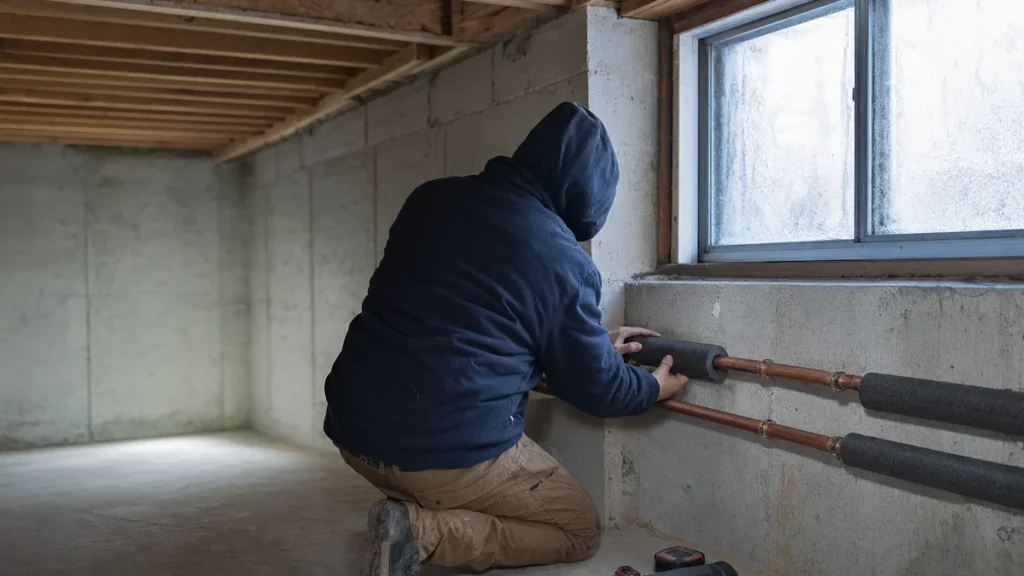
- What should a plumbing company do with its ads and Google profile before a cold snap?
- When should a plumber start getting ready for a freeze?
- Step 1: Can my phones and trucks handle a freeze surge?
- Step 2: How should I update my Google Business Profile before a freeze?
- Step 3: What should my website say before the pipes freeze?
- Step 4: Which ads should I build before the freeze?
- Step 5: How much should I raise my ad budget, and when?
- Step 6: Should I use a seasonality adjustment for a cold snap?
- Step 7: What about Local Services Ads during a freeze?
- Step 8: Should I contact past customers before a freeze?
- Step 9: What should I do after the freeze?
- How do I know the freeze plan worked?
- What's different about freeze marketing for plumbing companies
- A worked example: sizing the budget for a three-day cold snap
- Frequently asked questions
- Key takeaways
- More in this section
- Sources
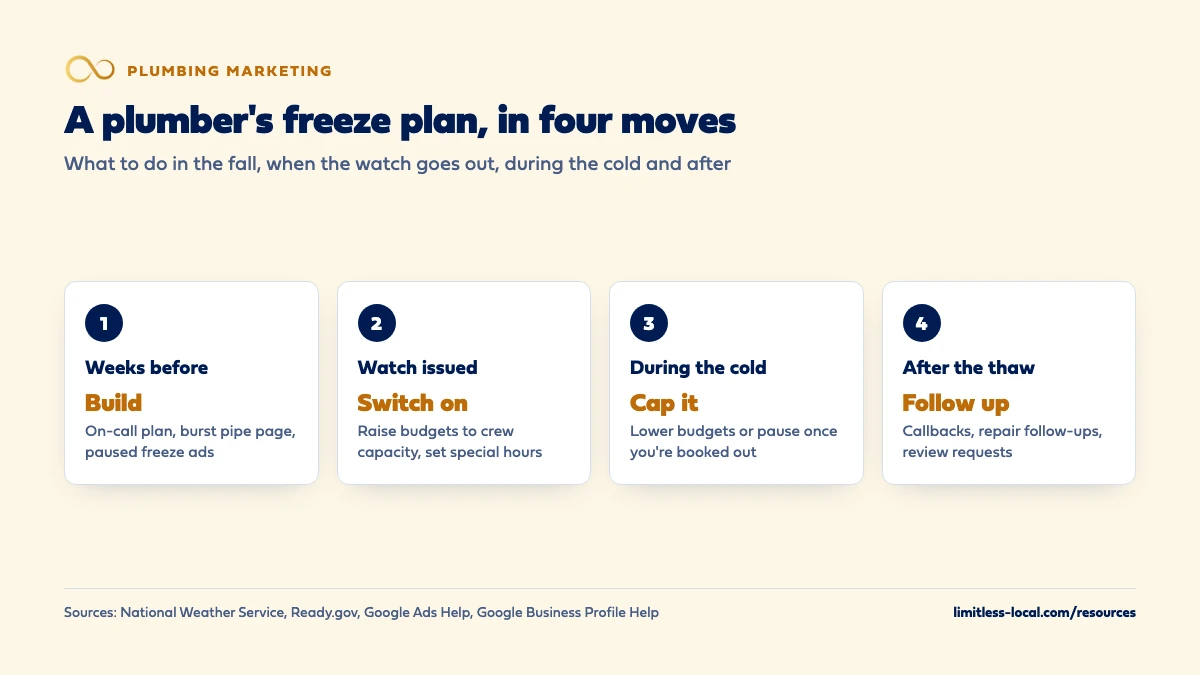
The short version
- Fall: on-call plan, burst pipe page, freeze ads built and paused.
- Watch issued: raise budgets to crew capacity and set special hours.
- During the cold: cap spend or pause once the schedule is full.
- After: callbacks, repair follow-ups, review requests, budgets back down.
For plumbing owners who know the next hard freeze will flood the phones, and want the ads, Google profile and website ready before it does.
Get a free visibility audit · Book a growth call
What should a plumbing company do with its ads and Google profile before a cold snap?
Prepare in two stages: in the fall, build what takes time, like an on-call plan, a burst pipe page on your website and freeze ad campaigns left paused; then switch the plan on when the weather service issues a watch for your area. When it does, raise ad budgets to match how many extra emergency jobs your crew can take, set special hours on your Google Business Profile only for hours someone answers, and lower budgets or pause the moment you’re booked out. After the thaw, call back everyone you missed, follow up on temporary repairs and ask happy customers for reviews.
A freeze rewards the plumber whose ads, profile and phones were ready before the forecast turned, and the right measure afterward is what each booked job cost. Our local ads management covers Google Ads and, on the Growth tier, Local Services Ads, with ad spend paid to Google separately. See how we work with plumbing companies, or browse the rest of the plumbing marketing questions library.
When should a plumber start getting ready for a freeze?
In two stages. The slow work, like a burst pipe page on your website, freeze campaigns built and paused, and an on-call plan, belongs in the fall, weeks before your area’s first hard freeze. The fast moves, like raising budgets and extending hours, happen when the forecast turns.
The National Weather Service gives you the trigger. Its page on cold weather alerts says a Freeze Watch is issued when significant, widespread freezing temperatures are possible within the next 24-36 hours, but only in autumn until the end of the growing season and in spring at its start. In the depth of winter, look for an Extreme Cold Watch, which is issued when dangerous cold is possible but the timing is still uncertain. Ready.gov’s winter weather page adds that Winter Storm Watches are usually issued 12 to 48 hours before a storm. In our judgement, a watch for your service area is the moment to act on the plan, not the moment to start making one.
Step 1: Can my phones and trucks handle a freeze surge?
Start here, because marketing can only fill capacity you have. A hard freeze tends to bring a burst of urgent calls at once, often overnight and on the first warm-up as frozen lines thaw and leak. Before you spend a dollar more on ads, settle:
- Who answers, and when. An on-call rotation, an answering service or an AI answering tool, with a written rule for which calls go straight to the on-call plumber.
- A triage order. Active leaks and burst pipes first, no water and frozen lines next, routine work rescheduled with a promised callback.
- Parts on the trucks. Running out of fittings and pipe on day one turns marketing into apologies.
- A cap. How many extra emergency jobs a day the crew can really take. That number sets your ad budget later.
If calls already slip through at night, fix that first; stopping lost after-hours calls walks through the options.
Step 2: How should I update my Google Business Profile before a freeze?
Make the hours honest and the profile current. If you’re adding night or weekend coverage for a cold snap, Google’s page on special hours says you can set them when your business temporarily changes its hours, for up to six days in a row, without touching your regular hours. Show only the hours someone will actually answer.
Then post. Google’s help page on Business Profile posts says posts can share announcements and updates with customers on Search and Maps. A short update before the freeze, such as where pipes tend to freeze and how to find the main shutoff, and another saying you’re answering through the cold snap, gives searchers something current to read. One detail from that page: posts with a phone number in the description might be rejected if it can’t be verified as connected to the business, so let the profile’s call button do that job.
Step 3: What should my website say before the pipes freeze?
Have a frozen and burst pipe page live well before winter. A homeowner standing in an inch of water reads one screen on a phone and calls, so the page should lead with the number and what to do in the next five minutes, starting with shutting off the main water valve. Below that, explain when to call you and what you’ll do when you arrive.
The National Weather Service’s page on what to do after it warms up is a good guide to what homeowners are told. It says pipes on exterior walls and in basements, attics and under kitchen cabinets freeze most often, that water expands as it freezes and bursts pipes, never to use an open flame to thaw them, and to call a plumber if there are more issues. Your page can say the same things in your own words, with photos of your own work.
Timing matters because pages take time to show up in search: SEO typically takes 3-6 months to show meaningful organic growth, while ads can bring calls within days of launch. A page built in October has a chance by January; one built during the freeze mostly serves your ads. What an emergency plumbing page should include covers the layout.
Step 4: Which ads should I build before the freeze?
Build the freeze campaign or ad group now and leave it paused, so the cold snap only needs a switch. In our judgement, that means a small set of tight ads around burst pipes, frozen pipes, broken water lines and no-water calls, each sending people to the page from Step 3, with your hours and service area set to match what the crew can cover.
Freezes also bring do-it-yourself searches: people looking up how to thaw a pipe or how to fix a split line themselves. Some will call you an hour later, but paying for the first search rarely makes sense. Blocking them takes negative keywords set up in advance; negative keywords for plumbing ads shows which ones.
Curious what your marketing is actually booking?
Get a free visibility audit — no obligation, no sales pitch.
Step 5: How much should I raise my ad budget, and when?
Raise it when the watch is issued, by roughly what your crew can absorb, and no more. Google’s page on how budget changes take effect says a change to your average daily budget shows in your account immediately and Google starts serving ads with the new budget in mind. On the day you change it, most campaigns can be charged up to twice the highest daily budget you set that day, and for the rest of the month, spend won’t exceed the new daily budget times the days left.
Two habits follow from that. Raise the budget a day or so before the cold arrives rather than at 6 a.m. on the worst morning, and decide the ceiling from Step 1’s cap: if the crew can take six extra emergency jobs a day, budget that buys twenty calls sends fourteen of them to someone else. Lower it again the moment the schedule fills; a decrease shows in your account immediately too, and Google’s page says it may have the opposite effect on spend.
Step 6: Should I use a seasonality adjustment for a cold snap?
Maybe, if you use automated bidding and expect a big jump in how often clicks turn into calls. Google describes seasonality adjustments as an advanced tool that tells Smart Bidding to expect a change in conversion rates for a future event. It says to use them only for major changes, because Smart Bidding already manages seasonal events, that they’re ideal for short events of one to seven days, and that they may not work as well for periods longer than 14 days.
A three-day cold snap fits that window better than a whole winter does. They’re available for Search campaigns using Target CPA or Target ROAS, and for Performance Max campaigns on any bid strategy. If you run manual bids or Maximize Clicks, skip this and adjust budgets instead. Either way, the cap from Step 1 still applies: telling Google to bid harder doesn’t add a truck.
Step 7: What about Local Services Ads during a freeze?
Check where yours live now. Google is moving Local Services Ads into Google Ads as Performance Max campaigns with pay-per-lead goals, and plumbing is in the first phase, which began in August 2026 for select advertisers. Migrated campaigns switch from weekly to daily budgets. Google says daily spend may fluctuate on high-demand days, while monthly spend is capped at the daily budget times 30.4.
Two things on that page matter in a freeze. You can pause a pay-per-lead campaign to temporarily stop receiving leads at any time, which is the honest move once you’re booked out. And ad schedules and service areas can be set in Google Ads separately from your Business Profile, so you can narrow the area to towns your trucks can reach on icy roads. Whether LSAs or search ads should carry the load is its own question: LSAs or Google Ads for emergencies compares them.
Step 8: Should I contact past customers before a freeze?
Yes, and it’s the cheapest step on this list. Ready.gov’s winter guidance tells households to learn how to keep pipes from freezing, and a short note from the plumber who already knows their house is a natural place to get that advice. Send it when the forecast turns: where pipes freeze, how to find and test the main shutoff, and your number for after-hours trouble.
In our judgement, this does two jobs. It saves some customers a burst pipe, which they remember, and it puts your name in front of everyone else before they search. Commercial email and texts have rules about opt-outs and consent; keeping calls coming in slow months covers the email basics alongside other ways to work your customer list.
Step 9: What should I do after the freeze?
- Call back everyone you couldn’t reach. Missed calls and voicemails from the rush are warm leads, and some still have a temporary fix holding.
- Follow up on temporary repairs. A patched line in an exterior wall is a reason to talk about rerouting or replacing that section before next winter, in our judgement.
- Ask for reviews while the save is fresh. A customer whose kitchen you kept dry at midnight is often glad to say so; getting more Google reviews covers how to ask.
- Turn budgets, hours and special posts back down so you’re not paying freeze prices for normal-week calls.
How do I know the freeze plan worked?
Count booked jobs, not calls. For the freeze days, write down how many calls came in, how many were answered live, how many were turned away or missed, how many became booked jobs, and what you spent on ads over the same days. Divide the spend by the booked jobs and you have cost per booked job for the freeze, which you can compare with a normal week.
The most useful number for next year is often the turned-away count. If you turned away more calls than your ads brought in, the bottleneck was capacity, not marketing, and next fall’s plan should start with on-call coverage rather than budget.
Not sure which of these is costing you jobs?
A free visibility audit checks the Google profile, reviews, site and tracking, and shows what to fix first.
What's different about freeze marketing for plumbing companies
The busiest hours can be the worst hours to advertise. A freeze can send calls in faster than you can drive to them. Unlike a slow-burn season, a cold snap can go from quiet to overbooked in an afternoon, which is why the cap and the pause button matter as much as the budget.
Freeze calls often lead to bigger work. A burst pipe is an emergency repair today and, sometimes, a repipe or water line replacement conversation next month. Tag freeze calls in ServiceTitan, Housecall Pro or Jobber so the follow-up actually happens.
Not every market freezes the same way. In places where hard freezes are rare, homes may be less prepared and a single cold night can bring a rush, in our judgement. In colder markets, the pattern is steadier and the first deep freeze of the season and the first thaw tend to matter most. Plan around your own past call logs, not someone else’s calendar.
A worked example: sizing the budget for a three-day cold snap
These numbers are made up to show the math, not a benchmark. Say a plumbing company normally runs Google Ads at $150 a day. An Extreme Cold Watch goes out on Tuesday for a cold snap expected Wednesday through Friday, and the owner knows the crew can take about six extra emergency jobs a day.
- Raise the budget Tuesday afternoon to $400 a day. On the day of a change, Google can charge up to twice the day’s highest budget, so Tuesday’s ceiling is $800.
- Extra spend: $400 – $150 = $250 a day above normal, or $750 over the three days.
- Break-even: if an average emergency job leaves $500 in gross profit, the extra $750 is covered by two booked jobs, well inside a capacity of six a day.
The ceiling isn’t the budget, it’s the crew. If calls start ringing out by Wednesday noon, lowering the budget the same day saves money the trucks couldn’t have turned into jobs anyway.
Frequently asked questions
Should I run ads all night during a freeze?
Only if someone answers live all night. Ads that send burst-pipe calls to voicemail pay for leads that go to the next plumber on the list.
Can I reuse this plan for other rushes, like heavy rain?
Mostly. The pieces are the same: a capacity cap, pages and ads built in advance, honest hours, and a budget you can raise and lower the same day. Only the services and searches change, such as sewer backups after heavy rain.
Is it worth running Facebook ads before a freeze?
In our judgement, Search and Maps carry most freeze calls, because people search when the pipe bursts, and a social post or a short reminder to past customers is a cheaper way to stay in mind before the cold.
What if I'm already booked solid when the freeze hits?
Lower your budgets or pause your freeze campaigns, keep answering the phone, and take names and numbers for callbacks. A promised callback that actually happens can still turn into a job and a review.
Should my freeze ads mention a price or discount?
Usually not. People with water on the floor are choosing speed and trust. Clear availability, like answering now in their town, tends to matter more than a coupon in that moment, in our judgement.
How far ahead should my burst pipe page go live?
Months, not days. SEO typically takes 3-6 months to show meaningful growth, so a page built in early fall has a far better chance of being found by midwinter than one built during the cold snap.
Key takeaways
- Build the slow parts in the fall: on-call plan, burst pipe page and paused freeze ads.
- Use the weather service’s watches as the trigger to switch the plan on.
- Size budgets to how many extra jobs the crew can take, and lower them the moment you’re booked out.
- Keep your Google profile hours honest with special hours, and post freeze updates.
- After the thaw, call back missed callers, follow up on temporary repairs and ask for reviews.
- Judge the freeze on booked jobs and cost per booked job, not calls.
Want a second set of eyes on your setup?
We'll look at how you show up locally and where calls are leaking, then send you a plain-English breakdown.
More in this section
- How should a plumbing company market to commercial customers?
- Should I market harder before or after hiring another plumber?
- Which plumbing services should I advertise first?
- How do I market water softeners and filtration as a plumber?
- How do I keep plumbing calls coming in during slow months?
Sources
- Understanding Cold Weather Alerts — National Weather Service
- Essential Tasks After it Warms Up — National Weather Service
- Winter Weather — Ready.gov
- How budget changes take effect — Google Ads Help
- About seasonality adjustments — Google Ads Help
- Local Services Ads transition to Performance Max campaigns with pay-per-lead goals — Google Ads Help
- How to set Special hours — Google Business Profile Help
- Create & manage posts on your Business Profile — Google Business Profile Help