
How do pool builders keep leads coming in the off-season?
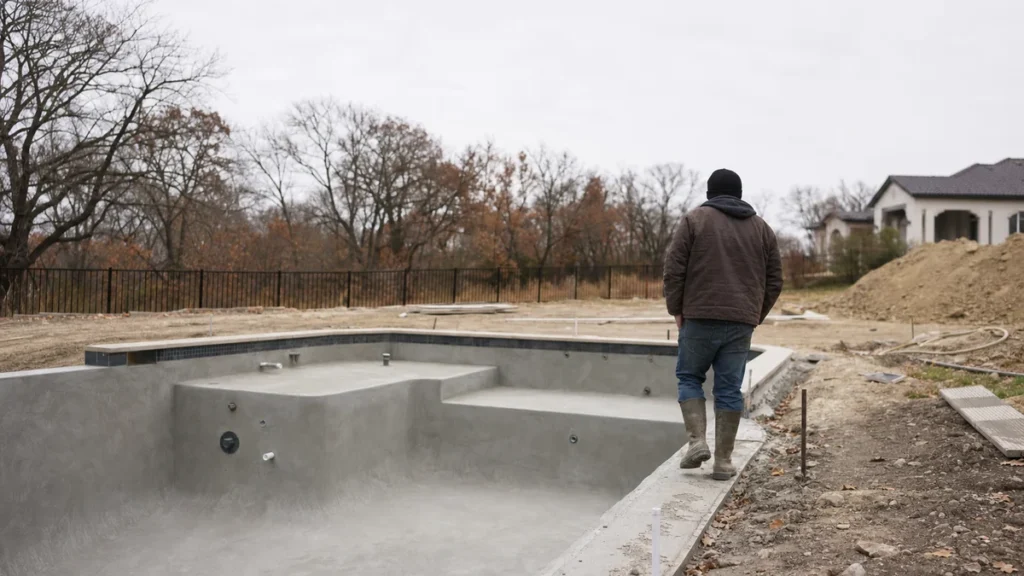
- How can a pool builder fill the slow months with consultations that sign for spring?
- Why do pool leads slow down in the off-season?
- Step 1: How do I sell the build calendar in winter?
- Step 2: Who should I contact first?
- Step 3: Should I pause my Google Ads in the off-season?
- Step 4: What should my ads push in the slow months?
- Step 5: Can I advertise pool financing in the off-season?
- Step 6: How do I use my Google Business Profile in the off-season?
- Step 7: What should I work on while the phones are quiet?
- How do I get reviews from this season's customers without breaking the rules?
- Should I discount to fill the winter?
- How do I know if the off-season plan worked?
- What's different about the off-season for pool builders
- A worked example: what the pipeline you already have is worth
- Frequently asked questions
- Key takeaways
- More in this section
- Sources
The short version
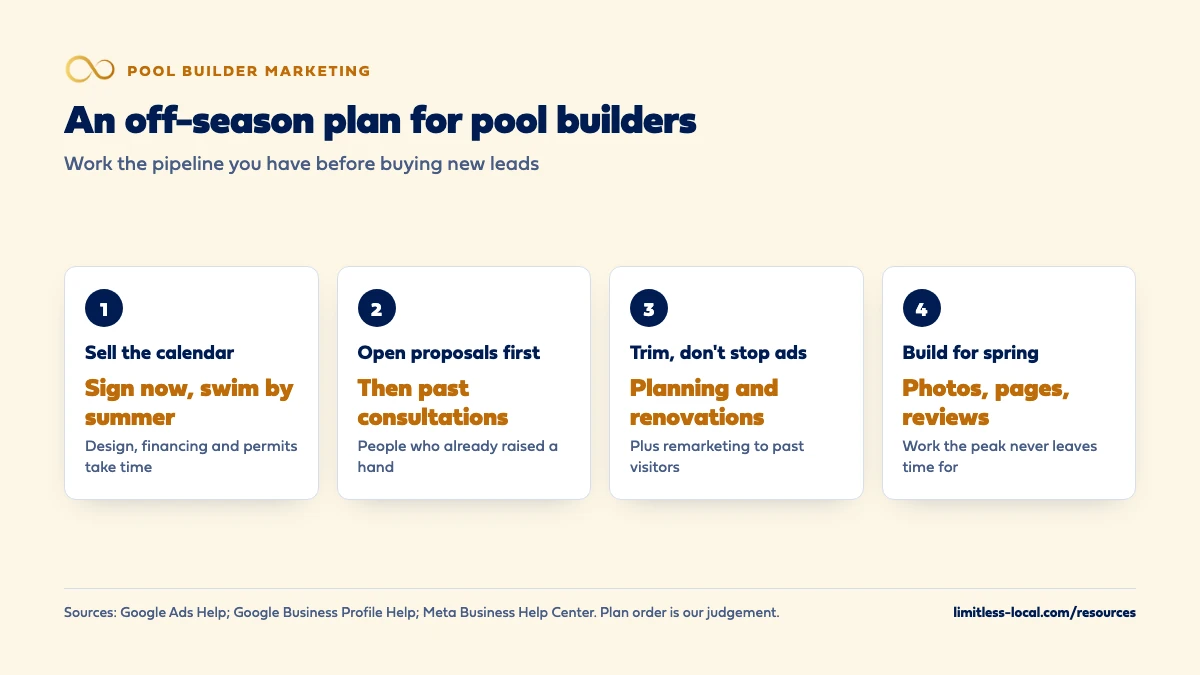
- Sell the calendar: winter is when homeowners who want a summer pool need to sign.
- Work open proposals and past consultations before paying for new leads.
- Trim ads instead of switching them off, and point them at planning and renovation searches.
- Use the slow weeks for photos, pages and reviews that pay off next season.
For pool construction owners whose phones go quiet when the weather turns, and who need contracts signed before the next build season starts.
Get a free visibility audit · Book a growth call
How can a pool builder fill the slow months with consultations that sign for spring?
Pool builders keep leads coming in the off-season by selling the build calendar: a homeowner who wants to swim next summer has to design, finance and permit the pool months ahead, so the slow months are when that decision gets made. Work the open proposals and past consultations you already have first, keep ads running at a smaller budget aimed at planning searches and renovations, and stay in front of past site visitors with remarketing. Use the quiet weeks to add project photos, pages and reviews that will carry you through the next peak.
A consistent marketing engine is how we approach the seasons for pool builders: keep the pipeline moving in winter instead of starting cold every spring. Our packages combine local SEO, Google Ads, follow-up and reporting, and the pool builder marketing page explains how they fit a long, seasonal sales cycle. The rest of the pool builder marketing questions library goes question by question.
Why do pool leads slow down in the off-season?
Because most homeowners think about pools when it’s hot and they’re outside. Once the weather cools, fewer people search, fewer fill out a form, and the ones still interested often decide they’ll deal with it in spring. Google’s Keyword Planner help says its historical metrics show how popular keywords are during different times of the year, so you can see how deep the dip runs in your market rather than guess.
The catch for a builder is that spring demand needs winter decisions. A pool isn’t a same-week purchase: there’s a design consultation, a proposal, financing, a permit and a place on your build schedule. In our judgement, a homeowner who starts that process in spring is often swimming late in the summer, or next year. That gap is the off-season opportunity.
Step 1: How do I sell the build calendar in winter?
Make the timeline the message. Instead of “pools on sale”, tell homeowners what has to happen between today and the first swim, and what that means for when they should start. In plain terms:
- Show the steps. Design, proposal, financing, permit, excavation, steel, shell, tile and finish. Homeowners rarely know how many there are.
- Show your calendar. If spring build slots fill up, say so honestly, and say how many are left only if it’s true.
- Offer the consultation, not a discount. A winter design meeting with no pressure is an easy yes for someone who’s only thinking about it.
Be careful with deadlines you can’t back up. A false “only two spots left” may get a call this week and cost you the homeowner’s trust before they sign.
Step 2: Who should I contact first?
The people who already raised their hand, in roughly this order:
- Open proposals. Homeowners who got a price in late summer or fall and went quiet. Many paused on timing, not on you.
- Past consultations that never got a proposal. Something stalled; ask what.
- Past customers. For a resurfacing, a new heater, automation, lighting, a spa or an outdoor kitchen, and for referrals to neighbors.
- Website visitors who never reached out, through remarketing ads (Step 4).
- Cold audiences last, because they cost the most and take the longest.
In our view a call from the owner or the designer beats an email for the first two groups. If your follow-up has been ad hoc, following up during a long sales cycle lays out a cadence that doesn’t wear people out.
Step 3: Should I pause my Google Ads in the off-season?
In our judgement, trim them rather than switch everything off. Fewer people search in winter, but the ones who do are often planners worth reaching, and renovation work doesn’t stop entirely.
Google Ads gives you both options. Google’s campaign help says pausing or removing a campaign stops its ads from showing, that a removed campaign can’t be resumed or restored, and that resuming a campaign won’t restart ad groups or keywords you also paused, so each has to be turned back on. Pause, don’t remove, if you plan to come back in spring.
One tool that doesn’t fit this job: seasonality adjustments. Google describes them as an advanced tool for short events, ideal for one to seven days, and says they may not work as well for periods longer than two weeks. A whole off-season isn’t what they’re built for. How much to spend overall is a separate question; how much a pool builder should spend on marketing covers it.
Step 4: What should my ads push in the slow months?
Planning and renovation, in our view, because that’s what homeowners can act on when it’s cold:
- Design consultations for next season, with your build calendar as the reason to start now.
- Renovations and resurfacing, which some owners want done before the pool opens again.
- Equipment and add-ons such as heaters, automation and lighting, if you do that work.
Remarketing fits the long decision well. Meta’s help center describes website custom audiences, built with the Meta Pixel, as a way to reach people who already showed interest in your business, including retargeting site visitors who haven’t converted yet. A homeowner who browsed your project gallery but never called can see your design-consultation offer while they’re still deciding.
Curious what your marketing is actually booking?
Get a free visibility audit — no obligation, no sales pitch.
Step 5: Can I advertise pool financing in the off-season?
Yes, and financing is often what turns a someday pool into a this-year pool. Be careful with how you word it. Under the federal Truth in Lending rules (Regulation Z, § 1026.24), if a credit ad states certain “triggering terms” (the amount or percentage of a downpayment, the number of payments or repayment period, the amount of any payment, or the amount of any finance charge), it must also state the downpayment, the terms of repayment, and the annual percentage rate, using that term (and, if the rate may go up after the loan is made, that fact).
So “financing available” is a different kind of ad from one that names a monthly payment. This is general information, not legal advice: if you want to put payment amounts in an ad, get the wording from your financing partner or an attorney before it runs.
Step 6: How do I use my Google Business Profile in the off-season?
Posts are the tool. Google’s Business Profile posts help says you can share updates, offers and events that show on Search and Maps. An offer post needs a title, dates and time and adds a “View Offer” button automatically, and you can schedule a post to publish later. Posts older than six months are archived unless a date range is set.
For a pool builder, that means a winter design-consultation offer with real dates, posts showing builds in progress where your climate allows winter work, and finished projects from the season just ended. Using project photos and videos covers what to shoot and where it does the most good.
Step 7: What should I work on while the phones are quiet?
The work that pays off at the next peak and never gets done during one:
- Project pages. Each finished build from the season deserves a page or gallery with real photos, the town and what the homeowner wanted. In our judgement, that’s both a sales tool and something for search to match to a local search.
- SEO. SEO typically takes 3 to 6 months to show meaningful growth, so work started in late fall has a chance to be in place by spring. How long pool builder SEO takes explains the ramp.
- Reviews. Customers from this season are still happy and reachable. Ask them now, before they forget the details.
- Tracking. Make sure every consultation is tagged with where it came from before the spring rush hides the answer.

How do I get reviews from this season's customers without breaking the rules?
Ask every customer, and don’t pay for it. Google’s Maps content policy describes incentivized reviews as reviews and ratings influenced by a payment, discount, free goods or services, or any other benefit offered to the reviewer, and says offering incentives in exchange for reviews undermines content integrity and can mislead consumers. A free filter cleaning for a five-star review falls on the wrong side of that line.
What works, in our view, is timing and ease: ask at the final walkthrough or first swim, send the link the same day, and follow up once. Getting more Google reviews for your pool company goes further.
Should I discount to fill the winter?
Carefully, in our judgement. A pool is a high-ticket, once-in-a-decade purchase for most homeowners, and a price cut on something that size draws people who shop on price and trains past leads to wait for next winter’s deal. Better levers are a build slot confirmed in writing that you can actually honor, an equipment upgrade included for contracts signed by a date, or a design consultation with no obligation.
Whatever you offer, give it a real end date and keep it. An off-season offer that runs all year stops being an offer.
How do I know if the off-season plan worked?
Not by winter contract count alone. Off-season marketing often pays in spring, so measure consultations booked in the slow months and follow them to signature, even if that takes a while. Compare against the same months last year, and tag each consultation by source and by type (new build, renovation, add-on).
That only works if the tagging starts now. Tracking which marketing produces signed contracts covers the setup.
Not sure which of these is costing you jobs?
A free visibility audit checks the Google profile, reviews, site and tracking, and shows what to fix first.
What's different about the off-season for pool builders
Your climate decides what the off-season is. In colder regions construction may stop for the winter, so the slow months are all selling and planning. In warmer regions builds can continue while inquiries dip, so the risk is a full crew today and an empty calendar in three months. In our judgement, plan the off-season around your sales pipeline, not just your build schedule.
Decisions are long and shared. A pool is usually a household decision with financing involved. Off-season contact gives both decision-makers time to look at designs and numbers without the summer rush.
New builds and renovations peak differently. Renovation and resurfacing customers may want the work done before opening day, so they can be the steadier winter line. Track them separately so one doesn’t hide the other.
A worked example: what the pipeline you already have is worth
These numbers are made up to show the math, not a benchmark. Say you held 24 design consultations last season that never signed. If a winter follow-up campaign gets one in six of those homeowners to sign for spring, that’s 4 contracts from people you already met, with no new ad spend behind them.
Compare that with buying new leads in the slowest months, when fewer people are searching and each new consultation still has to go through your full sales cycle. That’s why the order in Step 2 matters. For reference, our Essentials package is $3,500 a month and includes Google Ads management and a welcome email flow; Meta remarketing starts at our Growth package, $4,500 a month. Ad spend is paid to Google and Meta separately. A free visibility audit is the place to run this math with your own pipeline.
Frequently asked questions
Does a removed Google Ads campaign come back in spring?
No. Google says a removed campaign is stopped permanently and can’t be resumed or restored. Pause it instead if you plan to bring it back.
How long do Google Business Profile posts stay up?
Google says posts older than six months are archived unless a date range is set, so give seasonal offers clear dates.
Can I offer a discount for a Google review?
No. Google’s Maps content policy treats reviews influenced by a payment, discount, free goods or services, or any other benefit as incentivized reviews.
Can I say "low monthly payments" in a pool ad?
Under Regulation Z, stating the amount of a payment is a triggering term that requires more disclosures, including the annual percentage rate. Check exact wording with your financing partner or an attorney; this is not legal advice.
Should I stop posting on social media in winter?
In our judgement, no. Builds in progress, finished projects and design ideas keep you in front of homeowners who are planning, and remarketing can reach people who already visited your site.
Key takeaways
- Spring demand needs winter decisions, so sell the build calendar in the slow months.
- Contact open proposals, past consultations and past customers before paying for cold leads.
- Pause, don’t remove, ad campaigns you plan to bring back, and point winter ads at planning and renovations.
- Financing ads that name payment terms need extra disclosures under Regulation Z.
- Use quiet weeks for project pages, reviews and tracking that pay off next season.
Want a second set of eyes on your setup?
We'll look at how you show up locally and where calls are leaking, then send you a plain-English breakdown.
More in this section
- How should pool builders follow up on leads during a long sales cycle?
- How do pool builders qualify leads before the design consultation?
- How long does pool builder SEO take to bring in leads?
- What should a pool builder website include to get more consultations?
- What keywords should a pool builder target?
Sources
- § 1026.24 Advertising — Consumer Financial Protection Bureau
- Create & manage posts on your Business Profile — Google Business Profile Help
- Enable, pause, or remove a campaign — Google Ads Help
- About seasonality adjustments — Google Ads Help
- About Keyword Planner forecasts — Google Ads Help
- About website custom audiences — Meta Business Help Center
- Incentivized or Biased Reviews — Maps User Generated Content Policy Help