
What questions do pool buyers ask builders before hiring?
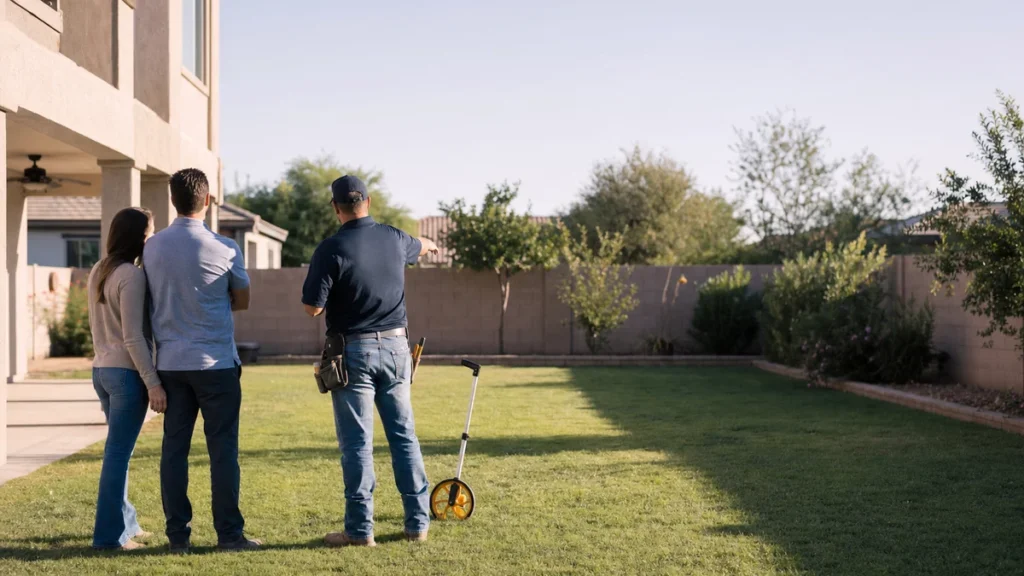
- Which questions do homeowners ask a pool builder before signing, and how should a builder answer them?
- What do pool buyers want to know before they hire a builder?
- How should I answer when buyers ask if I'm licensed and insured?
- What should I have ready when buyers ask for references?
- How do I answer questions about the timeline and start date?
- What should I tell buyers who ask who pulls the permits?
- How should I explain my payment schedule?
- How do I answer questions about my warranty?
- How should I explain change orders and what happens if something goes wrong?
- How do I show buyers what's included in the price?
- How should my website answer these questions before the first call?
- How should the consultation answer them?
- What's different about the questions pool buyers ask
- A worked example: tallying the questions from your own consultations
- Frequently asked questions
- Key takeaways
- More in this section
- Sources
The short version
- Expect questions on licensing and insurance, references, timeline, permits, payments, warranty and changes.
- Many buyers bring a checklist from consumer guides, so the questions are predictable.
- Answer them in writing: on your website and in a consultation packet.
- Tally your own buyers' questions and fill the gaps your site leaves.
For pool builders who want to know what buyers will ask before they sign, and how to answer it on the website and at the consultation before the buyer has to ask.
Get a free visibility audit · Book a growth call
Which questions do homeowners ask a pool builder before signing, and how should a builder answer them?
Pool buyers usually ask whether you’re licensed and insured, whether they can talk to past customers and see pools like the one they want, how long the build takes and when you can start, who pulls the permits, what the payment schedule is, what the warranty covers, and what happens if something changes or goes wrong. Most of these come straight from consumer guides that tell homeowners how to vet a contractor. The builders who win the contract answer them before they’re asked, on the website and in a short packet at the design consultation.
Answering buyers before they ask starts with the website. For pool companies we build portfolio-style sites that showcase your work and make it easy to request a consultation. On our website page, a themed site is $3,750, or $3,000 with any Limitless Engine package, and custom sites start at $5,000. The pool builder marketing page shows how we work with pool companies, and the pool builder marketing questions library takes the rest one question at a time.
What do pool buyers want to know before they hire a builder?
Under all the specific questions sit five worries: can I trust you, can you build what I’m picturing, what will it really cost, how long will my backyard be a construction site, and what happens if something goes wrong. Every question a buyer asks is one of those in disguise.
Many buyers arrive with a checklist, because that’s what consumer advice tells them to bring. The FTC’s booklet Hiring a Contractor tells homeowners to stick to licensed and insured contractors, call references, read reviews with a critical eye, get several written estimates and read the contract carefully before signing. A buyer who’s done that homework will ask you about each point.
That’s good news for a well-run pool company. The questions are predictable, so you can answer them before they’re asked: on your website, in a short handout and in the way you run the consultation. A builder who answers first looks like the safe choice.
How should I answer when buyers ask if I'm licensed and insured?
Expect this first, and answer it in writing. Have your license number ready where your state licenses pool work, plus current certificates for the insurance buyers are told to ask about: personal liability, worker’s compensation and property damage coverage. Make them easy to hand over or email the same day.
Careful buyers also ask whether you use subcontractors, and whether those subs carry their own insurance and licenses.
So have the answer for your subs ready as well: who does your shotcrete, tile, plaster and electrical, and that they carry their own coverage. Where those credentials belong on your site is covered in which credentials a pool builder should show on its website.
What should I have ready when buyers ask for references?
Yes should come easily. Buyers want to know how many pools like theirs you’ve built, and they expect names and contact details for at least three clients with similar projects. They’ll ask those clients whether the job finished on time, whether there were unexpected costs and whether the crew cleaned up. Some will ask to visit a job in progress.
Make that easy:
- A references list of recent customers who’ve agreed to take a call, grouped by pool type and town.
- A gallery sorted by type, so a buyer who wants a fiberglass pool with a spa sees those first.
- An offer to see a build in progress, with the homeowner’s permission. Seeing the steel and the cleanliness of your site does more than any brochure.
Refresh the list every season. A reference from many years ago tells a buyer less than one from last summer.
How do I answer questions about the timeline and start date?
Buyers ask this early, and a good answer has two parts: when you can start and how long the build runs once it does. Give both, with the stages in between: design, permits, dig, steel, shotcrete or shell set, plumbing and electrical, tile and coping, decking, finish and startup.
Say what can slow each stage down, such as permit review, inspections, rain or a backlog at your plaster sub, before the buyer has to ask. Buyers look for an estimated start and completion date in the contract, so put realistic ones in writing.
A start date you can’t keep costs more than a later one you can. Buyers forgive a long wait they were told about. They don’t forgive one they found out about from an empty backyard.
What should I tell buyers who ask who pulls the permits?
That you do, and say it plainly. Most states and localities require permits for building projects, a competent contractor gets them before work starts, and a contractor who asks the homeowner to get the permits is on the list of home improvement scam warning signs. A buyer who has read up will notice if you hesitate.
Beyond the building permit, explain the rest of the paperwork in the towns you serve: HOA approval, setbacks, easements and any fence or barrier rules your city applies to pools. You know those rules better than any buyer, and walking them through it is one of the best ways to show it.
Curious what your marketing is actually booking?
Get a free visibility audit — no obligation, no sales pitch.
How should I explain my payment schedule?
Buyers are told to be careful here: never pay the full amount up front, know that some states limit how much a contractor can ask for as a down payment, and tie payments to the completion of defined amounts of work, so payments slow down if the work does.
A draw schedule tied to build stages fits that advice: a deposit at signing, then payments at milestones such as excavation, shell, tile and coping, and completion. Check your state’s and city’s rules on deposits before you set yours. In New York City, for example, the Department of Consumer and Worker Protection’s tips for hiring a home improvement contractor tell consumers to pay no more than 25% of the total contract amount up front.
Put the schedule on paper early, even in a sample contract you can show at the consultation. Buyers who see a clear, stage-based schedule worry less about everything else.
How do I answer questions about my warranty?
Most buyers ask, and few understand the answer. They’re told the contract should cover warranties on materials and workmanship, who honors each one, whether the contractor, distributor or manufacturer, and the length and any limitations.
Keep it simple with a one-page warranty summary that separates three things: your own workmanship warranty on the structure and the build, the manufacturer warranties on equipment such as pumps, heaters and automation, and anything excluded. Then explain what a claim looks like: who they call and how fast you respond. A plain warranty with clear limits builds more trust than a big promise in small print.
How should I explain change orders and what happens if something goes wrong?
This is the question behind most nervous buyers’ silence, so raise it yourself. Two parts matter:
- Change orders. A change order is a written authorization to change or add to the work in the original contract, and it can affect the cost. Explain how you handle them, including the common ones in pool work: added features, upgraded finishes and conditions found during the dig, such as rock or groundwater.
- Unpaid subs and suppliers. Homeowners are warned that, depending on state law, unpaid subcontractors and suppliers may be able to file a mechanic’s lien against the home, and are told to ask for lien releases or waivers. Say up front that you provide them.
Owners often avoid these topics for fear of scaring the buyer. It works the other way: a builder with a clear answer for the bad day sounds like one who’s handled it before.
How do I show buyers what's included in the price?
Buyers comparing estimates ask because the estimates rarely match. They’re told not to automatically choose the lowest bidder, to ask why bids differ, and to make sure the contract spells out what the contractor will and won’t do, including cleanup.
For a pool, the usual gaps are decking, fencing, electrical runs, landscaping repair, access damage, startup and the first chemical balance. List what’s in and what’s out on every proposal. It answers the question before it’s asked, and it makes a cheaper bid that leaves half of it out easy to spot.
When the question turns into a push on price, how a pool builder can handle buyers who push on price covers that conversation.
How should my website answer these questions before the first call?
Put the answers where buyers look while they’re still choosing who to call:
- A process page with each stage of the build, typical timing and what can delay it.
- A gallery sorted by pool type and town, with a short story for each project.
- Licensing and insurance, stated plainly with your license number where it applies.
- A payment and warranty overview: how draws work and what your warranty covers.
- A permits page for the towns you serve.
- Reviews and a line inviting reference calls.
Each of these is also a strong blog post or FAQ answer. Whether blogging can bring a pool builder real leads covers turning them into posts, and what a pool builder website should include to get more consultations covers the rest of the site.
How should the consultation answer them?
Bring the answers with you, so the buyer doesn’t have to ask. A short buyer’s packet works well: your license number and insurance certificates, a references list, the build stages with timing, a sample contract with the payment schedule, and the warranty summary.
If you sign contracts at the homeowner’s kitchen table, check whether the FTC’s Cooling-Off Rule applies. It lets buyers cancel certain sales made at their home until midnight of the third business day, and the seller has to tell them about that right when they sign and hand them a cancellation form in duplicate. Explaining that yourself shows the buyer you play it straight.
Then leave time for their list. A buyer who gets every question answered without pressure is a buyer who signs. How pool builders turn design consultations into signed contracts covers the rest of the meeting.
Want to see where your company stands?
A free visibility audit shows where you show up on Google, Maps and AI answers, and what it's costing you in calls.
What's different about the questions pool buyers ask
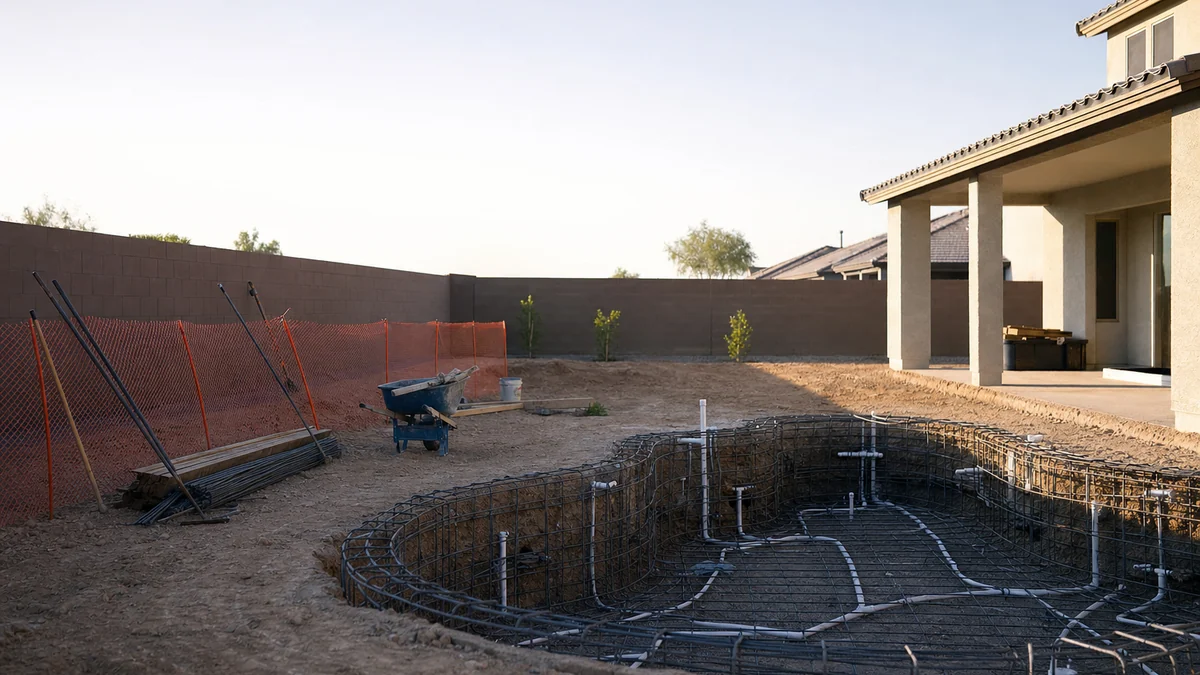
The backyard is a construction site for weeks. Buyers ask about access, yard damage, noise, cleanup and kids’ safety during the build, more than they would for a roof or a water heater.
The ground is a wild card. Rock, groundwater and soil conditions can change the job after the dig starts. Buyers who’ve heard stories ask how you price that risk.
Local rules shape the pool. Setbacks, HOA approval and barrier requirements vary from town to town, and buyers expect you to know them.
It’s a long relationship. Startup, equipment training and warranty service mean buyers are choosing who they’ll call for years, so they ask about what happens after the last payment.
A worked example: tallying the questions from your own consultations
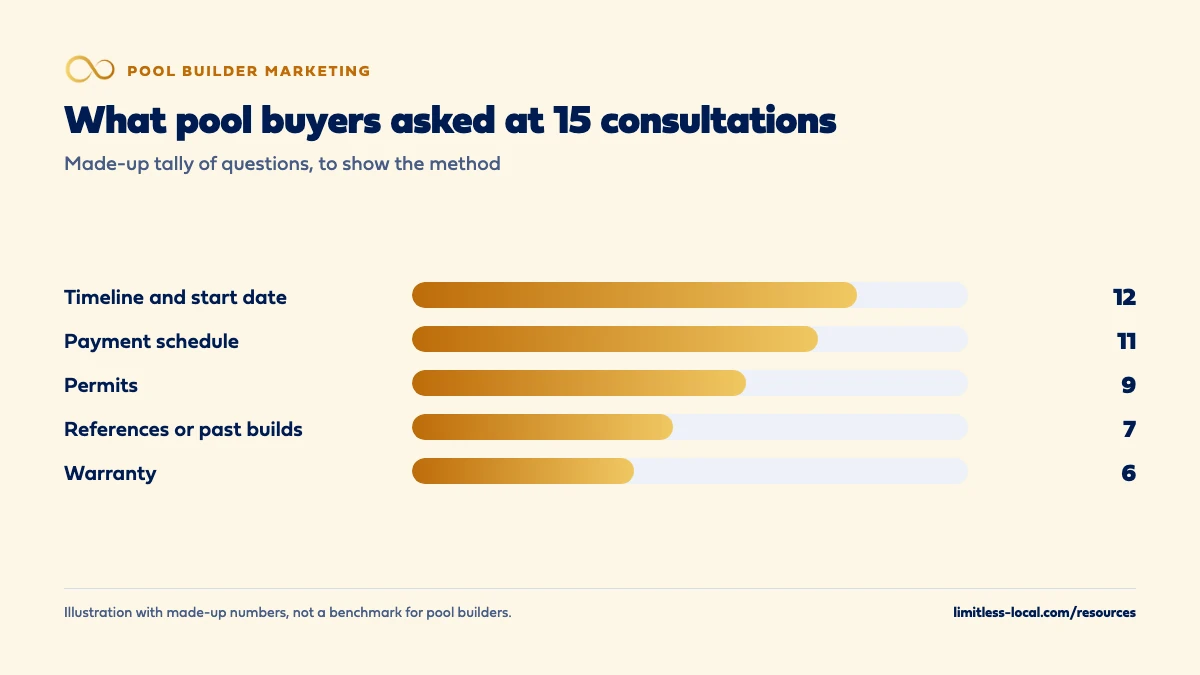
These numbers are made up to show the method, not a benchmark for pool builders. Say a builder writes down every question asked at 15 design consultations:
- Timeline and start date: asked at 12.
- Payment schedule: asked at 11.
- Permits: asked at 9.
- References or past builds: asked at 7.
- Warranty: asked at 6.
The two most common questions, timeline and payments, weren’t answered anywhere on the builder’s website. So the builder adds a process page with stage-by-stage timing and a payment overview, and puts both in the consultation packet. At the next round of consultations, buyers spend less time on logistics and more on the design. Your own tally will look different, which is the point of keeping one. A free visibility audit checks whether your site answers the questions buyers search before they call.
Frequently asked questions
Should I post a sample contract on my website?
A summary is usually enough online: how draws work, what’s included and what the warranty covers. Bring the full sample contract to the consultation, where you can walk through it.
How many references should I keep ready?
Enough to match most buyers’ projects by pool type and town. Ask happy customers at handover whether they’d take a call, and keep the list current each season.
What if a buyer asks about a competitor's lower bid?
Ask to see what it includes, line by line. Most gaps between pool bids come from scope, finishes and exclusions, and walking through them answers the question without knocking anyone.
Do buyers really check licenses and insurance?
Many do, because consumer guides tell them to. Having the answer ready in writing costs you nothing and removes a reason to hesitate.
Should my sales staff answer warranty questions?
Yes, from a written summary you’ve approved. Warranty answers that change depending on who’s asked are a fast way to lose trust.
Where do I find the questions my buyers ask?
Write them down at every consultation for a season, and check your call recordings and form messages. The same handful will come up again and again.
Key takeaways
- Pool buyers’ questions come down to trust, fit, cost, timing and what happens if something goes wrong.
- Have licensing, insurance, references, permits, payment schedule and warranty answers ready in writing.
- Consumer guides tell buyers to avoid paying in full up front and to tie payments to completed work, so show a stage-based draw schedule.
- Answer the common questions on your website and in a consultation packet, before the buyer has to ask.
- Tally the questions from your own consultations and fix the gaps your site leaves open.
Not sure what's working right now?
Start with a free visibility audit: rankings, Google profile, reviews and tracking, checked against your service area.
More in this section
- What do homeowners search when they are ready to hire a pool builder?
- How should a pool builder handle buyers who push on price?
- Where do homeowners research pool builders before they call?
- How do pool builders qualify leads before the design consultation?
- What should a pool builder ask before hiring a marketing agency?
Sources
- Hiring a Contractor — Federal Trade Commission (via govinfo.gov)
- 16 CFR Part 429, Rule Concerning Cooling-Off Period for Sales Made at Homes or at Certain Other Locations — eCFR (Federal Trade Commission rule)
- Hiring a Home Improvement Contractor Tips — NYC Department of Consumer and Worker Protection