
How do pool builders stop attracting price shoppers?
- Why does my pool company keep getting price-only inquiries?
- Why do some pool companies attract mostly price shoppers?
- Mistake 1: Leading your ads with price or discounts
- Mistake 2: Paying for searches that signal a different buyer
- Mistake 3: Never checking what your ads actually showed for
- Mistake 4: Hiding every hint of what a pool costs
- Mistake 5: Offering a "free quote" instead of a design consultation
- Mistake 6: Running social lead forms built for volume
- Mistake 7: Booking every inquiry without asking about budget or timing
- Mistake 8: Showing work that doesn't match the pools you want to sell
- Mistake 9: Competing on price once the proposal is out
- How do I tell whether price shoppers are really my problem?
- What's different about price shoppers in pool construction
- A worked example: what filtering price shoppers saves
- Frequently asked questions
- Key takeaways
- More in this section
- Sources
The short version
- Stop leading ads with price, discounts or "starting at" figures few homeowners will actually pay.
- Keep your ads off searches for cheap, above-ground and kit pools, and check what your ads actually show for.
- Share a realistic range and what drives cost, so homeowners filter themselves before they call.
- Offer a design consultation, not a free quote, and ask about budget and timing before you book it.
For pool builders whose phones ring with “how much for a pool?” and whose design consultations keep ending on the cheapest number.
Get a free visibility audit · Book a growth call
Why does my pool company keep getting price-only inquiries?
Pool builders attract fewer price shoppers when their marketing stops leading with price and starts showing what they build, who they build for and roughly what it costs. The usual mistakes are “lowest price” or “starting at” headlines, ads that show on searches for cheap or above-ground pools, forms that ask nothing, and “free quote” offers that invite homeowners to collect numbers. Fix those, share a realistic price range early, and use the first call to find out whether a homeowner wants a pool designed or just wants a number.
Price shoppers are mostly a marketing problem, and that’s the part we fix. Our packages cover the ads, SEO, website and follow-up together, so the message a homeowner sees in an ad matches what they hear on the first call, and our pool builder marketing page shows how we approach a high-ticket, long-cycle sale. The rest of the pool builder marketing questions take the related steps one at a time.
Why do some pool companies attract mostly price shoppers?
Because marketing teaches homeowners what to compare you on. In our view, a builder whose ads talk about price, whose website shows no sense of what makes their pools different, and whose offer is a free quote has told every homeowner that the number is the decision. Homeowners then do the sensible thing and collect numbers.
Not everyone who asks about price is a price shopper. Most homeowners have no idea what a pool costs, and asking is reasonable. The problem is the homeowner who wants several bids for the same thing so they can pick the lowest, and who sees no difference between builders. The mistakes below are the ones that bring more of those homeowners to your door.
Mistake 1: Leading your ads with price or discounts
A headline built on a low number attracts people shopping for a low number. “Pools from” a figure that only the smallest, plainest build reaches, or a seasonal discount in every ad, pulls in homeowners anchored to that figure, and in our judgement many of them leave the consultation disappointed.
Price claims also carry rules. The FTC’s advertising FAQ for small businesses lists price among the claims it treats as material to a buying decision, says it’s illegal to advertise a product you have no intention of selling when you plan to sell the customer something else, usually at a higher price (bait and switch), and says that when a “free” offer is tied to a purchase, the price of what’s purchased shouldn’t be raised from its regular price. That’s general information, not legal advice.
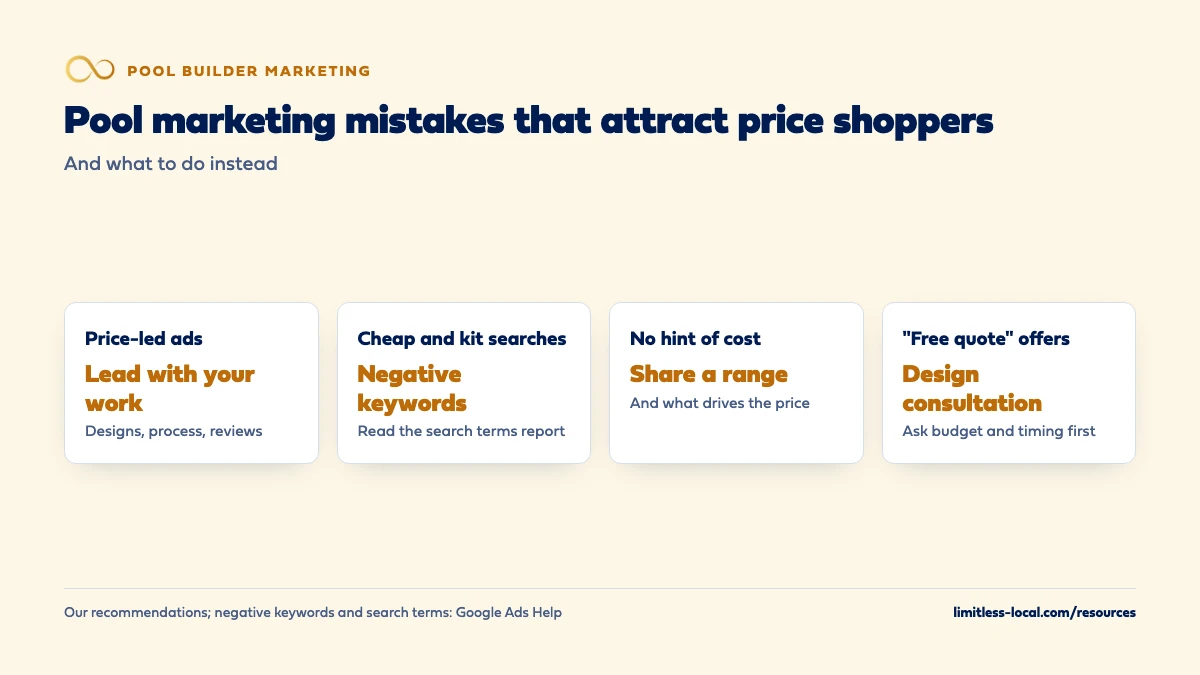
Lead with what you build and why homeowners choose you instead: your designs, your process, your warranty, your reviews and how long you’ve been building in their area.
Mistake 2: Paying for searches that signal a different buyer
Some searches mean someone wants a different product, not your pool. Searches for above-ground pools, pool kits, cheap or DIY pools, or used equipment usually come from homeowners shopping for something you don’t sell. In our view, those are prime candidates to exclude.
Google’s page on negative keywords says they let you exclude search terms from your campaigns, and suggests looking for terms similar to your keywords that cater to people searching for a different product, using the example of an optometrist excluding “wine glasses.” Be careful with cost searches: “how much does an inground pool cost” can be serious early research, and in our judgement it’s often worth answering on your website rather than blocking. Negative keywords for pool builders has the full list to start from.
Mistake 3: Never checking what your ads actually showed for
Your keywords aren’t the searches your ads appear on. Google’s page on keyword matching options says broad match, the default, can show ads on searches related to your keyword, including searches that don’t contain its direct meaning. That’s useful for reach and expensive if nobody looks.
Google’s search terms report shows the actual searches that triggered your ads, and Google suggests adding irrelevant ones as negative keywords so your ads stop showing to people looking for something you don’t sell. In our judgement, a pool builder running search ads should read that report at least monthly, and weekly in the first months of a campaign. Choosing which searches to pay for in the first place is the other half of the job.
Mistake 4: Hiding every hint of what a pool costs
It sounds backward, but in our view saying nothing about cost attracts more price shoppers, not fewer. When a homeowner can’t find any sense of cost, they book a meeting just to find out, and you spend an evening designing for someone whose budget was never close.
You don’t need a price list. Say what your typical projects range from, what drives the cost up or down (size, shape, finishes, decking, features, site work) and which projects you don’t take on. The homeowners who can’t get near your range will mostly stop there. What a pool builder website should include covers where that information fits on the site.
Curious what your marketing is actually booking?
Get a free visibility audit — no obligation, no sales pitch.
Mistake 5: Offering a "free quote" instead of a design consultation
Words set expectations. “Free quote” tells a homeowner they’ll get a number, and a number is easy to compare. “Design consultation” tells them they’ll get time with someone who will design a pool for their yard, which is harder to compare and closer to what you actually sell.
In our judgement, the change works best when the consultation lives up to its name: you walk the yard, ask how they’ll use it, and sketch with them. Describe on your website what happens in the consultation, so homeowners who only want a price for a standard shape know before they book.
Mistake 6: Running social lead forms built for volume
Facebook and Instagram lead forms can fill your inbox with people who tapped a button while scrolling. Meta’s page on instant form types describes the default “more volume” form as designed to generate a larger number of leads, and a “higher intent” form that adds a note that your business may follow up and a review screen where people confirm their information. Meta says those features help prevent submissions from people who are only marginally interested, and that the higher intent form may make more sense if every lead needs follow-up or further qualification. It also notes the higher intent form only runs in Facebook and Instagram feeds on mobile.
For a pool builder, in our view, that trade of fewer leads for more intentional ones is usually worth testing, along with one or two questions about project type and timing.
Mistake 7: Booking every inquiry without asking about budget or timing
If your form asks for a name and a phone number and your first call books whoever answers, the calendar fills with consultations that end on price. A few questions up front change that: what kind of project, when they hope to swim, roughly what they’ve budgeted or whether they plan to finance, and who will make the decision.
The goal isn’t to interrogate anyone. It’s to find out, before a designer drives across town, whether this homeowner wants a pool designed or a number to compare. Qualifying pool leads before the consultation covers the questions and how to ask about budget without scaring good homeowners off.
Mistake 8: Showing work that doesn't match the pools you want to sell
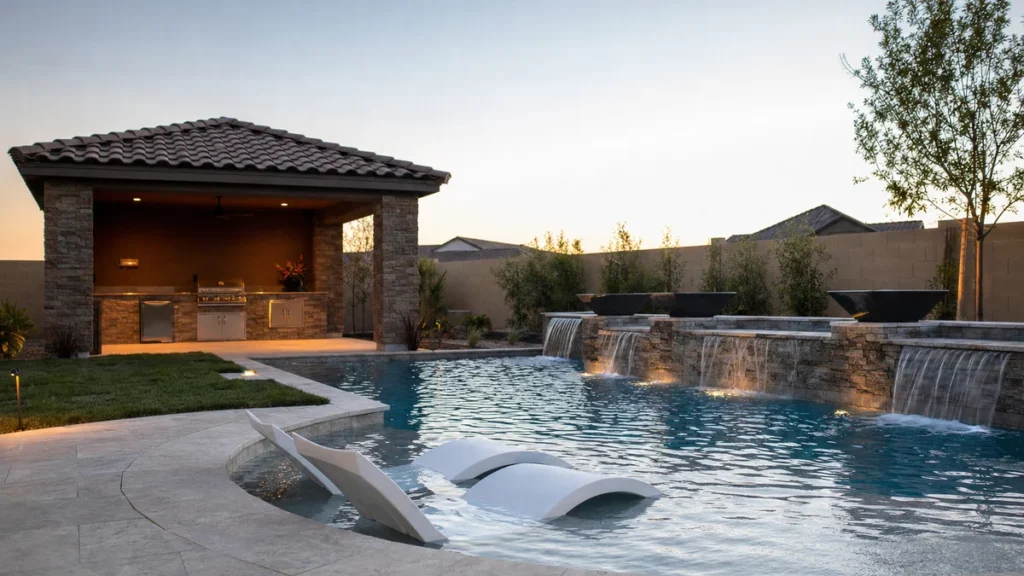
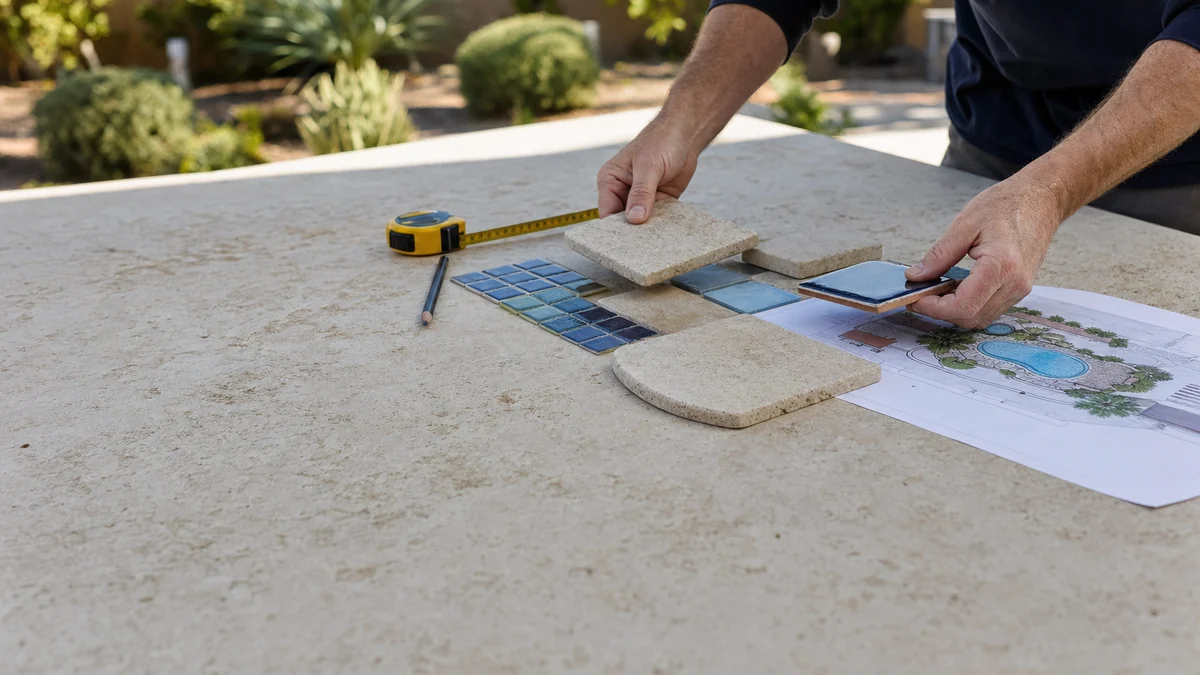
Your photos tell homeowners what you are. In our judgement, a gallery full of basic rectangles brings inquiries for basic rectangles, and a builder who wants custom work has to show custom work: finished backyards, outdoor living, the details that took time. Write a short story for each project about the yard, the problem and what you built.
The same goes for reviews. Reviews that mention communication, design help and how the build went say more about value than reviews that only say “great price.” If you’re moving toward higher-end work, positioning your pool company as a premium builder goes further.
Mistake 9: Competing on price once the proposal is out
A builder who cuts the price the moment a homeowner mentions a cheaper bid teaches that homeowner, and their neighbors, that the first number was never real. In our view, the better answer is to compare scope: offer to go through the other bid line by line, so the homeowner can see what’s included, what’s an allowance and what’s missing.
Sometimes the cheaper bid really is a different, smaller project, and that’s fine to say. Often it isn’t. Turning consultations into signed contracts covers how a clear proposal with inclusions and options makes that comparison easier.
How do I tell whether price shoppers are really my problem?
Count, don’t guess. For every consultation, record whether it signed and, if not, why: price, timing, chose another builder, project on hold or went quiet. If “price” dominates the lost reasons, look at which lead sources those homeowners came from. One channel sending most of the price-only leads points to a targeting or messaging problem in that channel, not across all your marketing.
Also watch the cost per signed contract by source, not the cost per lead. A channel with cheap leads that rarely sign can be the most expensive one you run. Tracking which marketing produces signed contracts shows how to keep the source attached until the contract is signed.
Not sure which of these is costing you jobs?
A free visibility audit checks the Google profile, reviews, site and tracking, and shows what to fix first.
What's different about price shoppers in pool construction
Every pool is a different price. Yard, access, size, finishes and features make two “standard” pools very different projects. That’s why a single advertised number attracts the wrong expectations, and why ranges and cost drivers work better.
Homeowners usually get more than one bid. Comparing builders is normal for a purchase this size. The goal isn’t to stop comparison; it’s to be compared on design, process and trust, not just the bottom line.
A consultation is expensive to give. Every price-only consultation costs a designer’s evening plus the design work after it. Filtering earlier saves more for a pool builder than for a trade that sends a tech for a one-hour visit.
Payment-led ads have their own pull. An ad built around a low monthly payment can attract payment shoppers. Under Regulation Z, § 1026.24, a credit ad that states the amount of a payment must also state other terms, including the annual percentage rate. That’s general information, not legal advice; get the wording from your lender first.
A worked example: what filtering price shoppers saves
These numbers are made up to show the math, not a benchmark for your market. Say a pool builder runs 50 design consultations in a season and 14 of them end on price alone. Each consultation, with the drive, the meeting and the design work afterward, takes the owner or a designer about six hours.
Now say sharing a realistic range on the website and on the first call filters 10 of those 14 out before the meeting. That’s 60 hours handed back in a season, time that can go into the consultations most likely to sign.
The ad side works the same way. If a pool builder spends $4,000 a month on Google Ads and the search terms report shows $600 of it went to searches for cheap, above-ground or kit pools, that’s 15% of the budget buying the wrong inquiries. On our side, Google Ads management is in every package, with Essentials covering up to $2,500 a month in ad spend and Growth up to $5,000; the ad spend itself is paid directly to Google.
Frequently asked questions
Should I refuse to give a price over the phone?
No. Give a realistic range for the kind of pool they describe and explain what moves it. Refusing to talk about money sends serious homeowners to builders who will, and a range filters out the ones who can’t get close.
Is everyone who asks about price a price shopper?
No. Most homeowners don’t know what a pool costs, and asking is reasonable. A price shopper is someone who sees no difference between builders and wants the lowest number for the same thing.
Will advertising financing bring in fewer price shoppers?
It can shift the conversation from total price to what fits the household budget, but payment-led ads attract their own shoppers and can trigger federal disclosure rules. Advertising pool financing covers how to do it carefully.
What should I do when a homeowner shows me a cheaper bid?
Offer to compare the two line by line: what’s included, what’s an allowance, and what’s missing. If the other bid really is a smaller project, say so; if it’s the same project, explain what your price buys.
Should I cut back my ads to get fewer price shoppers?
Usually not across the board. Cutting spend cuts serious homeowners along with price shoppers. Fix who the ads reach and what they say first, then judge each channel by its cost per signed contract.
Will raising my prices scare off price shoppers?
Prices alone rarely change who calls; the message does. In our judgement, raising prices without changing what your ads, website and first call say mostly loses deals you would have won.
Key takeaways
- Price shoppers are mostly a messaging problem: marketing teaches homeowners what to compare you on.
- Drop price-led ads and “free quote” offers; lead with your designs, process and reviews.
- Exclude searches for cheap, above-ground and kit pools, and read the search terms report regularly.
- Share a realistic range and what drives cost, and ask about budget and timing before booking a consultation.
- Track lost reasons and cost per signed contract by lead source to see which channel sends price-only leads.
Want a second set of eyes on your setup?
We'll look at how you show up locally and where calls are leaking, then send you a plain-English breakdown.
More in this section
- How do pool builders keep leads coming in the off-season?
- How do pool builders qualify leads before the design consultation?
- How do pool builders turn design consultations into signed contracts?
- What keywords should a pool builder target?
- How can pool builders get referrals from landscapers and builders?
Sources
- Advertising FAQ's: A Guide for Small Business — Federal Trade Commission
- About negative keywords — Google Ads Help
- About keyword matching options — Google Ads Help
- About the search terms report — Google Ads Help
- About instant form types — Meta Business Help Center
- § 1026.24 Advertising (Regulation Z) — Consumer Financial Protection Bureau