
Can one in-house person keep up with storm restoration marketing?

- Is one marketing hire enough for a restoration company in storm season?
- What does a storm actually ask of restoration marketing?
- Where does one in-house person run out of hours?
- What should be ready before storm season starts?
- Who should answer the phones when a storm hits?
- How should ad budgets change during a storm, and who decides?
- Can storm ads mention the storm by name?
- What Google Business Profile updates matter during a storm?
- What slips first when one person does it all?
- When does storm marketing need a second person or outside help?
- What should the in-house person do after the storm?
- What's different about storm marketing for restoration companies
- A worked example: one in-house marketer on a surge day
- Frequently asked questions
- Key takeaways
- More in this section
- Sources
The short version
- The marketing side of a storm takes a short block of time each day.
- Answering calls and callbacks takes many hours; give that job to someone else.
- Prepare budgets, pages, call routing and a triage script before the season.
- Cut budgets the day crews fill up, and review after every storm.
For restoration owners with one in-house marketing person who want to know whether that’s enough when a storm turns a quiet week into a flood of calls.
Get a free visibility audit · Book a growth call
Is one marketing hire enough for a restoration company in storm season?
One in-house person can keep up with storm restoration marketing if the plan is built before the storm and someone else owns the phones. During a surge, the marketing itself is a short daily list: raise and then cut ad budgets, update Google Business Profile hours and posts, check search terms and pull back once crews are full. Where one person runs out of hours is answering calls, booking inspections and calling back leads at the same time, so hand call handling and overflow to another person or an answering service, and have budget levels, pages and routing ready before the weather turns.
Storm seasons are where planning pays off, and it’s why our restoration marketing work starts with the foundation: tracking, follow-up and a clean online presence, before turning on lead flow. Our Growth package ($4,500 a month) runs Google Ads up to $5,000 a month in spend and manages Local Services Ads, with a dedicated account manager, so your in-house person can focus on the phones, photos and reviews. After-hours answering plugs in as an add-on to any package. The restoration marketing guide covers every channel, and the rest of the restoration marketing questions library goes question by question.
What does a storm actually ask of restoration marketing?
Less than most owners expect, as long as it was planned. The marketing side of a storm is a short list of jobs, spread over four stretches:
- Before the season: a budget plan, pages for the storm-related services you do, Google Business Profile hours you can stand behind, call routing and a triage script.
- When the storm hits: raise budgets on the campaigns for the work you want, check that ads point to the right pages, update hours and post an update on your profile.
- At the peak: watch spend and lead quality a couple of times a day, and cut budgets the moment crews are booked out.
- After: bring budgets back to normal, ask storm customers for reviews and tag storm leads so they don’t distort your regular numbers.
None of that is a full-time job on its own. What makes a storm overwhelming is everything around it: the calls, the callbacks, the scheduling and the customers waiting to hear when a crew is coming.
Where does one in-house person run out of hours?
At the phones. A marketer who is also the person answering calls during a surge stops doing marketing within the first few hours, because a ringing phone always wins. Then the things that need a calm hour quietly stop: checking the search terms that are eating the budget, pausing ads once crews are full, calling back forms and messages, logging where each lead came from.
The cost shows up in two places. Ad money keeps flowing after you can’t take more work, and leads that did come in go cold because nobody called them back. Both are worse in a storm, because clicks often cost more and homeowners call several companies at once.
So the realistic answer is one person can keep up with storm marketing. One person can’t also be the storm call center. Split those two jobs before the season, even if the second job goes to the owner, an office manager or an answering service.
What should be ready before storm season starts?
Everything that takes thinking. A surge is no time to write a landing page or decide how much you’re willing to spend.
- A three-level budget plan for each campaign: normal, surge, and crews full. Write down who can move between them and what triggers each change.
- Automated changes. Google Ads automated rules can enable or pause ads and adjust budgets on a schedule or on conditions you set. Google notes that rules run within 2 hours after their scheduled time, so they’re a backstop, not a stopwatch.
- Pages for storm-related work: water damage, roof-leak water damage, flooding and frozen pipes, whichever fit your area, each with a phone number that’s easy to tap.
- Call routing and overflow: who answers first, who answers second, and where calls go when everyone’s busy.
- A short triage script so whoever answers asks the same questions and logs every caller in one list.
Handling marketing during storm season covers the full season plan step by step.
Who should answer the phones when a storm hits?
Anyone but the person running the marketing. That can be the owner, an office manager, technicians who are between jobs, or an answering service on overflow. What matters is that calls get answered and every caller lands on the same list with a promised callback time.
Missed calls cost more than the lost job when you’re running Local Services Ads. Google’s page on how Local Services Ads leads work says a valid lead includes a call you missed during your business hours if the caller stays on the line for more than 20 seconds, so unanswered storm calls can still be charged. Messages and voicemails count as leads too.
If you can’t answer, reduce what you’re paying for: tighten hours, lower budgets or pause the campaign until the phones are covered. Handling a storm call surge without missing jobs covers overflow routing and triage in detail.
Curious what your marketing is actually booking?
Get a free visibility audit — no obligation, no sales pitch.
How should ad budgets change during a storm, and who decides?
The owner decides in advance; the in-house person carries it out. Agree on the surge budget, the ceiling you won’t go past and the signal for cutting back, usually how many days out your crews are booked. Then the marketer doesn’t need to find the owner on a roof to get a yes.
Know how your budgets behave. Local Services Ads are moving into Google Ads as Performance Max campaigns with pay-per-lead goals, and Google’s transition page says budgets there become daily averages, with monthly spend capped at the daily average budget times 30.4 and daily spend able to run higher on busy days. You can pause the campaign and turn it back on from its settings when you want leads again.
Raise budgets early in the storm rather than after the phones are already ringing, and cut them the same day crews fill up. Paying for clicks you can’t serve is the most common way storm marketing loses money. Why restoration ad costs spike in storms and freezes covers what happens to click prices.
Can storm ads mention the storm by name?
Be careful. Google’s sensitive events policy applies to events like natural disasters, and the examples it prohibits include using keywords related to a sensitive event to drive additional traffic, and price gouging. Keep your ads on the services people search for, like water damage restoration or emergency water extraction in your towns, not on the storm’s name.
Keep the wording calm and specific: what you do, the towns you cover and how fast you can realistically get there. Homeowners are being warned about storm-chasers at the same moment. The FTC’s advice on avoiding scams after weather emergencies tells people to be skeptical of anyone promising immediate clean-up or repairs, to walk away from anyone who wants cash up front, and never to sign an insurance check over to a contractor. Ads and pages that sound like the opposite of that, with a real address, real photos of your crews and a written estimate, are the ones that get the call.
What Google Business Profile updates matter during a storm?
Three, and each takes minutes:
- Hours you can actually answer. If you’re adding night or weekend coverage for the storm, Google lets you set special hours for a temporary change of up to 6 days in a row without touching your regular hours. Once your Local Services Ads have moved into Google Ads, your profile’s business hours sync one way to the campaign, so the profile is the place to change them.
- A short post. Say you’re taking water damage calls in your towns and how to reach you. Skip disaster photos.
- Review replies. Reply to new reviews when you can, even briefly. It shows the business is active.
What doesn’t belong on the list: changing your business name, primary category or address in a hurry. Changes like those can trigger a verification review and pause your Local Services campaign, which is the last thing you want during a storm.
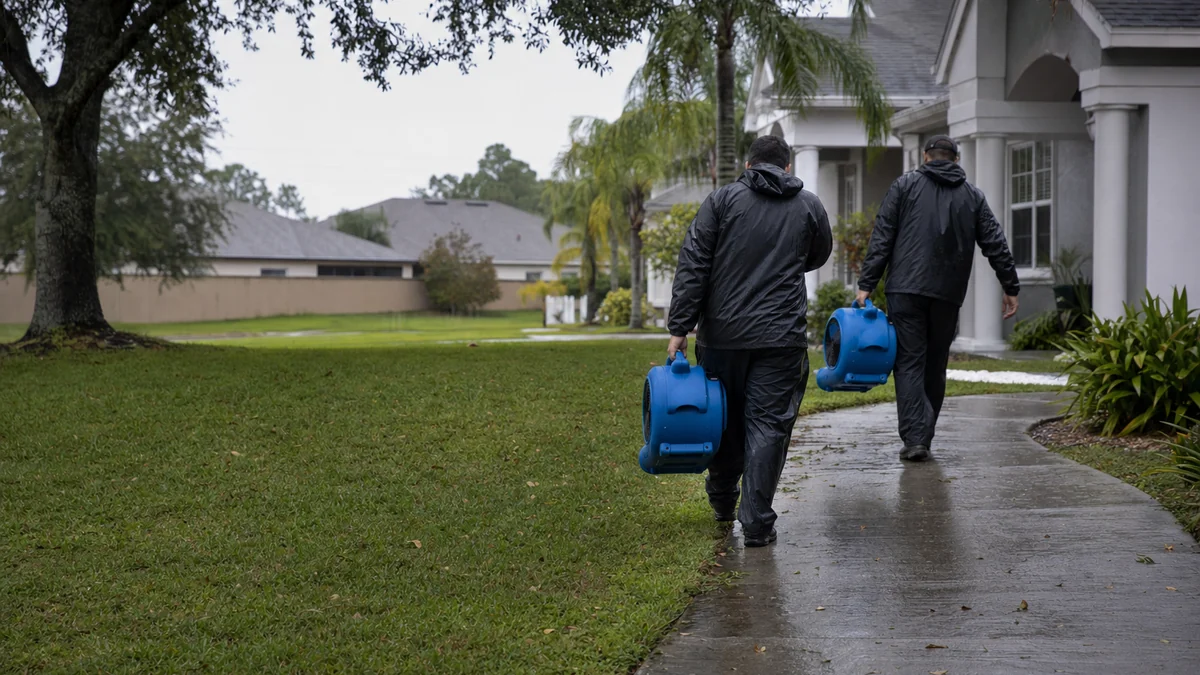
What slips first when one person does it all?
The work that doesn’t ring:
- Callbacks on forms and messages. They sit while the phone keeps ringing, and by the time someone calls, the homeowner has booked someone else.
- Search term checks. Surge traffic brings odd searches, and nobody is cutting them.
- Pausing on time. Budgets stay at surge level a day or two after crews are full.
- Lead tracking. Calls stop getting tagged with a source and job type, so the storm’s results can’t be judged afterward.
- Review requests. Storm customers are some of your best review prospects, and they’re the easiest to forget.
If you can only protect two, protect callbacks and pausing on time. One saves jobs, the other saves money.
When does storm marketing need a second person or outside help?
One in-house person stops being enough when any of these is true:
- Surges last days at a time and come several times a season.
- You run more than one paid channel, or ads in more than one market.
- The marketer is also the office’s backup on phones, scheduling or estimates.
- There’s nobody else who knows the accounts if that person is sick or on vacation.
The fix doesn’t have to be a second marketer. Common splits are an answering service on overflow, a part-time office hand for callbacks, or an agency running the ads while the in-house person owns the Google profile, reviews, photos and follow-up. Comparing an in-house marketer with an agency goes through the costs, and what marketing can wait until you have a bigger team helps decide what the one person should drop.
What should the in-house person do after the storm?
A short wrap-up that pays off next time:
- Bring budgets back to normal and remove any special hours that have ended.
- Send review requests to every storm customer whose job is done.
- Tag storm-period leads and jobs so they don’t inflate your normal monthly numbers.
- Write down what broke: calls that went unanswered, budgets that stayed up too long, pages that were missing.
- Fix the plan for the next storm while it’s fresh.
That review is the part that makes one person enough. Each storm is easier to run if the last one left notes.
Want to see where your company stands?
A free visibility audit shows where you show up on Google, Maps and AI answers, and what it's costing you in calls.
What's different about storm marketing for restoration companies
Demand arrives all at once. Most trades see seasons; restoration companies see a quiet week turn into hundreds of calls in a day. Plans have to be in place before the weather, not built during it.
Crews fill up before budgets do. In a surge, the limit is almost always people and drying equipment, so the most valuable marketing move is often turning ads down, not up.
Homeowners are wary. Storm-chasers and scams make people cautious, so calm, local, specific messaging beats urgency.
Storm months distort the numbers. Close rates and costs during a surge aren’t normal. Keep them separate when you judge your regular marketing.
A worked example: one in-house marketer on a surge day
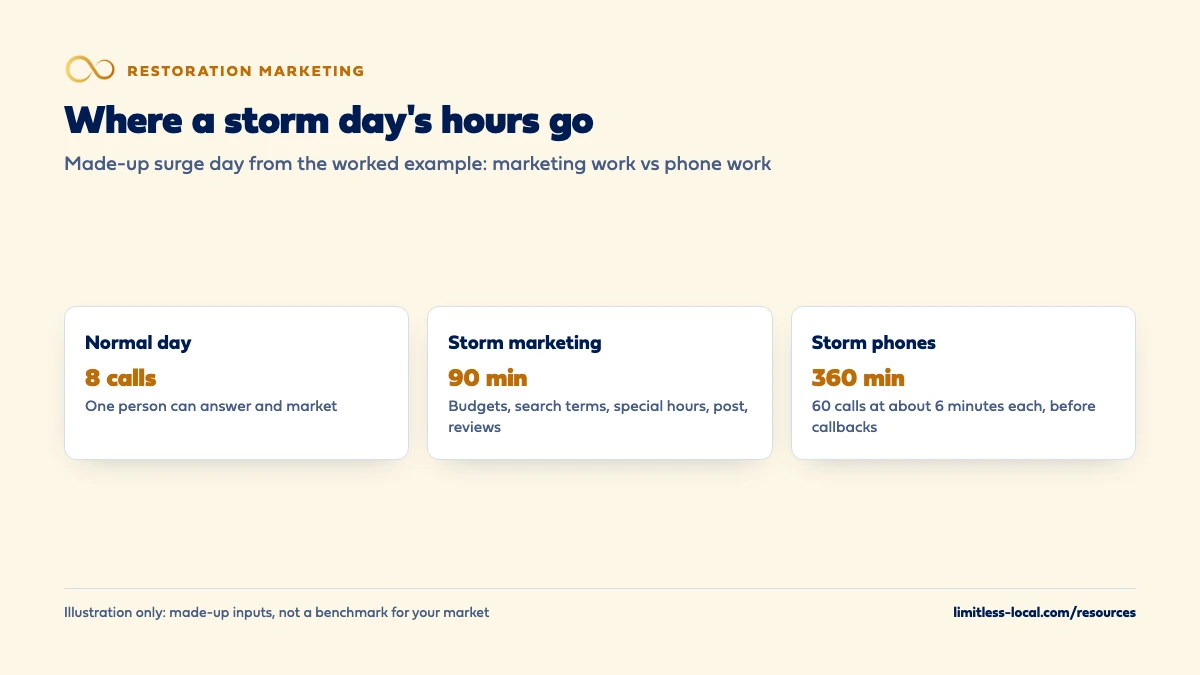
These numbers are made up to show where the hours go, not a benchmark. Say a normal day brings 8 calls, and the first full day after a big storm brings 60.
The marketing work on that day: raising budgets on two campaigns, checking search terms twice, setting special hours, posting a profile update, replying to a few reviews and checking spend in the late afternoon. Call it about 90 minutes.
The phone work: 60 calls at about 6 minutes each for answering, triage and logging is 360 minutes, or six hours, before a single callback or scheduling change.
One person can do the 90 minutes of marketing well. One person can’t do the six hours of phones and the marketing in the same day, and when they try, the marketing is what gets dropped. In this example the fix is simple: the in-house person owns the 90 minutes, and the owner, an office manager or an answering service owns the phones.
Frequently asked questions
Should our in-house marketer work storm nights and weekends?
Only for short checks on budgets and spend, which automated rules can mostly cover. Night and weekend coverage is a phone job, and it should be planned as one.
Can an answering service take storm calls for a restoration company?
Yes, as overflow. Give it the same triage script your office uses and one shared list for every caller, so nobody gets lost between the service and your team.
Should we pause all ads during a storm because we'll be busy anyway?
Not at the start. Early in a storm, ads help you get the jobs you want. Cut them when crews are booked out, and bring them back as soon as you have room.
Can we run storm ads in a town where we don't normally work?
Only if you can actually serve it well and quickly. Ads in places your crews can’t reach fast tend to bring leads you can’t close and reviews you don’t want.
What should our in-house person track during a storm?
Calls, forms and messages by source, which ones booked, and daily spend per campaign. Keep the storm period labeled so it doesn’t skew your normal monthly numbers.
Key takeaways
- Storm marketing itself is a short daily list; the phones are what swamp one person.
- Split marketing and call handling before the season, even if the phones go to the owner or an answering service.
- Set budget levels, automated rules, pages, routing and a triage script before the weather turns.
- Keep ads on your normal service keywords, not the storm’s name, and keep the wording calm and specific.
- Cut budgets the day crews fill up, and run a short review after every storm.
Not sure what's working right now?
Start with a free visibility audit: rankings, Google profile, reviews and tracking, checked against your service area.
More in this section
- How should a restoration company handle marketing during storm season?
- What skills do I need to hire to run restoration marketing in-house?
- Should a restoration company hire an in-house marketer vs agency?
- How do I keep marketing steady while hiring restoration techs?
- How much of my time does managing a restoration marketer take?
Sources
- Common ways to use automated rules — Google Ads Help
- How leads work — Local Services Help
- Local Services Ads transition to Performance Max campaigns with pay-per-lead goals — Google Ads Help
- Sensitive events — Advertising Policies Help
- How to set Special hours — Google Business Profile Help
- How To Avoid Scams After Weather Emergencies and Natural Disasters — FTC Consumer Advice