
How fast should an HVAC company respond to new leads?
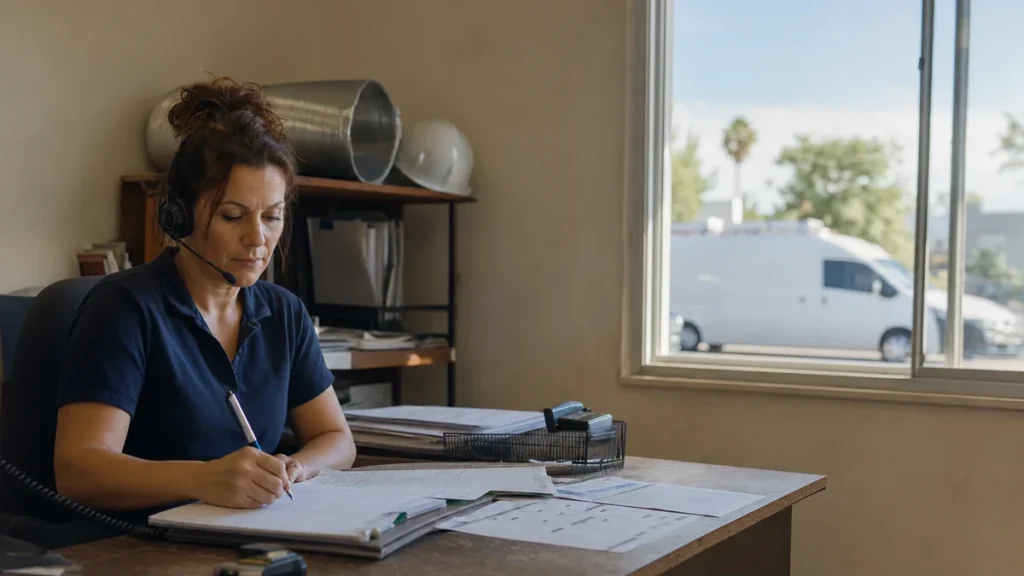
- What's a good lead response time for an HVAC company?
- What does a fast response actually mean for an HVAC lead?
- Why does a few minutes make that much difference?
- What should happen when we miss a call?
- How fast do web forms and text messages need an answer?
- How should we handle leads that come in after hours or on weekends?
- What follow-up sequence should we use when a lead doesn't answer?
- How should we follow up on estimates that haven't booked?
- Who should own lead response at a 3-truck HVAC shop?
- Who should own lead response at a fifteen-truck HVAC shop?
- Which tools help: missed-call text-back, an answering service or a CRM?
- How do we measure our lead response time?
- What's different about lead response for HVAC companies
- A worked example: what slow callbacks cost in a hot week
- Frequently asked questions
- Key takeaways
- More in this section
- Sources
The short version
- Business hours: answer live, and call back missed calls and web forms within five minutes.
- After hours: an instant automatic text, then a person calls first thing the next morning.
- No answer: a short call-and-text sequence over about a week, then close the lead.
- Measure the time to first real human contact, not the time to the auto-text.
For HVAC owners setting a response standard for calls, web forms, texts and after-hours leads, plus a follow-up routine the office can actually keep.
Get a free visibility audit · Book a growth call
What's a good lead response time for an HVAC company?
An HVAC company should reach a new lead within five minutes during business hours: answer calls live, call back missed calls right away, and call or text web-form and message leads within minutes. After hours, send an automatic text the moment a call is missed and have a person follow up first thing the next morning, sooner for no-heat or no-cool emergencies. If the homeowner doesn’t answer, keep following up on a set schedule for about a week. Speed matters because the odds of reaching a lead drop sharply within the first hour, and Google counts responsiveness when it ranks Local Services Ads.
Speed to lead is where a lot of HVAC marketing money quietly leaks out, so it’s part of how we judge results for the HVAC companies we work with: what did each booked job cost, and how many leads never got a real answer? An HVAC client got 47% more booked estimates from speed to lead, automated reminders and better follow-up. That’s a past result for one client, not a forecast for yours. After-hours answering, unified messaging and calendar reminders are automation add-ons that plug into any of our HVAC marketing packages. The HVAC marketing guide shows where follow-up fits with the other channels, and the rest of the HVAC marketing questions library goes question by question.
What does a fast response actually mean for an HVAC lead?
Fast means a real person reaches the homeowner within minutes, not hours. Each way a lead comes in has its own version of that standard:
- Phone calls during business hours: answered live. If a call is missed, someone calls back within five minutes.
- Web forms: a phone call within five minutes of the form being submitted. If nobody picks up, a text and an email right after.
- Texts and message leads (from your website, your Google Business Profile or Local Services Ads): a reply within minutes during business hours, from a person, not just an auto-reply.
- After hours and weekends: an automatic text the moment the call is missed or the form comes in, telling the homeowner when they’ll hear from you, then a real callback first thing the next morning. Emergencies go to whoever is on call.
The five-minute line is our standard, not a law of nature. It’s set where it is because of how quickly the odds of reaching someone fall off, which the next section covers.
Why does a few minutes make that much difference?
Two things work against a slow callback. The first is the homeowner: someone whose AC just quit is usually still holding the phone after filling out your form, and an hour later they’ve often called someone else.
The research behind speed-to-lead is older than most owners expect, and it wasn’t done on HVAC, so treat it as a direction and not a benchmark. A 2007 lead response study by InsideSales.com and MIT researcher James Oldroyd looked at web-form leads across six companies and found the odds of reaching a lead dropped 100 times when the first call came at 30 minutes instead of within 5. It measured whether a lead was reached and qualified, not whether a job was sold. Oldroyd and colleagues later wrote in Harvard Business Review that most companies weren’t responding to online leads nearly fast enough.
The second is Google. For Local Services Ads, Google says your responsiveness to customer inquiries is part of how likely your ad is to produce a lead, which feeds your ranking, and that missed calls may hurt your responsiveness. Its lead management guide recommends responding to leads as soon as they come in and says a consistently fast response time could improve your ad’s ranking. More on that in whether LSAs are worth it.
What should happen when we miss a call?
A caller is the hottest lead you get. When you miss one, three things should happen:
- An automatic text goes out right away. Something like: “Sorry we missed you, this is [Company] Heating & Air. We’ll call you back in a few minutes. If it’s a no-heat or no-cool emergency, reply HELP.” Always name the company so the homeowner knows who’s texting.
- A person calls back within five minutes. The text buys you a little time; it doesn’t replace the call.
- The call gets logged, answered or not, so it enters your follow-up sequence instead of sitting in a call log nobody checks.
Know the limits of the auto-text. CallRail, for example, notes that a caller on a landline won’t receive the text, and a caller who hangs up within 15 seconds is classed as abandoned and doesn’t get one. It also requires you to register for text messaging compliance before automated texts go out. That’s why the callback still matters.
If you run Local Services Ads, a missed call can also cost you money: Google counts a missed call during your business hours as a valid, chargeable lead once the caller stays on the line for more than 20 seconds. That lead counts against your budget whether or not you call back, so call back.
How fast do web forms and text messages need an answer?
Treat a web form like a missed call. The homeowner raised their hand a minute ago; call within five minutes, and if they don’t pick up, send a text and an email so they have your name and number in writing.
Text and message leads are growing because homeowners can now reach you that way from more places. Businesses with a verified Business Profile can add a text messaging or WhatsApp option to their contact info, though Google says it’s only available in select regions. Local Services Ads can send you message leads too, and Google notifies you by email, text or both, and lets you reply straight from the notification.
Google also puts your speed on display. Once you’ve had 2 or more message leads in the last 90 days, your Local Services ad may show an estimated message response time, anywhere from “a few minutes” to “one day”. Google calculates it from your average response during your listed business hours, or between 7 AM and 9 PM if you haven’t set hours, according to its guide to managing leads. A homeowner comparing three ads will notice which one says minutes.
How should we handle leads that come in after hours or on weekends?
Split after-hours leads into two groups and set a standard for each:
- Emergencies (no heat in a cold snap, no cooling in a heat wave, water from the air handler): route them to an on-call tech or an answering service that can reach one, and get the homeowner a callback as fast as you’d want one if it were your own house.
- Everything else (tune-ups, quotes, replacement questions): an instant text that says when you’ll call, such as “first thing tomorrow morning”, and then actually call first thing. The first calls of the day should be the overnight leads, before the trucks roll.
If you run Local Services Ads, Google notes that message and booking leads give customers a way to reach you on nights and weekends when you can’t answer the phone. You can also schedule your ad to run only during hours you can cover.
Curious what your marketing is actually booking?
Get a free visibility audit — no obligation, no sales pitch.
What follow-up sequence should we use when a lead doesn't answer?
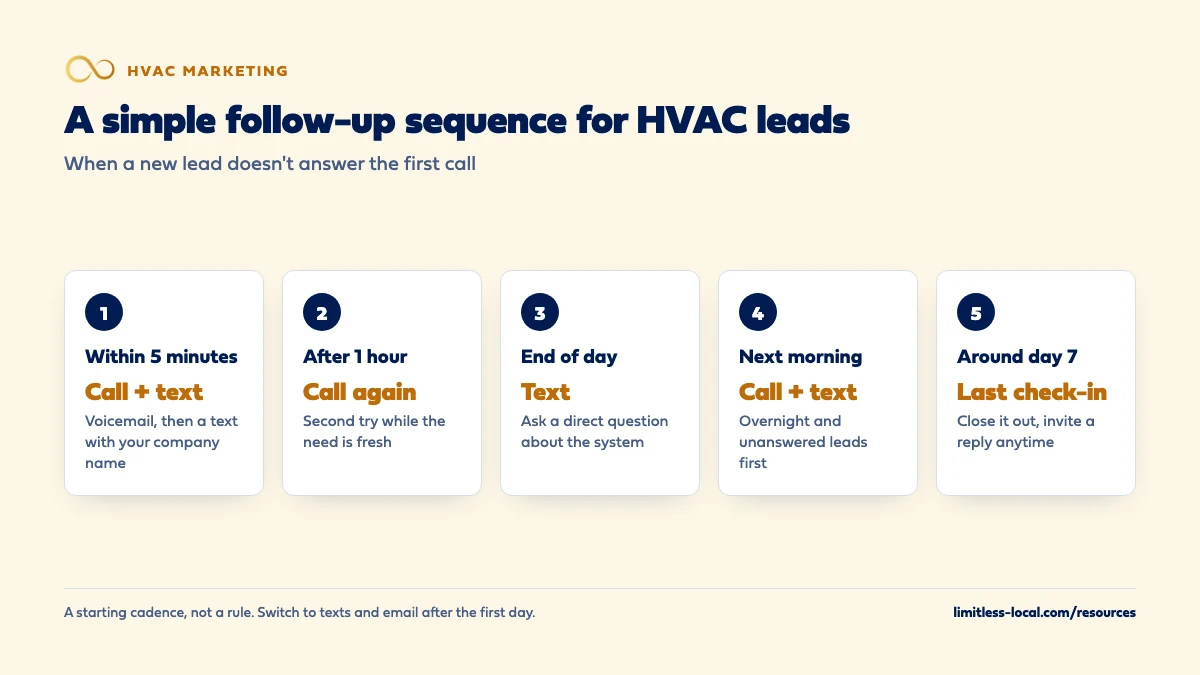
Most leads you can’t reach on the first try are busy, not lost. A simple sequence that works for most HVAC shops:
- Within 5 minutes: call. No answer? Leave a short voicemail and send a text.
- About an hour later: call again.
- End of the same day: a text with a direct question, like “Is the system still down, or did it come back on?”
- Next morning: call, then text if there’s no answer.
- Around day 4: text or email with something useful, such as your next open slot.
- Around day 7: a last check-in: “We’ll close this out for now. Reply anytime and we’ll get you on the schedule.”
Lean on texts and email after the first day instead of more calls. The 2007 study above found that after about twenty hours, each extra call attempt actually hurt the chances of qualifying a lead. Stop when the homeowner books, says no or asks you to stop, and honor that last one right away.
How should we follow up on estimates that haven't booked?
Speed to lead gets you in the door. Estimate follow-up decides whether a replacement quote turns into a job. Replacement buyers often take days to decide and may be comparing quotes, so the cadence is slower and the messages are more useful:
- Same day: send the estimate in writing, with financing or rebate options spelled out.
- 2 to 3 days later: a call from the person who did the estimate, to answer questions.
- About a week later: a text or email checking where they landed.
- A few weeks later: one last check-in, then move them to your seasonal tune-up or maintenance list.
Booked-job reminders belong in the same system. A text the day before the appointment, and another when the tech is on the way, keeps the jobs you’ve already won from turning into no-shows.
Who should own lead response at a 3-truck HVAC shop?
At a small shop, one named person owns it during business hours, usually the office manager, with the owner as the backup. The point of naming someone is that “everybody watches the phone” means nobody does when the shop gets busy.
- Have new-lead calls ring the office and the backup’s cell at the same time, so a call doesn’t die while the office is on another line.
- Turn on missed-call text-back so the homeowner hears from you even when both of you are tied up.
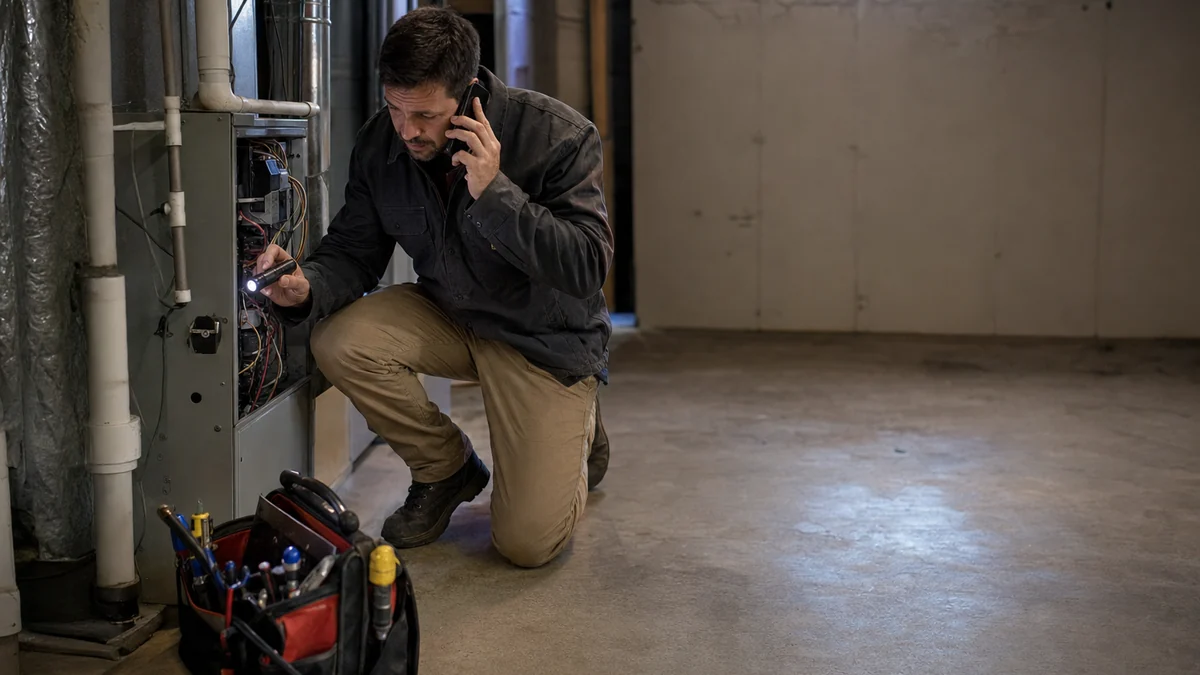
- Keep techs out of the lead-answering loop. A tech in an attic can’t take a sales call well, and the lead deserves better than a callback after the job.
- Decide who covers lunch, sick days and the first heat wave, before you need it. An answering service for overflow is often cheaper than the jobs it saves.
Who should own lead response at a fifteen-truck HVAC shop?
At this size it’s a team job, and the risk changes: calls get answered, but web forms and texts sit in a shared inbox because each person assumes someone else has them.
- Give CSRs or dispatch clear ownership by channel and by shift: who takes calls, who works forms and texts, who checks the overnight leads at open.
- Put every call, text, form and chat in one place, whether that’s ServiceTitan, Housecall Pro, Jobber or a separate lead inbox, so nothing lives only in someone’s personal phone.
- Use overflow routing, such as an answering service or call queue, for peak days, so a heat wave doesn’t turn into a wall of voicemails.
- Have the GM or owner review response times every week. What gets looked at gets done.
If leads are coming in but booked jobs aren’t, it’s worth checking whether follow-up is the problem before blaming the ads.
Which tools help: missed-call text-back, an answering service or a CRM?
Each one fixes a different gap, and most shops end up with more than one:
- Missed-call text-back covers the seconds after a missed call. It’s cheap and quick to turn on, and it’s built into many call-tracking and field-service tools. It doesn’t book jobs by itself; it holds the lead until someone calls.
- An answering service (live people or an AI answering tool) covers the hours nobody’s in the office and the overflow on peak days. Give it clear scripts for emergencies versus routine calls, and get every message handed back in writing.
- A CRM or field-service system (ServiceTitan, Housecall Pro, Jobber and others) covers memory: every lead, every attempt, and what happened. It’s what makes the follow-up sequence and the response-time report possible.
Start with your biggest leak. Missing daytime calls? Text-back and routing first. Answering every call but losing estimates? The CRM and the follow-up sequence.
How do we measure our lead response time?
Measure the time from when the lead came in to the first real human contact: a person on the phone or a personal reply, not the auto-text. Track it separately for calls, forms, texts and after-hours leads, because a great phone average can hide forms that wait until tomorrow.
- Your call tracking. Tools like CallRail keep a timeline of each contact that shows form submissions, calls and text conversations in one place, which makes the gap between a form and your first call easy to see.
- Your Local Services Ads lead inbox, where every call and message lead is recorded, plus the estimated response time Google may show on your ad.
- Your CRM, if leads are logged with a created time and a first-contact time.
No system yet? Once a week, pull your last 25 leads and write down when each came in and when someone first reached them. Then connect speed to results: compare the booking rate for leads reached within five minutes against leads reached later. Tracking whether your marketing pays off covers setting up the calls-to-booked-jobs side.
Not sure which of these is costing you jobs?
A free visibility audit checks the Google profile, reviews, site and tracking, and shows what to fix first.
What's different about lead response for HVAC companies
Weather makes the volume spike. The first heat wave or cold snap can bring more leads in a day than a normal week, right when the office is busiest. Plan overflow coverage before the season, not during it.
Emergencies don’t wait until morning. A no-heat call at night is a homeowner who will keep dialing until somebody answers. Decide in advance what counts as an emergency and who takes those calls.
Repair and replacement move at different speeds. A repair lead is won or lost in minutes. A replacement lead is won over days of follow-up. Your system needs both: a fast first response for everything, and a longer estimate sequence for the big tickets.
Your Google profile is a lead source too. Calls and messages from Maps count as new leads and should get the same speed. Getting more calls from your Google Business Profile only helps if somebody answers them.
A worked example: what slow callbacks cost in a hot week
These numbers are made up to show the math, not a benchmark for your market. Say a hot week brings in 25 leads and 10 of them are calls the office misses while it’s slammed. If those 10 get a callback hours later and 2 of them book, versus a five-minute callback where 4 of them book, the faster response is worth 2 extra jobs that week. At an average repair ticket of $400, that’s $800 in a single week, from the same marketing spend.
The same math works in your favor on paid leads. If those missed calls came from Local Services Ads, you were likely charged for them either way, so the callback is the difference between a lead you paid for and a job you booked. If you’re running ads, how soon Google Ads bring calls matters less than what happens when the phone rings.
Frequently asked questions
Is a missed-call auto-text enough on its own?
No. It tells the homeowner you saw the call and holds their attention for a few minutes, but it doesn’t book anything. A person still needs to call back quickly.
What should the first text to a new lead say?
Your company name, that you got their call or request, when a person will call, and how to flag an emergency. Keep it to two or three short sentences and skip the sales pitch.
How many times should we try to reach a lead before giving up?
A handful of attempts over about a week is reasonable: two or three calls in the first day, then texts or email, then one closing message. Stop right away if they book elsewhere or ask you to stop.
Should the owner's cell phone be the backup line?
At a small shop it often is, and that’s fine as long as it’s a deliberate backup with someone else covering when the owner is on a job, not the only line.
Do we need permission to text leads back?
Replying to someone who just called or filled out your form is different from sending marketing texts, but texting providers still make you register your business before automated texts go out. Ask your provider what’s required, and keep marketing texts to people who opted in.
Key takeaways
- Aim to reach every business-hours lead within five minutes, by a person.
- After hours, send an instant text and call first thing the next morning; route emergencies to whoever is on call.
- Follow up on a set schedule for about a week, leaning on texts and email after day one.
- Google counts responsiveness in Local Services Ads ranking, and missed calls can hurt it.
- Name one owner for lead response per shift, and review response times every week.
Want a second set of eyes on your setup?
We'll look at how you show up locally and where calls are leaking, then send you a plain-English breakdown.
More in this section
- How long does it take an HVAC lead to turn into a booked job?
- How long does HVAC SEO take to bring in calls?
- How should my HVAC office handle incoming calls from new customers?
- How long does it take a new HVAC company to show up on Google Maps?
- How do I keep HVAC calls coming in during slow months?
Sources
- About ad rankings — Google Local Services Help
- Manage leads and jobs — Google Local Services Help
- How leads work — Google Local Services Help
- Chat with customers from your Business Profile — Google Business Profile Help
- Automated responses for missed calls — CallRail Help Center
- Form submission log — CallRail Help Center
- The InsideSales.com/MIT Lead Response Management Study — InsideSales.com and James Oldroyd, MIT (2007)
- The Short Life of Online Sales Leads — Harvard Business Review