
How should a restoration company get more customer referrals?
- How do I get past restoration customers to send me their friends and neighbors?
- Why don't restoration customers refer more on their own?
- Step 1: Do the kind of job people talk about
- Step 2: Ask at the right moment
- Step 3: Decide who asks, and what they say
- Step 4: Make referring easy
- Should I ask for a review and a referral at the same time?
- Should I pay customers for referrals?
- Step 5: Follow up once, then stay in touch
- Which past customers tend to send the most referrals?
- How do neighborhood recommendations online count as referrals?
- How do I track referrals so I know they're working?
- What's different about customer referrals for restoration companies
- A worked example: what asking on every job can add up to
- Frequently asked questions
- Key takeaways
- More in this section
- Sources
The short version
- Referrals start with the job: fast arrival, daily updates and a clean exit.
- Ask at sign-off, when the house is dry and the homeowner is relieved.
- Leave your number behind, and send a short message they can forward.
- Follow up once, then stay in touch a couple of times a year.
- Thank people, don't pay them, and track every referred job.
For restoration owners who want more work from past customers, and a simple way to ask for it on every job without paying for it.
Get a free visibility audit · Book a growth call
How do I get past restoration customers to send me their friends and neighbors?
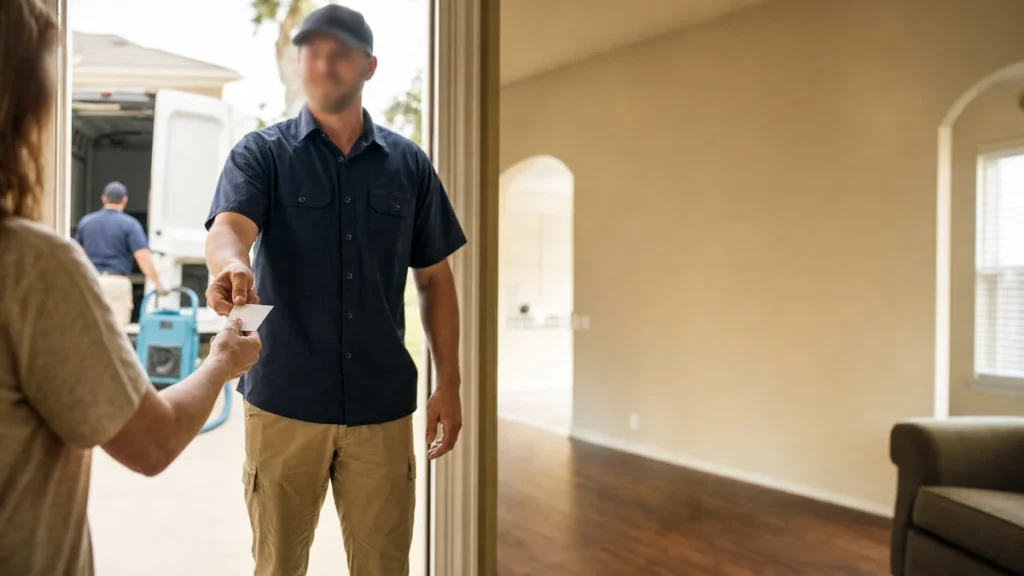
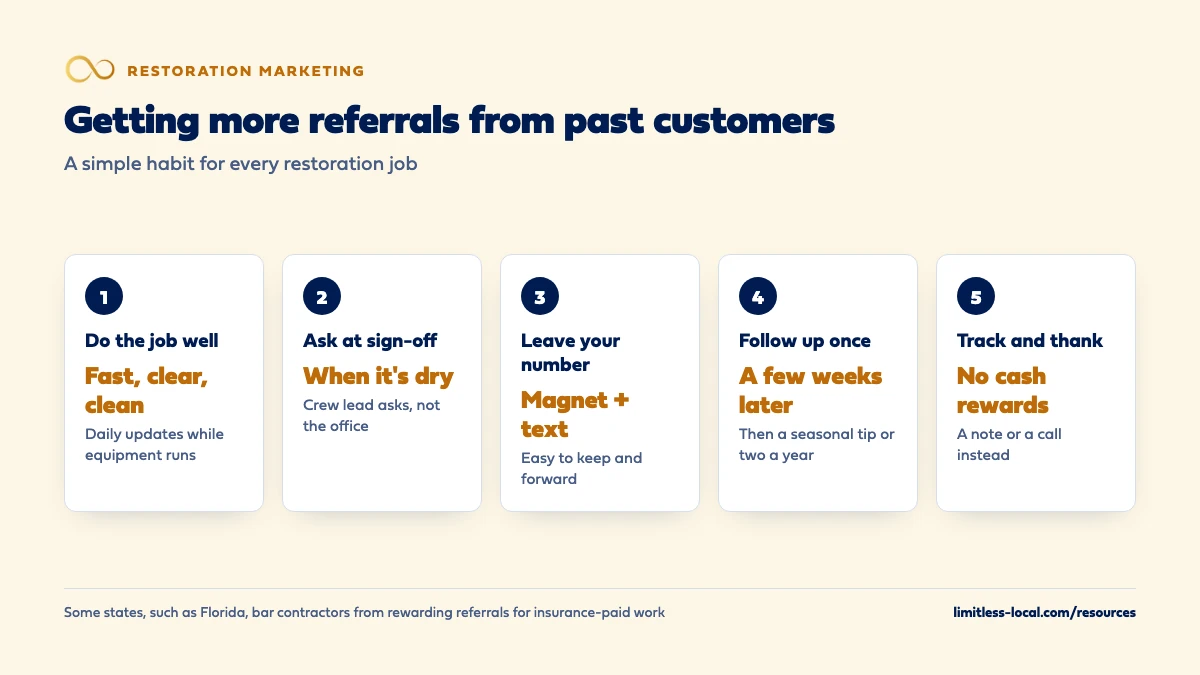
A restoration company gets more customer referrals by doing the kind of job people talk about, then asking for the referral at the right moment, usually when drying is done and the homeowner is relieved. Make it easy: leave a magnet or sticker with your number, send a short thank-you text they can forward, and follow up once when the repairs or paperwork wrap up. Track every referred job in your job software, and thank people with a note or a call rather than cash, since some states, such as Florida, bar contractors from rewarding referrals for work paid by property insurance.
Referrals and reviews come from the same moment on the job, and that’s where our work starts: review requests and responses are in every package, Growth adds advanced review generation, and every package tags each lead by source so referred jobs show up in your reports. See how the packages compare, how it fits restoration companies, and the full channel picture in the restoration marketing guide. More answers are in the restoration marketing questions library.
Why don't restoration customers refer more on their own?
Most restoration customers hire you once, during one of the worst weeks of their year. That’s why referrals don’t just happen:
- They forget your name. Six months later, a neighbor’s basement floods and they remember “the water people” but not who you were.
- They don’t know who needs you. Unlike a lawn service, nobody needs restoration until the day they do.
- The job ended on a messy note. Insurance delays, a missed callback or a crew that left dust behind can wipe out the good memories.
- Nobody asked. The crew packs up, the invoice goes out, and the moment passes.
Each of those has a fix, and none of them costs much. This page covers past customers. For trade partners like plumbers and property managers, see building a referral network with plumbers and property managers.
Step 1: Do the kind of job people talk about
Referrals come from how the job felt, not just how it turned out. On a restoration job, homeowners remember a handful of things:
- How fast someone answered and showed up. The first call sets the tone.
- Being kept in the loop. A short update every day while the equipment runs: what you measured, what’s next, when you’ll be back.
- Respect for the house. Shoe covers, protected floors, equipment cords taped down, a clean exit.
- Help with the paperwork. Photos and moisture readings handed over in a way that makes their insurance conversation easier.
- One person they can call. A crew lead or project manager who knows the job and calls back.
Ask your crews which part of the job customers thank them for most. Then make that part consistent on every job, because a referral program can’t fix a job people didn’t enjoy.
Step 2: Ask at the right moment
Timing matters more than the words. The best moments on a restoration job:
- At dry-out sign-off. The readings say it’s dry, the equipment is leaving, and the homeowner feels relief. That’s the peak.
- When repairs wrap up, if you do the rebuild too. Fresh drywall and paint are something they’ll show off to friends.
- Whenever a customer thanks you. “We really appreciate how fast you got here” is an open door.
And the moments to hold off:
- While the insurance claim is in dispute or a payment is stuck.
- Right after something went wrong on the job, until it’s fixed.
- On the first day, when they’re still in shock.
Build the ask into your job checklist at sign-off, so it happens on every job and doesn’t depend on someone remembering.
Step 3: Decide who asks, and what they say
The person the customer trusts most should ask, usually the crew lead or project manager who was there every day, not the office.
Keep it short and natural. Something like:
- “We’re glad we could get you dried out. Most of our work comes from people like you telling a neighbor or a friend. If you hear of anyone with a leak or a flood, would you pass along our number?”
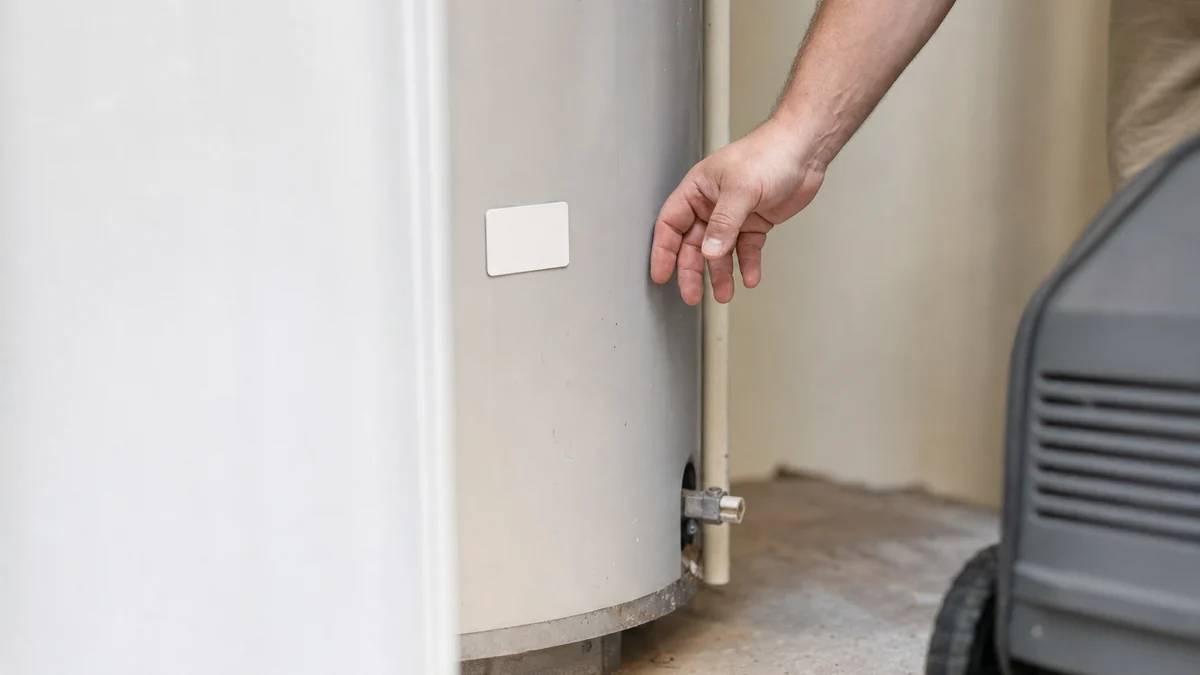
- “Here’s a magnet with our number. Stick it near the water heater or on the fridge. If you or anyone you know has a problem, that’s the number to call, day or night.”
No hard sell, no pressure, no discount offers. You’re asking them to remember you and to pass your name along when it comes up. Make sure the number you hand out reaches a person every time; getting more live inbound calls covers routing so referred callers don’t hit voicemail.
Step 4: Make referring easy
People refer you when it takes no effort. Give them something to hand over:
- Something physical. A magnet, a sticker near the main water shutoff or water heater, or a couple of business cards. It keeps your number in the house for the next emergency, theirs or a neighbor’s.
- A thank-you text after the job with your name, phone number and website in it, short enough to forward as is.
- A thank-you email with the same details and a line like “Know someone with water damage? Forward this.”
- A link to your Google profile, so a friend checking you out sees your reviews.
Some job software helps here. Jobber’s referrals feature, for example, can send automated campaigns asking clients for referrals after a job is completed, gives each client a unique referral link, and tracks the jobs and revenue that referrals bring. The program is built around a referral credit for the client who refers, which is a problem for restoration work, for reasons covered below. You can still mark a new client’s lead source as Referral and add the name of the client who sent them, with no credit involved.
Curious what your marketing is actually booking?
Get a free visibility audit — no obligation, no sales pitch.
Should I ask for a review and a referral at the same time?
Ask for both at sign-off, but keep them as two separate requests, and ask for the review first. A review helps every future customer find you; a referral helps one. And a friend who gets your name will likely look you up, so reviews make every referral land better.
Keep the two apart in one important way: never tie a reward to a review. Google’s help page on requesting reviews with a link or QR code says reviews must reflect a genuine experience, and that offering incentives like free or discounted goods or services in exchange for reviews is considered fake engagement and is strictly prohibited. The same page suggests putting the review link on receipts and in thank-you emails, which fits neatly into the thank-you message you’re already sending.
How a restoration company gets more five-star Google reviews covers the review side step by step.
Should I pay customers for referrals?
No. Skip cash, gift cards and discounts for referrals in restoration.
A lot of restoration work is paid for by property insurance, and some states put rules on rewarding referrals for that work. In Florida, for example, section 489.147 of the state’s statutes says a contractor may not offer, deliver, receive or accept any compensation, inducement or reward for the referral of any services for which property insurance proceeds are payable, with fines of up to $10,000 per violation. Rules vary by state, so don’t assume a referral bonus is fine where you work.
You don’t need rewards anyway. What people want is to look good for recommending you. Ways to thank them that don’t involve money:
- A handwritten thank-you note after the referred job is done.
- A call from the owner saying thanks.
- Letting them know their friend was taken care of.
Step 5: Follow up once, then stay in touch
One ask at sign-off is easy to forget. A light follow-up keeps you in mind:
- A check-in a few weeks after the job. “Just checking everything’s still dry and the repairs are holding up.” It shows you care about the work, and it’s a natural moment to remind them you’re happy to help friends and family.
- A seasonal reminder or two a year. Before winter: how to keep pipes from freezing and where the main water shutoff is. Before storm season: what to do if water comes in.
- A holiday card, if that fits your company.
Keep it useful and rare. Only message people who agreed to hear from you, give them an easy way to stop, and don’t turn every message into an ad. A past customer who gets one helpful tip before the first freeze is far more likely to remember your name than one who gets a coupon every month.
Which past customers tend to send the most referrals?
Not every customer is equally likely to refer. Pay extra attention to these:
- Landlords and property managers who hired you for one unit. They have more units, and they talk to other owners.
- Condo and townhome owners. Water often crosses walls and ceilings, so the neighbors and the association may need help too.
- Real estate agents and investors who used you once. They see water damage in houses all the time.
- Small business owners whose shop or office you dried out. They know other business owners.
- Very happy homeowners, the ones who thanked the crew by name.
For these customers, a personal touch from the owner goes a long way. Property managers in particular can turn into steady repeat work; what property managers look for in a restoration vendor covers how to become their go-to company.
How do neighborhood recommendations online count as referrals?
Many referrals now happen in writing. When someone posts “Who do you use for water damage?” in a neighborhood group, your past customers can answer for you.
- Nextdoor. Its small business page lists getting recommendations from customers among the things a free business account offers. Claim your business page so past customers can recommend you by name.
- Local Facebook groups. Same idea. You can’t control the posts, but a customer who remembers your name will tag you.
- Google reviews. A neighbor who gets your name will check your reviews before calling.
In your thank-you message, you can mention that you’re on Nextdoor and that recommendations there help. Don’t post fake recommendations or ask employees to pose as customers. Real ones carry the weight.
How do I track referrals so I know they're working?
Referred jobs are easy to miss in your numbers, because they don’t come with a tracking number or an ad click. Three habits fix that:
- Ask every caller how they heard about you, and log the answer, including who referred them.
- Use a lead source field in your job software. Housecall Pro’s lead sources let you track where customers found your business on customers, jobs and estimates, and Jobber’s referral lead source records the name of the client who sent them.
- Count referred jobs and revenue every quarter, next to your other channels.
Then use what you learn. If one customer has sent three jobs, they get a call from the owner. If referrals dropped, check whether crews stopped asking at sign-off. Tracking which marketing brings booked restoration jobs shows how referrals fit alongside your other sources.
Not sure which of these is costing you jobs?
A free visibility audit checks the Google profile, reviews, site and tracking, and shows what to fix first.
What's different about customer referrals for restoration companies
One-time customers. Most homeowners need you once, so the referral has to come from memory. Something physical with your number on it does a lot of the work.
Insurance in the background. Much of the work is paid for by property insurance, which is why rewarding referrals is a bad idea and, in some states, against the rules for contractors.
Water travels. In condos, townhomes and apartments, one leak often touches several units, so a job can lead straight to the neighbors.
The best referrers are often businesses. Landlords, property managers and agents who were customers once can send work again and again.
A worked example: what asking on every job can add up to
These numbers are made up to show the math, not a benchmark for your market. Say a restoration company finishes 120 residential jobs a year and starts asking for a referral at sign-off on every one, with a magnet left behind and a thank-you text that’s easy to forward.
If 1 in 10 of those customers sends someone over the following year, that’s 12 referred calls. If about half of them book, that’s 6 jobs. At a made-up average of $5,000 a job, that’s $30,000 in work from a habit that costs a box of magnets and a few minutes per job.
The numbers in your market will be different. The point is that a referral ask is nearly free, so even a small share of customers acting on it is worth having.
Frequently asked questions
Should I offer a discount to customers who refer someone?
Skip it. Much restoration work is insurance-paid, and some states bar contractors from rewarding referrals for that work. A thank-you note or call does the job.
Is it awkward to ask for referrals after a disaster?
Not if you wait for the right moment. At sign-off, when the house is dry, most homeowners are relieved and glad to help.
Should the owner or the crew ask for referrals?
The person the customer saw every day, usually the crew lead or project manager. The owner can follow up with the best customers personally.
How long after the job do referrals usually come in?
Often months later, when a friend or neighbor has their own leak. That’s why leaving your number in the house matters more than a one-time email.
Can I send past customers marketing texts to stay in touch?
Only if they agreed to hear from you, and keep it to helpful, occasional messages with an easy way to stop.
Do referrals from past customers help my Google ranking?
Not directly. But referred customers often leave reviews, and reviews count toward where you show up in Maps.
Key takeaways
- Restoration referrals start with the job itself: fast arrival, daily updates and a clean exit.
- Ask at dry-out sign-off, through the person the customer trusts most.
- Leave a magnet or sticker and send a short thank-you text that’s easy to forward.
- Ask for a review too, but never reward reviews or pay for referrals.
- Log how every caller heard about you and count referred jobs every quarter.
Want a second set of eyes on your setup?
We'll look at how you show up locally and where calls are leaking, then send you a plain-English breakdown.
More in this section
- How should a restoration company market to real estate agents?
- How should a restoration company market a second location?
- How should a restoration company market to commercial properties?
- How can a restoration company get more five-star Google reviews?
- How should a restoration company follow up on leads that don't book?
Sources
- Referrals | Marketing Tools — Jobber Help Center
- Create a Google link or QR code to request reviews — Google Business Profile Help
- Florida Statutes 489.147: Prohibited property insurance practices; contract requirements — The Florida Senate
- Small Business Ads: Promote Locally with Nextdoor — Nextdoor
- How to Use Lead Sources — Housecall Pro Help Center