
How long does SEO take to bring a roofer their first leads?
- How many months until SEO starts bringing in roofing calls, and when do they get steady?
- When does SEO usually bring a roofer the first lead?
- What's the difference between a first SEO lead and steady SEO leads?
- What happens in the first month of roofing SEO?
- What should I see in months two and three?
- When does SEO start bringing consistent roofing calls?
- What makes roofing SEO faster or slower?
- Does the map pack bring leads faster than my website?
- Why do SEO leads take even longer to become signed roofs?
- What should I do for leads while roofing SEO ramps up?
- When should I worry that SEO isn't working?
- What's different about the SEO timeline for roofers
- A worked example: a roofer's first six months of SEO
- Frequently asked questions
- Key takeaways
- More in this section
- Sources
The short version
- Meaningful organic growth typically takes 3-6 months.
- First calls can come sooner, usually from Maps or a narrow town-and-service page.
- A new site, a crowded market and many target towns all stretch the timeline.
- Before the calls, watch impressions and indexed pages in Search Console.
For roofing owners starting SEO, or a few months in, who want to know when the first organic calls should come and what progress looks like before they do.
Get a free visibility audit · Book a growth call
How many months until SEO starts bringing in roofing calls, and when do they get steady?
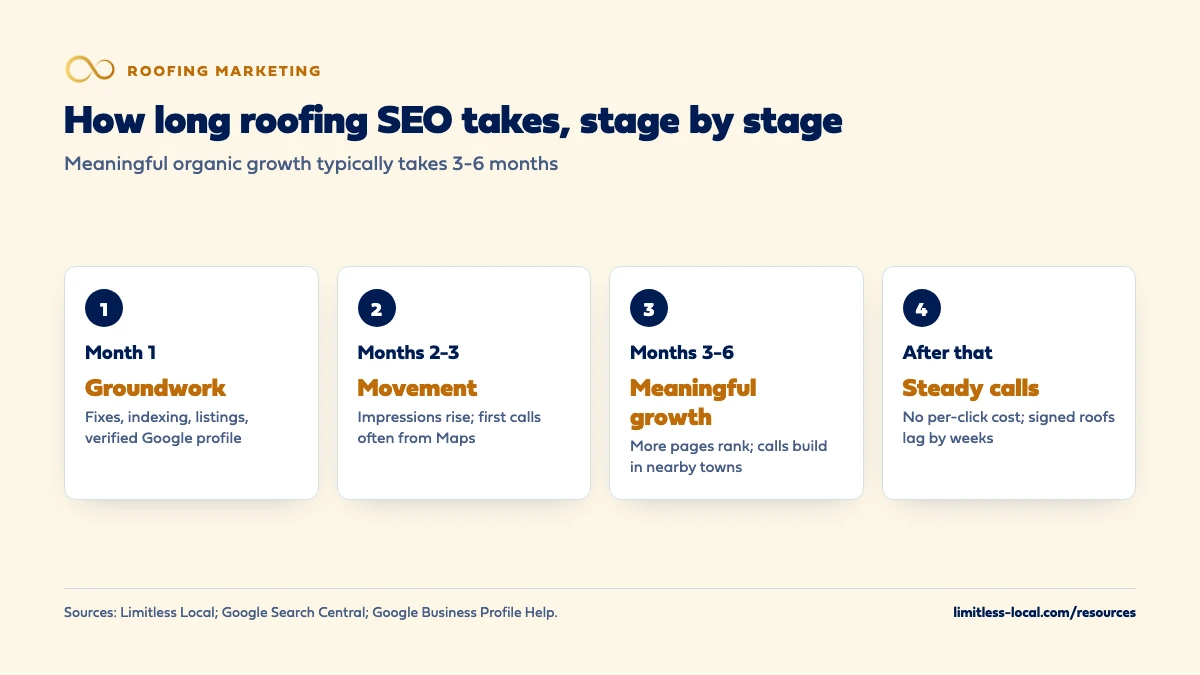
SEO typically takes 3-6 months to show meaningful organic growth for a roofing company, and the first calls usually arrive somewhere inside that window rather than at the end of it. A roofer with a verified Google profile, good reviews and a site Google already indexes can see a first call from Maps or a town-specific page within weeks of the fixes; a brand-new site in a crowded metro takes longer. Steady, week-after-week roofing calls from SEO come later than the first one, and signed roofs lag again behind those.
That ramp is why our local SEO work for roofers usually runs alongside ads in the first months: ads bring calls now while search and Maps build, all tracked to signed roofs. Our roofing marketing page shows how that fits together, is SEO worth it for roofers weighs up the wait, and the roofing marketing questions library takes the follow-ups one at a time.
When does SEO usually bring a roofer the first lead?
SEO typically takes 3-6 months to show meaningful organic growth. The very first lead often comes before that, because it doesn’t take much: one homeowner in one of your towns searching for exactly the thing one of your pages is about.
Those early leads tend to come from three places:
- The map pack, once your Google profile is verified, complete and collecting reviews.
- Narrow searches, like a specific service in a smaller town, where few roofers have a page at all.
- Your own name. Homeowners who heard about you and searched your company, now finding a site that actually works.
Google itself says some changes take effect in a few hours and others could take several months, and that you’ll likely want to wait a few weeks to judge whether a change helped (SEO Starter Guide). So the first call is a good sign, not the finish line.
What's the difference between a first SEO lead and steady SEO leads?
A first lead proves the pipe works. Steady leads mean you rank for the searches that happen every week in your towns, like roof replacement and roof repair, not just the occasional narrow one.
For most roofers, the gap between the two is measured in months. The broad searches are the ones every roofer in your area wants, so they’re the slowest to win. Steady calls usually follow as more of your pages rank, more reviews come in, and your profile climbs in the towns closest to you first.
Plan your budget around the steady stage, not the first call. If you need calls every week now, SEO alone won’t carry the schedule yet.
What happens in the first month of roofing SEO?
Mostly groundwork that the homeowner never sees:
- Fixing what stops Google from reading the site, and getting the main pages indexed.
- Clear page titles and a homepage that says roofing and your area.
- Cleaning up your business name, address and phone everywhere you’re listed.
- Completing and verifying your Google Business Profile.
- Setting up call and form tracking, so the first organic lead gets counted.
Even the indexing part takes time. Google says crawling can take anywhere from a few days to a few weeks after you ask it to recrawl a page (Ask Google to recrawl your URLs). The order to do it in is in the first SEO fixes a roofer should make on their website.
What should I see in months two and three?
Movement before money. The early signs that roofing SEO is working usually show up in Google Search Console before they show up as calls:
- More impressions. An impression means someone has seen, or potentially seen, a link to your site in search (What are impressions, position, and clicks?). Rising impressions for roofing searches mean Google is starting to show you.
- New search terms. Searches like a service plus one of your towns appearing in the report for the first time.
- A better average position on the pages you’ve been working on.
- The first calls or forms tracked from organic search or your Google profile.
If impressions are climbing, clicks and calls usually follow. If nothing in Search Console has moved by the end of month three, it’s time to ask why.
Curious what your marketing is actually booking?
Get a free visibility audit — no obligation, no sales pitch.
When does SEO start bringing consistent roofing calls?
For most roofers, somewhere after the first few months, as the broad searches start to come your way and the profile ranks well in your closest towns. Where in that range you land depends on the things in the next section. A roofer who already had a decent site and a strong review count is often months ahead of one starting from scratch.
Consistent doesn’t mean even. Roofing searches rise and fall with the weather and the season, so compare spring with last spring, not spring with January. Once steady calls arrive, they keep coming without a per-click cost, which is the whole point of the wait.
What makes roofing SEO faster or slower?
The biggest factors are ones you can see before you start:
- Your website’s starting point. An older site Google already trusts, with real pages, moves faster than a new domain.
- Competition. A small town with a few roofers moves faster than a metro where established companies already hold the map pack and page one.
- How many towns you want. One town is quicker than ten, because each needs its own relevance and reviews.
- Your reviews. A steady stream of real reviews helps your profile climb in Maps.
- Consistency. Work that stops every time the crews get busy resets the clock.
The same factors shape every channel’s speed, not just SEO; what makes roofing marketing work faster or slower covers them across ads and Local Services Ads too.
Does the map pack bring leads faster than my website?
Often, yes. Your Google Business Profile can start showing in Maps once it’s verified, and Google says verification reviews take up to 5 business days, or longer on rare occasions (Verify your business on Google). Then it’s a matter of a complete profile, the right category, photos and reviews, and how close you are to the homeowner searching.
Your website has to be crawled, indexed and judged against every other roofing site before it ranks for broad searches, which takes longer. That’s why many roofers see their first SEO-era calls from Maps, then from the website. How quickly a Google Business Profile brings roofing calls goes into what speeds that part up.
Why do SEO leads take even longer to become signed roofs?
Because a roofing lead isn’t a job yet. The homeowner who calls in month three still needs an inspection, an estimate, maybe a second opinion and sometimes an insurance decision. A replacement can take weeks to sign after the first call.
So when you judge SEO, look at the stages in order: impressions first, then calls and forms, then inspections booked, then signed roofs. A month that looks quiet in signed jobs may have several organic inspections in progress. Tag each lead’s source when it comes in, so you can trace signed roofs back to search later.
What should I do for leads while roofing SEO ramps up?
Don’t wait on SEO to fill the schedule. While it builds:
- Run search ads in your best towns. They can generate leads within days of launch.
- Consider Local Services Ads, once you’ve passed Google’s screening.
- Work your past customers and the neighbors around current jobs.
- Ask for a review after every job. It helps the ramp and costs nothing.
As organic calls grow, you can trim ad spend in the towns where Maps and search are doing the work. The fastest way for a roofer to get leads online compares the quick options.
When should I worry that SEO isn't working?
Not at month one, and not because a single month was slow. Worry when you see any of these:
- Several months in, impressions for roofing searches in Search Console haven’t moved.
- Your main service pages still aren’t indexed.
- You can’t get a straight answer about what work was done each month.
- Nobody is tracking calls and forms from search, so nobody can tell you.
- Someone promised you page one by a date. No one can honestly promise that.
If you pay someone for SEO, how to know if your roofing marketing agency is getting results lists what to ask for. If you’re still pricing it, how much a roofer should expect to pay for SEO covers what the fee should include.
Talk it through with someone who runs this every day
A 15-minute growth call: your market, your numbers, and what a realistic budget looks like. No pressure.
What's different about the SEO timeline for roofers
Start before storm season. SEO can’t be switched on after a hailstorm. If you want organic calls when storms hit, the work has to start months earlier, in the quiet season.
Seasons skew the early read. Starting in late fall means your first months land in the slowest searches of the year. That isn’t SEO failing; compare against the same season, and give it through the spring.
Wide service areas slow it down. Roofers often want a dozen towns. Rank in the closest few first, where your reviews and jobs already are, then grow outward. Trying to win them all at once spreads the same work thin.
A worked example: a roofer's first six months of SEO
This timeline is made up to show how the stages stack, not a forecast for your company. A roofer with a five-year-old site and a verified Google profile starts SEO in late winter, with call tracking in place.
- Month 1: fixes, titles, listings cleanup, profile completed. No organic calls yet.
- Month 2: impressions in Search Console climb; a first call comes from the map pack in the roofer’s home town.
- Month 3: new roof repair and roof replacement pages start showing for a couple of nearby towns; 4 organic calls this month.
- Month 5: 11 organic calls and forms, with 2 replacements signed from earlier leads.
- Month 6: 14 organic calls and forms. The roofer starts trimming search ad spend in the home town.
The first call came early; steady calls took most of the six months. Our Essentials package, $3,500 a month, runs that kind of local SEO work alongside Google Ads management, so ads cover the calls while search builds, and a free visibility audit shows where your site stands today.
Frequently asked questions
Can I speed up SEO by paying more?
More budget can mean more pages, content and link work each month, which helps. It can’t skip Google’s crawling and ranking time, and anyone promising page one by a date is overpromising.
Is SEO faster for a roofer in a small town?
Usually. Fewer roofers compete for the same searches, so a good profile and a few solid pages can show up sooner than they would in a metro.
Do blog posts bring roofing leads quickly?
Rarely. Service pages and your Google profile tend to bring the first calls. Helpful posts build over time and support those pages.
Will a new website reset my SEO timeline?
It can, if the move loses old pages or addresses. Redirecting old URLs to the matching new pages and keeping the content helps protect what you’ve built.
Should I stop SEO if I get busy?
Pausing slows the ramp, and starting again picks up later than where you left off. If crews are booked out, keep the basics going, like reviews and profile photos, even if you pause bigger projects.
How do I know a lead came from SEO and not ads?
Use separate tracking numbers for your website, your Google profile and your ads, and tag forms by source. Without that, organic calls get mixed in with everything else.
Key takeaways
- SEO typically takes 3-6 months to show meaningful organic growth for a roofer.
- The first call can come sooner, often from Maps or a narrow town-and-service page.
- Steady calls take longer than the first one, and signed roofs lag behind both.
- Watch impressions and indexing in Search Console to judge progress before the phone rings.
- Run ads while SEO builds, and start before storm season, not after it.
Ready to compare options?
Book a short growth call and we'll walk through the math for your service area, including when we're not the right fit.
More in this section
- How much should a roofer expect to pay for SEO?
- What is the fastest way for a roofer to get leads online?
- How does a roofer see which searches and pages bring leads?
- What close rate should a roofer expect from online leads?
- What can a roofer do this month to get more leads without waste?
Sources
- SEO Starter Guide — Google Search Central
- Ask Google to recrawl your URLs — Google Search Central
- What are impressions, position, and clicks? — Search Console Help
- Verify your business on Google — Google Business Profile Help