
How should a one-truck pool builder handle marketing in peak season?
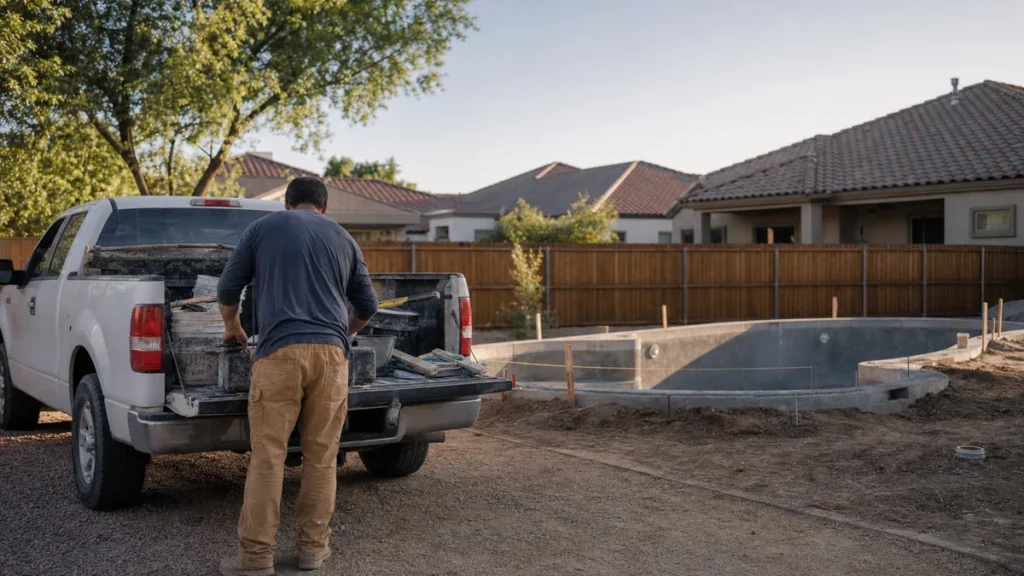
- How does a small pool company with one crew market itself when the busy season hits?
- Why is peak season different when you're one truck?
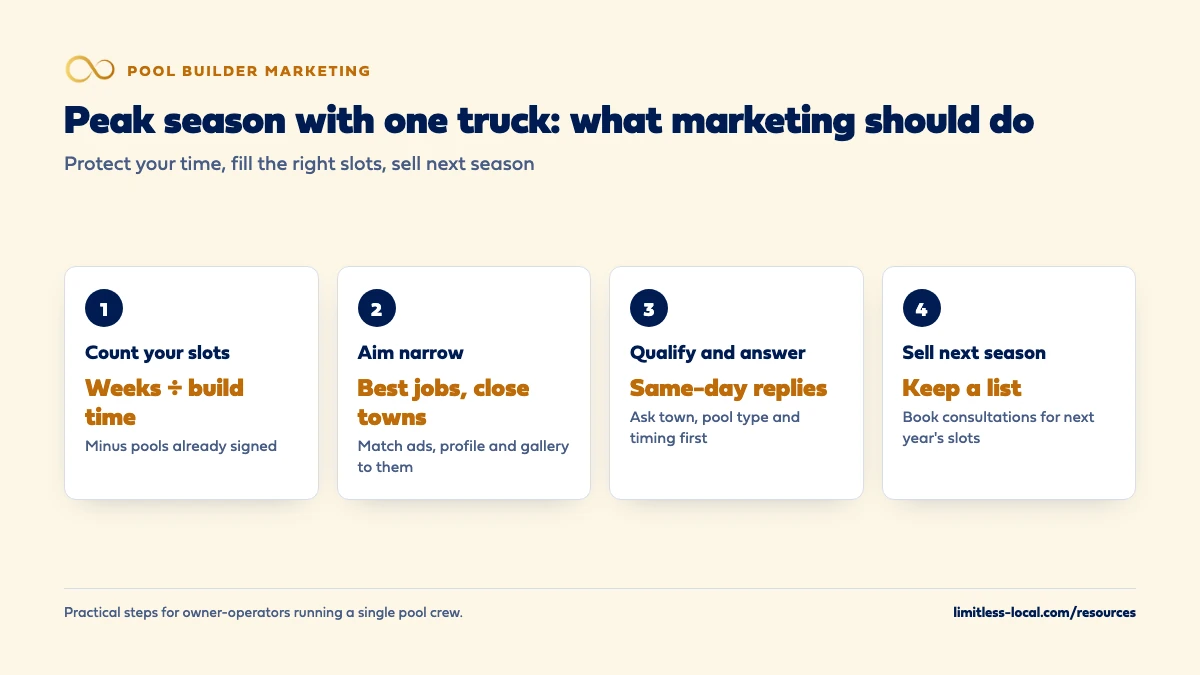
- Step 1: How many pools can I really take this season?
- Step 2: Which jobs should my marketing go after?
- Step 3: How do I qualify leads without losing good ones?
- Step 4: How do I tell homeowners my real start date?
- Step 5: Who answers the phone when I'm on the job site?
- Step 6: What marketing should keep running when I'm slammed?
- Step 7: How do I turn ads down without losing next season?
- Step 8: How do I keep next season's pipeline full while I'm busy?
- Should I add help instead of turning leads away?
- How do I know my peak-season marketing is working?
- What's different about peak season for a one-truck pool builder
- A worked example: how many leads one truck needs
- Frequently asked questions
- Key takeaways
- More in this section
- Sources
The short version
- Count your real build slots first; marketing should fill them, not overflow them.
- Qualify harder and quote honest start dates so consultations go to buyers who fit.
- Keep reviews, photos and a lean ad budget running; turn ads down, not off.
- Once this season is full, sell next season's slots.
For owner-operators running one crew, who are on the job site all day in peak season and still need next season’s work to keep coming.
Get a free visibility audit · Book a growth call
How does a small pool company with one crew market itself when the busy season hits?
In peak season, a one-truck pool builder’s marketing should stop chasing volume and start protecting your time: aim only at the jobs and towns you want, qualify leads before you give up an evening to a consultation, and tell homeowners your real start date up front. Keep the things that compound running, like reviews at every handover, photos from every build and a lean ad budget on your best-fit work, and sell next season’s slots once this season is full. Make sure someone answers the phone or calls back the same day, because one crew can’t afford to lose the good leads it does get.
If referrals already fill your one-truck calendar, you may not need an agency yet. When you’re ready to add a crew and want marketing that brings in the right pools, our packages lay out what each tier includes, our pool builder marketing page covers the trade, and the pool builder marketing questions library has the related pages.
Why is peak season different when you're one truck?
Because your time is the bottleneck, not leads. A builder with three crews and an office can take every call, run every consultation and hand the build to a foreman. A one-truck builder is often the salesperson, the project manager and part of the crew, all in the same week.
That changes what marketing is for. In the slow months, more leads is almost always good. In peak season, every extra lead costs you something: a phone call during a pour, an evening drive to a consultation, a proposal written at the kitchen table. If those leads don’t fit your schedule, budget range or towns, they cost you time you don’t have and still don’t turn into pools.
So the goal shifts from “more” to “right”: fewer, better-fit leads, handled quickly, with the rest of the demand pointed at next season.
Step 1: How many pools can I really take this season?
Start with the calendar, not the ads. Count backwards from the end of your building season:
- How many weeks of good building weather are left.
- How long a typical pool takes your crew, including waits for permits, inspections, plaster and subcontractors.
- How many builds you can overlap without quality slipping.
- How many you’ve already signed.
What’s left is the number of open slots your marketing needs to fill. For a one-truck builder that might be two or three for the rest of the season, not twenty.
Then work out how many leads that takes using your own numbers: what share of leads book a design consultation, and what share of consultations sign. The worked example below shows the math. If you already have more leads than that, more marketing won’t help this season. Better qualifying will.
Step 2: Which jobs should my marketing go after?
The ones that make the most of one crew. Decide before the phone rings:
- Pool types: the builds you do best and most profitably. If gunite with a spa is your sweet spot, say so in ads and on your profile.
- Towns: the closest ones. Every extra half hour of driving each way is time off the job site for the whole crew, every day of the build.
- Budget range: the price range where your work fits and your margins hold.
- Start dates: homeowners whose timing fits your next open slot, or next season.
Then make your marketing match. Narrow your ads to your best towns and pool types, list those services first on your Google profile, and put those projects at the top of your gallery. Homeowners who want something else will still find you, but fewer of them, and that’s the point in peak season.
Step 3: How do I qualify leads without losing good ones?
Ask the few questions that tell you whether a consultation is worth your evening, before you book it:
- Where’s the property? (Is it in your towns?)
- What are they picturing? (Pool type, size, extras.)
- When do they hope to swim? (This season, next season, someday.)
- Have they thought about a budget range, or how they’ll pay for it?
- Who else needs to be at the consultation?
Put the first three on your website form and ask the rest on a short call. Be friendly about it: you’re helping them get a builder who can actually do their job, not screening them out. A homeowner who isn’t a fit this season may be perfect for next season, so keep their details.
How pool builders qualify leads before the design consultation covers the questions in more depth, including how to ask about budget without scaring anyone off.
Step 4: How do I tell homeowners my real start date?
Everywhere they’ll look, before they call. Homeowners who know your earliest start date before the consultation either plan around it or move on, and both save you time.
- Website: a short line near the consultation form, such as “Now booking builds for late summer and next spring.”
- Google profile: Google lets you post updates on your Business Profile with a description, photo and button, and posts older than six months are archived unless you set a date range. A quick update with a recent finished pool and your current start window does the job.
- Ads: a line in the ad text, so homeowners who need a pool next month don’t click.
- Voicemail: your current lead time, and when you’ll call back.
- Consultations: say it again, in writing, in the proposal.
Being upfront about a wait rarely costs you the buyers you want. Homeowners planning a big build are used to waiting for good builders, and a booked calendar tells them you’re in demand.
Curious what your marketing is actually booking?
Get a free visibility audit — no obligation, no sales pitch.
Step 5: Who answers the phone when I'm on the job site?
Someone has to, or someone has to call back fast. A one-truck builder who lets calls roll to voicemail all day during peak season loses the few good leads marketing does bring in, because homeowners who don’t hear back usually call the next builder.
Options that work for small crews:
- Set call-back windows. Lunch and end of day, every day, without fail.
- Share the load. A spouse, a part-time office helper or a trusted crew lead takes calls and books consultations from your calendar.
- Use forms well. A website form that asks the qualifying questions lets homeowners reach you without a call, and lets you reply in order.
- Record a useful voicemail. Your start window, the best way to reach you, and when you’ll call back.
Whatever you choose, aim to reply the same day. How fast a pool builder should respond to a new lead explains why speed matters even on a long sale.
Step 6: What marketing should keep running when I'm slammed?
The things that get easier the longer you keep them going, and cost minutes, not hours:
- Reviews. Ask every homeowner at handover, with a link or QR code. Peak season is when you finish the most pools, so it’s when you can collect the most reviews. When to ask for a review during the build covers the timing.
- Photos. A few phone photos at each stage of every build, and a proper set at the end. Upload the best to your Google profile every week or two.
- A lean search campaign on your best-fit pool types and towns, so you’re still visible to the right homeowners.
- Your Google profile. Accurate hours and current photos.
What can wait until the slow months: website rebuilds, new social channels, home shows, and anything that needs you to learn a new tool. Write them down and come back to them when the crew is quieter.
Step 7: How do I turn ads down without losing next season?
Turn them down, not off, in most cases. A small budget aimed at your best-fit work keeps you visible to the homeowners you want and keeps next season’s pipeline filling.
- Lower the daily budget. Google says a budget change shows in your account immediately, and a decrease may reduce how often your ads show and how much you spend.
- Narrow the campaign. Pause the pool types and towns you don’t want right now, and keep the rest.
- Run ads when you can respond. With an ad schedule, your ads are only eligible to show during the days and times you choose, set in your account’s time zone. If calls come in only when you can return them, fewer leads go cold.
If you do switch everything off, pause rather than remove. Google’s campaign help says pausing is temporary and keeps your settings and history, while a removed campaign can’t be restored. Whether to pause marketing when the schedule is full covers when a full stop does make sense.
Step 8: How do I keep next season's pipeline full while I'm busy?
Sell the next calendar as soon as this one fills. Homeowners who call in peak season and can’t get a slot this year are often the easiest signed pools of next year, if you stay in touch.
- Keep a list. Every homeowner who fits but can’t be scheduled this season goes on it, with their town, pool type and timing.
- Offer a design consultation for next season, in the slower weeks at the end of your season, before the next rush.
- Check in a few times, with a photo of a recent build or a note when next season’s dates open.
- Give them a reason to sign early, such as first choice of start dates.
Nurturing leads who plan to build next year covers how to stay in touch without becoming a nuisance.
Should I add help instead of turning leads away?
Only once demand has proved itself for more than one season. A great peak season can make adding a second crew look obvious, but a crew has to be paid in the slow months too.
The signs it’s worth looking at:
- You’ve turned away good-fit, profitable jobs for at least a full season.
- Next season’s slots are filling before this season ends.
- You know your cost per signed pool and your margin per pool, so you know what more work is worth.
- You can step back from the tools to sell and manage.
A smaller first step is often office help: someone to answer calls and book consultations, so you can spend your time selling and building. When you’re ready to think bigger, how a pool builder scales past referrals and a single crew covers the next stage.
How do I know my peak-season marketing is working?
Judge it by how your season fills, not by how busy your phone is:
- Your open slots got filled with the pool types, towns and price range you wanted.
- Consultations signed at a steady rate, because the homeowners you met were a fit.
- Leads got a reply the same day, even on pour days.
- Next season’s slots started selling before this season ended.
- Reviews kept coming in from every finished pool.
If you were drowning in calls but signing the same number of pools, your marketing was too broad for one truck. If your slots sat open, the problem was volume or follow-up, and it’s worth fixing before next spring.
Not sure which of these is costing you jobs?
A free visibility audit checks the Google profile, reviews, site and tracking, and shows what to fix first.
What's different about peak season for a one-truck pool builder
Each job ties up the crew for weeks. A plumber can squeeze in another call this afternoon. A pool takes weeks of crew time, so a one-truck builder has only a handful of slots in a season.
Consultations are expensive. A design consultation means a site visit, a design conversation and a proposal, often after a full day on the tools. A poor-fit consultation costs more than a poor-fit phone call.
Weather sets the season. Every rainy week pushes the schedule back, so start dates you quote need some slack.
Next season is sold now. Homeowners plan pools months ahead, so the leads you can’t take this season are the start of next year’s calendar.
A worked example: how many leads one truck needs
These numbers are made up to show the math, not a benchmark for your market. A one-truck builder has 28 weeks of good building weather and can finish about one pool every four weeks with overlapping stages: 7 pools in the season. Four are already signed, so 3 slots are open.
About 1 in 4 of this builder’s consultations sign, so filling 3 slots takes 12 consultations. About 3 in 10 leads book a consultation, so 12 consultations take 40 leads.
If marketing brings in far more than 40 good leads, the extras can’t be built this season. That’s the moment to tighten targeting, qualify harder, and start booking consultations for next season instead. If it brings in fewer, the gap is either volume or follow-up, and a free visibility audit is a quick way to find out which.
Frequently asked questions
Should a one-truck pool builder stop advertising in peak season?
Usually not completely. Turn the budget down and narrow it to your best-fit pool types and towns, so the right homeowners can still find you and next season keeps filling.
Should I raise my prices when I'm booked up?
A full calendar is a sign of demand, and many builders review pricing when they’re consistently booked. Base it on your costs, your margin and the jobs you want, not on one busy month.
Is it rude to tell homeowners I can't start until next year?
No. Saying it plainly and early respects their time, and many homeowners planning a pool expect good builders to have a wait.
Can I book consultations months out?
Yes, but keep in touch in between. A homeowner booked for a consultation in three months can easily meet another builder in the meantime.
What's the one thing to never drop in peak season?
Asking for reviews at handover. It takes a minute, peak season is when you finish the most pools, and reviews keep working for you all year.
Should I take smaller jobs to fill gaps between builds?
If a short gap opens while you wait on an inspection or plaster, a small renovation or repair can keep the crew busy. Just make sure it can’t push your next pool’s start date.
Key takeaways
- In peak season, a one-truck builder’s time is the limit, so marketing should bring the right leads, not more leads.
- Count your open slots, then aim ads, profile and gallery at the jobs and towns you want.
- Qualify before consultations, quote honest start dates and reply to every lead the same day.
- Keep reviews, photos and a lean ad budget running; turn ads down rather than off.
- Put every good homeowner you can’t fit this season on a list for next season.
Want a second set of eyes on your setup?
We'll look at how you show up locally and where calls are leaking, then send you a plain-English breakdown.
More in this section
- How should a pool builder prepare marketing before peak season?
- How do I grow a pool construction business with marketing?
- How do pool builders keep leads coming in the off-season?
- What should a pool builder expect in the first 90 days of marketing?
- Should a pool builder pause marketing when the schedule is full?
Sources
- Create & manage posts on your Business Profile — Google Business Profile Help
- How budget changes take effect — Google Ads Help
- Set up an ad schedule — Google Ads Help
- Enable, pause, or remove a campaign — Google Ads Help