
Should an electrician market battery backup and solar tie-in work?
- Is battery backup and solar tie-in work worth advertising for an electrical contractor?
- Is battery backup and solar tie-in work worth marketing?
- What part of solar and battery work belongs to the electrician?
- Who buys battery backup from an electrician?
- Should I market to homeowners or to solar installers?
- How do I market battery backup without overpromising?
- Can I still mention the federal tax credit for solar and batteries?
- How do I check if there's demand for battery backup in my area?
- What should my battery backup and solar page say?
- How do I list this work on my Google profile?
- How do I know if this work is paying off?
- What's different about this work for electricians
- A worked example: homeowner campaign vs installer partner
- Frequently asked questions
- Key takeaways
- More in this section
- Sources
The short version
- Market the electrical side: battery backup, storage add-ons, panel and tie-in work.
- Sell to two buyers: homeowners who want backup power and solar installers who need a sub.
- The federal residential clean energy credit doesn't cover property placed in service after 2025.
- Don't promise savings; win on clear answers and no pressure.
For electrical contractors weighing whether home batteries and the electrical side of solar should be a marketed service line, and how to sell it without the hype that surrounds solar.
Get a free visibility audit · Book a growth call
Is battery backup and solar tie-in work worth advertising for an electrical contractor?
Yes, if you have the training and your area has the demand, but market the electrical side of the work rather than trying to sell solar: battery backup for outages, adding storage to existing solar systems, and the panel and tie-in work that solar installers need from an electrician. Aim at two buyers, homeowners who want backup power and solar companies that need a reliable electrical sub, and check search demand in Keyword Planner before you spend on ads. Leave the expired federal residential clean energy credit and any savings promises out of your marketing.
Getting found for the specific jobs you want, with pages and a Google profile built around them, is the core of our local SEO work. Solar is named on our electrical contractor marketing page as one of the newer lines electricians are positioning for, and the electrical marketing questions library covers the rest one question at a time.
Is battery backup and solar tie-in work worth marketing?
For an electrician with the training and the right market, it can be. These are high-ticket jobs, and the buyer often wants someone who understands the house’s whole electrical system, not just the box on the wall. But solar has a crowded, noisy sales world around it, and in our judgement an electrical company does better selling its own lane than trying to look like a solar company.
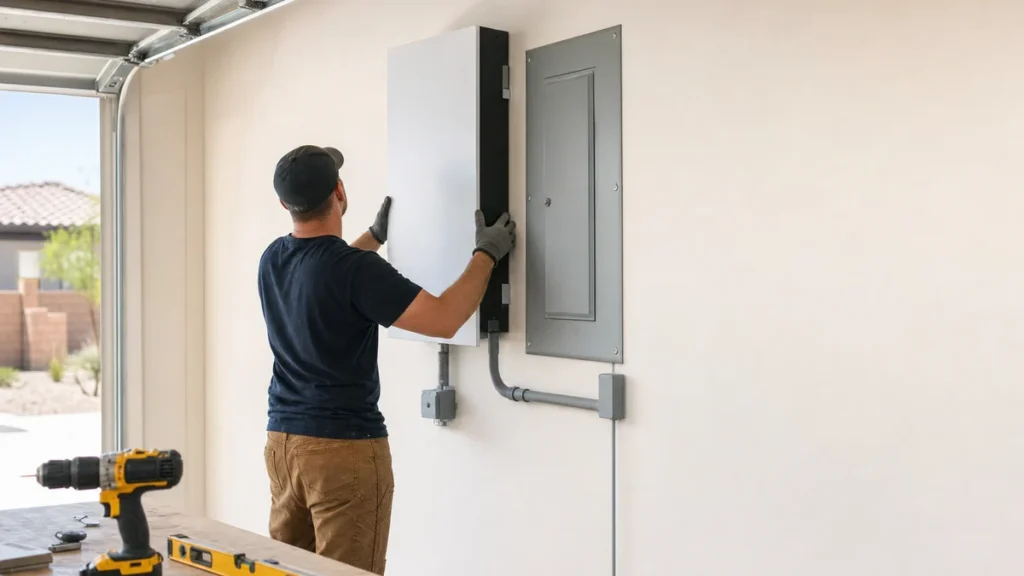
That lane is the electrical work: battery backup for outages, storage added to systems that are already on the roof, panel upgrades and service changes, and the tie-in and inspection work solar installers need done by a licensed electrician. Whether it’s worth a page, a campaign or a partnership depends on demand in your towns, which the sections below show how to check.
What part of solar and battery work belongs to the electrician?
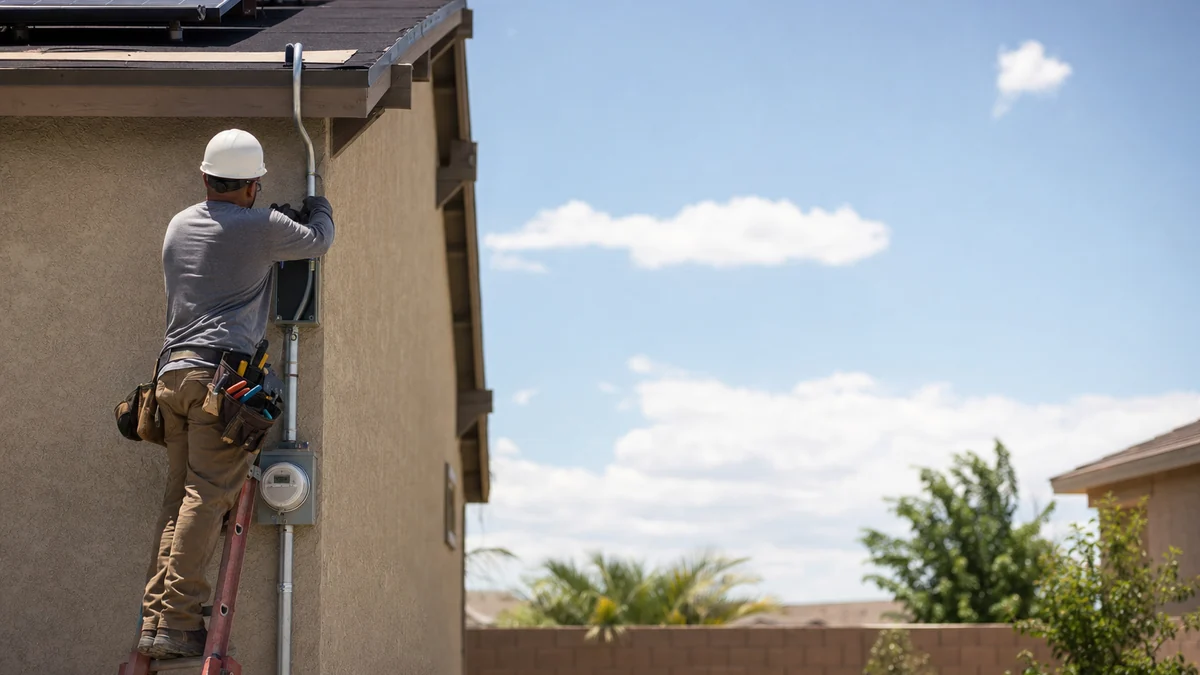
The Department of Energy’s homeowner guide to solar says a qualified installer will install panels to meet local building, fire and electrical codes, and that the system will undergo a thorough inspection from a certified electrician as part of the installation process. That’s the electrician’s opening: even when someone else sells the system, the electrical work and the sign-off need a licensed electrician.
In our judgement, the work that fits an electrical company best includes panel upgrades and service changes ahead of solar or a battery, wiring and connecting home battery systems, setting up which circuits a battery keeps running in an outage, and the tie-in itself. Code and permit requirements vary by state and utility, so describe how you handle them in your area rather than quoting general rules. Panel work has its own page in getting more panel upgrade jobs.
Who buys battery backup from an electrician?
Mostly people who have lived through an outage, or are worried about the next one. Ready.gov’s power outage guidance notes that outages can disrupt communications and water, cause food to spoil and prevent the use of medical devices, and tells households to plan for batteries and other alternative power sources for when the power goes out. Those are the reasons your buyer is calling.
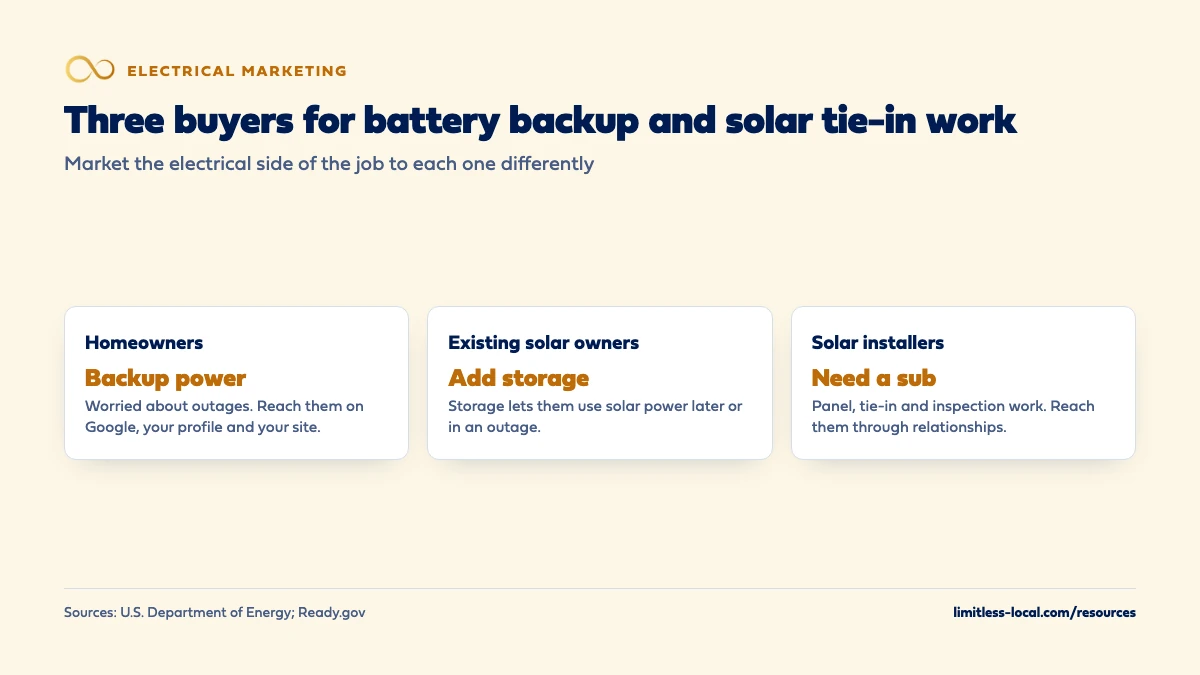
The second group already has solar. The Department of Energy’s page on solar and storage basics says solar and storage can provide backup power during an electrical disruption, and its homeowner guide notes that storage lets owners use solar power later in the day or when the power goes out. In our judgement, owners of existing systems without a battery are some of the easiest buyers to reach, because they already understand the system and you can see the panels from the street. If your area also buys generators for outages, generator installation leads covers that overlapping buyer.
Should I market to homeowners or to solar installers?
Both, through different channels. Homeowners find you through Google, your profile, your website and word of mouth. Solar installers find you through relationships. Many solar companies need licensed electricians for panel upgrades, tie-ins and service work, and in our judgement a solar company that trusts you can send steady work without a dollar of ad spend.
Treat installers the way you’d treat general contractors: show up, be reliable on schedule and inspections, and make it easy to send you a job. Getting steady work from contractors covers how to build those relationships. Keep the arrangement about good work and fair pricing for the job, not payments for referrals.
Curious what your marketing is actually booking?
Get a free visibility audit — no obligation, no sales pitch.
How do I market battery backup without overpromising?
Solar and battery buyers have been warned about high-pressure sales. The FTC’s guide to solar power for your home tells consumers never to deal with a power or home repair company that pressures them for a quick decision, tells them to sign without time to review, or asks for cash. The Department of Energy’s homeowner guide lists pushy sales tactics as a red flag too. That’s an opening for an electrician who sells differently.
The same FTC guide warns that companies may show future energy bills with and without their system, and that future utility rates are hard to predict. So skip the savings projections. In our judgement, an honest pitch is stronger here: what a battery will and won’t keep running during an outage, how long you expect the install to take, what the permit and utility steps are in your area, and a written quote with time to think it over. Put “no pressure, written quotes” on your page only if your process matches it.
Can I still mention the federal tax credit for solar and batteries?
Not for new installs. The IRS page on the Residential Clean Energy Credit says the credit equaled 30% of the costs of new, qualified clean energy property installed from 2022 through December 31, 2025, with battery storage counting from 2023, and that it isn’t available for any property placed in service after December 31, 2025. Ads, pages and quote templates that still promise customers a federal credit on a new battery or solar install are out of date.
State, local and utility incentives may still exist; the Department of Energy’s homeowner guide points to the DSIRE database for those. If you mention any incentive, check that it’s current, link to the program, and send tax questions to the customer’s tax preparer. This is a summary of the IRS page, not tax advice.
How do I check if there's demand for battery backup in my area?
Look before you spend. Keyword Planner shows estimated monthly searches for terms like “home battery backup installation” or “add battery to solar” in the areas you choose, and Google notes that results also depend on your bid, budget, ad quality and location targeting. Keywords with very low search volume can’t be forecast, which tells you something too.
In our judgement, demand for this work tends to follow two things you can see without any tool: how often your area loses power, and how many roofs in your towns already have panels. If both are high and the planner shows steady searches, a campaign can make sense. If not, a good page, a Google profile service and installer relationships are a cheaper start.
What should my battery backup and solar page say?
Answer the questions the buyer is stuck on. Which circuits will a battery keep running, and for roughly how long? Does the home need a panel upgrade first? Do you add batteries to existing systems, including systems you didn’t install? Who handles the permit and the utility steps? How does a battery compare with a standby generator for this home?
Ask early whether an existing solar system is owned or leased. The FTC guide notes that when homeowners lease a system or sign a power purchase agreement, they don’t own the system, and in our judgement that can change who has to approve changes to it. Show photos of your own installs, say clearly what you do and don’t do (if you don’t sell panels, say so), and make it easy to book an assessment from a phone.
How do I list this work on my Google profile?
Google lets service businesses list services on their Business Profile, including custom services with a description when the one you want isn’t suggested. Add battery backup installation and solar tie-in or solar electrical work as their own services, described in plain words. Google automatically rejects custom service names that include prices or phone numbers.
Photos of real battery installs and reviews that mention backup power help homeowners connect you with the work. Optimizing your electrician Google profile covers the rest.
How do I know if this work is paying off?
Track battery backup, storage add-ons and installer subcontract work as separate job types from the first call, with the source attached. Homeowner jobs and installer jobs have very different costs to win and different margins, and lumping them together hides which one is carrying the line. Tracking which marketing brings real jobs covers the setup.
Want to see where your company stands?
A free visibility audit shows where you show up on Google, Maps and AI answers, and what it's costing you in calls.
What's different about this work for electricians
You’re not the solar company, and that helps. Homeowners who are wary of solar sales pitches may be more comfortable with the licensed electrician who explains the panel and the battery plainly. Lean into that rather than copying solar marketing.
Utilities and codes shape the job. The Department of Energy notes that net metering depends on the policies of your state and utility. Utility and code steps vary by area, so explain your local process instead of making general promises about timelines.
Training matters. Battery systems and inverters are their own equipment. Market only the systems your crews are trained and, where required, certified to install, and say which ones on your page.
A worked example: homeowner campaign vs installer partner
These numbers are made up to show the math, not a benchmark for your market. Say an electrician spends $1,500 in a month on a battery backup campaign aimed at homeowners and gets ten assessment requests. Two sign, so each booked battery install cost $1,500 divided by 2, or $750 to win.
In the same month, a solar installer the electrician has worked with sends 3 tie-in and panel jobs with no ad spend. Those jobs may carry a lower price than a homeowner job, but they cost nothing to win beyond the relationship. Tracked side by side, the owner can see which channel is worth growing.
For reference on management cost: our Essentials package is $3,500 a month and includes a content sprint of up to 10 pages and Google Business Profile management, which can cover a battery backup page and profile services. Ad spend is paid to Google separately. A free visibility audit shows what backup power searches look like in your own towns.
Frequently asked questions
Does the federal tax credit still apply to home batteries?
Not for new installs. The IRS says the Residential Clean Energy Credit, which included battery storage, isn’t available for property placed in service after December 31, 2025. Send customers to their tax preparer for anything earlier; this isn’t tax advice.
Do solar systems need an electrician involved?
The Department of Energy’s homeowner guide says a solar system will undergo a thorough inspection from a certified electrician as part of the installation process, and that installers build to local building, fire and electrical codes.
Can a battery keep a home running during an outage?
It can provide backup power. The Department of Energy says solar and storage can provide backup power during an electrical disruption. How much of the home it runs, and for how long, depends on the system, so explain that per job.
Should I show customers how much they'll save?
Be careful. The FTC warns consumers that savings comparisons depend on future utility rates, which are hard to predict. Describe what the system does rather than promising a saving.
Can I add a battery to a leased solar system?
Ask first. The FTC notes that homeowners with a lease or power purchase agreement don’t own the system, so the system’s owner may need to be involved in any change.
Where can customers find state or local incentives?
The Department of Energy’s homeowner guide points to the DSIRE database, which lists incentives and policies by ZIP code. Check that any program you mention is current.
Key takeaways
- Market the electrical side of the work: battery backup, storage add-ons, panel upgrades and tie-ins.
- Reach homeowners through Google and your site, and solar installers through relationships.
- Remove federal clean energy credit claims for new installs; the IRS says the credit ended with 2025.
- Skip savings projections and pressure; clear answers and written quotes set you apart.
- Track homeowner jobs and installer jobs separately by cost to win and margin.
Not sure what's working right now?
Start with a free visibility audit: rankings, Google profile, reviews and tracking, checked against your service area.
More in this section
- Should my electrical company market smart home installs?
- How should an electrician market lighting upgrades and LED retrofits?
- How should an electrical contractor market to commercial customers?
- Should I show my electrical license number in my marketing?
- Should electricians show prices on their website?
Sources
- Homeowner's Guide to Going Solar — U.S. Department of Energy
- Solar Integration: Solar Energy and Storage Basics — U.S. Department of Energy
- Residential Clean Energy Credit — Internal Revenue Service
- Solar Power for Your Home — Federal Trade Commission, Consumer Advice
- Power Outages — Ready.gov
- Use Keyword Planner — Google Ads Help
- Manage your services on your Business Profile — Google Business Profile Help