
How can my roofing company stand out from other roofers online?
- What makes a homeowner pick one roofer over another online?
- What do homeowners actually check before they call a roofer?
- Why doesn't "quality work, free estimates" set my roofing company apart?
- Which differences can a roofer actually prove?
- How do I make my Google Business Profile stand out from other roofers?
- What photos make a roofing company look different from the rest?
- How do reviews make one roofer stand out from another?
- How should a roofer talk about warranties without overpromising?
- How do I show I'm the local roofer, not a storm chaser?
- How do I make my roofing ads say something different?
- Does my website need to back up what my profile and ads say?
- In what order should a roofing company work on this?
- What's different about standing out as a roofing company
- A worked example: making one roofer's online presence specific
- Frequently asked questions
- Key takeaways
- More in this section
- Sources
The short version
- Build your pitch around what homeowners are told to check: license, insurance, reviews, a written estimate and a written contract.
- Show it with real photos of your crews and finished roofs, not stock images or heavily edited shots.
- Say the same specific, provable things on your Google profile, your website and your ads.
- Skip claims you can't prove, fake or paid-for reviews, and keyword-stuffed business names; they cost more than they win.
For roofing owners whose Google profile, website and ads look like every other roofer’s in town, and who want homeowners to see a reason to call them first.
Get a free visibility audit · Book a growth call
What makes a homeowner pick one roofer over another online?
Stand out on the things homeowners are told to check before they hire a roofer, and make that proof easy to find everywhere you show up: your license and insurance, a real local track record, photos of your own crews on real roofs, specific reviews, and a written warranty and estimate you can explain. Put the same proof on your Google Business Profile, your website and your ads, in plain claims you can back up, instead of “best roofer in town” or “lowest price”. When every listing says “quality work, free estimates”, specifics are what separate one roofer from the next.
Making a roofer look like the obvious local choice is a lot of what our website work and our roofing marketing packages are built around: a profile, a site and ads that all show the same proof. The roofing marketing guide covers which channels book roofing jobs; this page covers only how to look different once you’re there. More questions like this one are in the roofing marketing questions library.
What do homeowners actually check before they call a roofer?
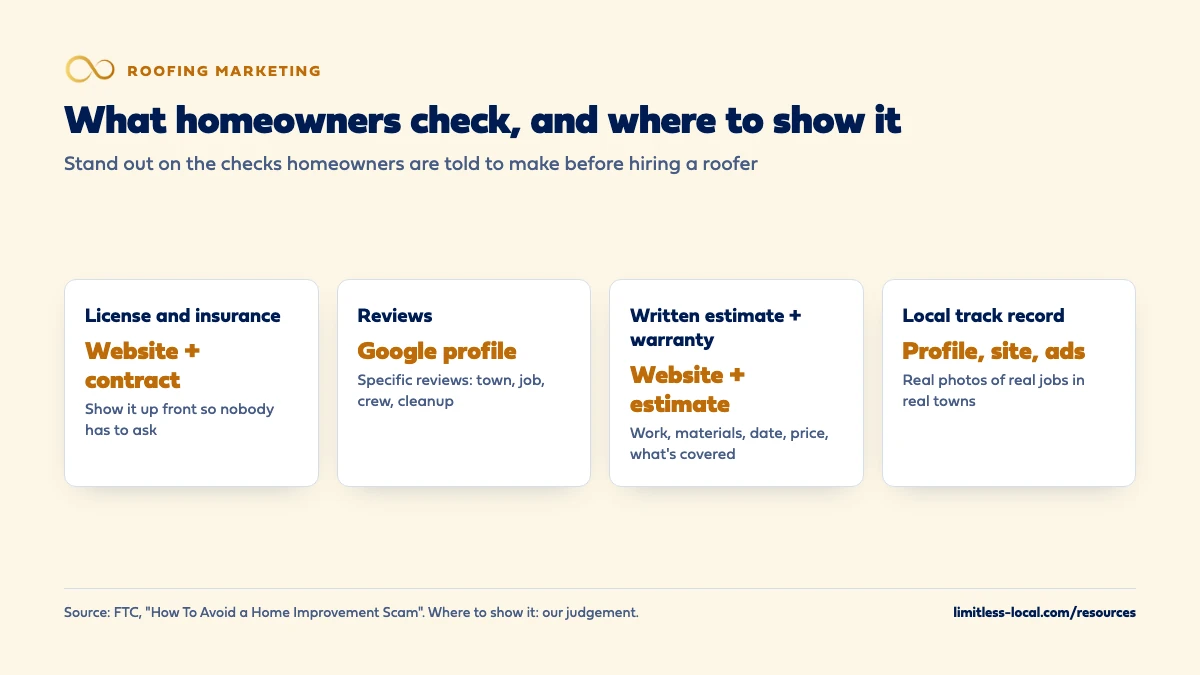
The easiest way to stand out is to answer the questions homeowners are already being told to ask. The FTC’s consumer advice on avoiding home improvement scams tells homeowners to:
- Consider only contractors who are licensed and insured, confirm the license with the state or county, and ask for proof of insurance.
- Search the company’s name with words like “scam”, “review” or “complaint”, and read reviews with a critical eye.
- Get more than one written estimate that describes the work, the materials, the completion date and the price, and not automatically choose the lowest bidder.
- Get a written contract with the contractor’s name, address, phone number and license number.
Every item on that list is something you can show before the homeowner asks. In our view, the roofer who puts it up front, on the profile, the site and the estimate, looks more trustworthy than the one with the bigger ad budget.
Why doesn't "quality work, free estimates" set my roofing company apart?
Because nearly every roofer says it, so it tells a homeowner scrolling the map pack nothing about why to call you. Specifics do: who’s on the roof, what the warranty covers in writing, how long you’ve worked these streets, what the estimate includes.
There’s a rule behind this too. The FTC’s advertising guidance for small businesses says ads must be truthful, that advertisers must have evidence for their claims before the ad runs, and that an ad can be deceptive because of what it leaves out. “Best roofer in town” is hard to prove and easy to tune out. “Licensed and insured, written workmanship warranty, photos of every step” is easy to prove and easy to remember.
Which differences can a roofer actually prove?
Pick the few that are true for your company and that a homeowner would care about:
- License and insurance, shown up front.
- How long you’ve been local: your office, the towns you’ve roofed in, jobs on streets the homeowner would recognize.
- Who does the work: your own crews, a named crew lead, or an honest description of how you use subcontractors.
- Your warranty, in writing: what it covers, for how long, and what voids it.
- Your process: a photo report from the inspection, an itemized written estimate, cleanup at the end.
- Certifications or specialties, such as metal roofs or commercial work, but only the ones you really hold or really do.
If you can’t back a line up with a document, a photo or a review, leave it off. Two or three provable differences beat ten vague ones.
How do I make my Google Business Profile stand out from other roofers?
Your profile is often the first thing a homeowner sees, and Google gives you several places to show what’s different:
- Photos. Google says the photos you add can help your business stand out on Google. Its tips for business-specific photos suggest at least three photos at work that show the services you offer, and at least three team photos to present a more personal side of the business.
- Business description. Google says to use it for useful information on your services and the mission and history of your business. It also says the description shouldn’t focus on special promotions or prices, and can’t include links. That makes it the right place for your local story, not your coupon.
- Services. Google lets you add services to your profile, grouped into categories with details like descriptions (Google Business Profile Help), so “roof replacement”, “leak repair” and “storm damage inspection” can each say what you do differently.
- Your name, as it really is. Google’s guidelines say the profile name should match your real-world name, and that adding taglines or service information to it isn’t permitted. A stuffed name is a suspension risk, not a way to stand out.
If your profile isn’t showing up at all, fix that first; why a roofer goes missing on Maps walks through the checks.
What photos make a roofing company look different from the rest?
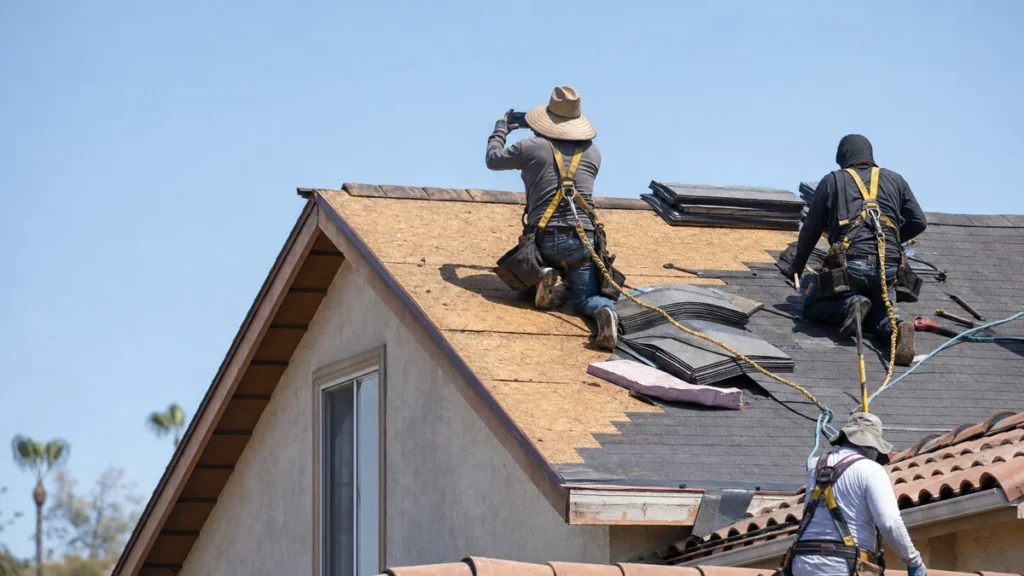
Photos are where roofers can stand out fastest, because so many profiles and sites use the same stock images of a perfect shingle roof. A homeowner can’t judge your work from a stock photo. Your own photos show it: crews in harnesses on a real job, the tear-off and decking repairs a homeowner never sees, the finished roof from the street, the clean yard afterward, and you and your office team.
Google’s photo tips say photos should be in focus, well lit, and have no significant alterations or excessive use of filters or AI, so the image represents reality. That suits roofers: an honest photo of a clean job site does more than a polished one that looks like an ad.
Curious what your marketing is actually booking?
Get a free visibility audit — no obligation, no sales pitch.
How do reviews make one roofer stand out from another?
Most roofers in a competitive town have reviews. What stands out is what they say. A review that mentions the town, the kind of job, the crew lead and the cleanup tells the next homeowner far more than another “great job”. You can’t script reviews, but you can ask at the right moment, after the final walkthrough. Getting reviews after a roof replacement covers that ask step by step.
Reviews are also where shortcuts backfire. The FTC’s rule on consumer reviews and testimonials covers fake and false reviews, and the FTC says a business that puts testimonials on its own website is disseminating them, not just hosting them, so it can be liable if they’re fake. Reply to reviews, good and bad; a calm, specific reply to a complaint can say more about you than the complaint does.
How should a roofer talk about warranties without overpromising?
A roof is a big, long-lived purchase, so a clear warranty is one of the strongest differences a roofer can show. It’s also easy to inflate. In our view, the warranty that stands out is the one a homeowner can understand in one read: the manufacturer’s product warranty and your own workmanship warranty kept separate, how long yours lasts, what it covers, what voids it, all written into the estimate or contract so it matches what the salesperson said.
The FTC’s guidance says advertisers need evidence for their claims before the ad runs, and that leaving out important information can make an ad deceptive. “Lifetime warranty” with no explanation of whose lifetime, or what it covers, invites exactly that problem. Spell it out on the website, then point to it from the profile and the ads.
How do I show I'm the local roofer, not a storm chaser?
After hail or a big wind event, out-of-town crews show up and every roofer starts to look alike online. The FTC’s advice to homeowners after weather emergencies warns that unlicensed contractors and scammers often appear in recovery zones, and tells homeowners to check reviews and confirm license and insurance before committing to anything.
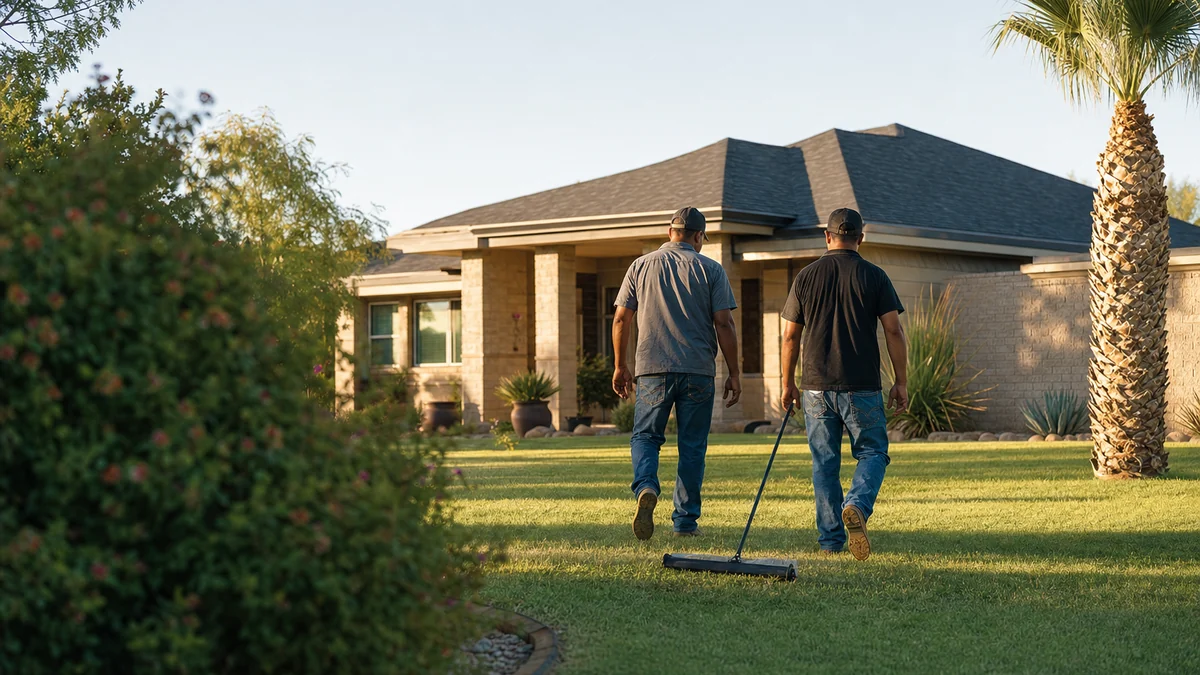
That’s the local roofer’s opening. Show what a crew passing through can’t: a local office address on your contract (and on your profile, if customers can visit), years of jobs with photos in the same towns, reviews from homeowners there, and a phone number that’s been yours for years. Show your own proof rather than attacking anyone else’s. And keep insurance-claim language careful; mentioning insurance claims in ads covers what to watch for.
How do I make my roofing ads say something different?
Most roofing search ads lead with the same promise: fast, free, affordable. The ad text matters, but so do the extras around it. Google Ads callouts let you add short lines to a search ad to promote what’s unique about your business. Google says callouts are limited to 25 characters each, can show up to 10 depending on the device and spacing, and cost nothing to add (you still pay for clicks). Callouts that carry proof work well for roofers, for example:
- Licensed and insured
- Written roof warranty
- Photo report every job
- Local crew, local office
Only use a callout you can back up on the page the ad sends people to. If your ads are bringing in bargain hunters, leading with proof instead of price is part of the fix; filtering out price shoppers covers the rest.
Does my website need to back up what my profile and ads say?
Yes. A homeowner who sees “written warranty” in an ad and clicks through to a page that never mentions it starts to wonder what else isn’t true. The website is where the details live: the warranty in full, the crew, the process, and project pages with real photos from real towns.
Google’s guidance on helpful content asks whether content demonstrates first-hand expertise, the kind that comes from actually doing the work, and whether it’s clear who created it. For a roofer, that’s the same proof again. What a roofing website needs covers the pages and forms that turn that trust into estimate requests.
In what order should a roofing company work on this?
- List your provable differences. Pick two or three a homeowner would care about, with the document, photo or review that backs each one.
- Fix your Google profile. Real name, real photos of your crews and finished roofs, a description with your history, services with descriptions.
- Ask for specific reviews at the final walkthrough of every job.
- Put the details on your website: warranty, crew, process, project pages by town.
- Rewrite your ads to lead with the same proof, with callouts that match the landing page.
- Make the estimate match the marketing. Itemized, written, with the warranty spelled out, so the promise holds up at the kitchen table.
Not sure which of these is costing you jobs?
A free visibility audit checks the Google profile, reviews, site and tracking, and shows what to fix first.
What's different about standing out as a roofing company
Homeowners compare several bids. A roof is a big, infrequent purchase, and the FTC tells homeowners to get more than one written estimate and not to automatically pick the lowest. An itemized estimate and a warranty in writing give the homeowner a reason other than price to choose you.
Storm seasons flatten the field. After a hail or wind event, many crews compete for the same homeowners in the same towns. A long local track record, reviews from those towns and an office address are things a crew passing through can’t copy.
Your work is visible from the street. A finished roof is something the neighbors see. Photos of finished roofs in recognizable neighborhoods, and reviews that name the town, turn that visibility into proof online.
A worked example: making one roofer's online presence specific
This is a made-up roofer to show the steps, not a real client. Ridgeline Roofing has been in the same town for years and has its own crews, but online it looks like everyone else: stock shingle photos on its Google profile, a description with a seasonal discount in it, search ads that say “Affordable Roofing, Free Estimates”, and a website with no warranty details.
- Provable differences: its own crews, a written workmanship warranty, and a photo report after every inspection.
- Profile: stock photos come down; at least three photos of crews at work and three team photos go up. The description drops the discount and tells the company’s history.
- Reviews: the crew lead asks at every final walkthrough, so new reviews mention towns, crews and cleanup.
- Website: a plain-language warranty page and project pages with photos from real jobs in each town.
- Ads: callouts change to “Licensed and insured”, “Written roof warranty” and “Photo report every job”, each backed up on the landing page.
Nothing here changes Ridgeline’s prices. It changes what a homeowner sees when comparing Ridgeline to the next roofer.
How we’d handle it: our Essentials package ($3,500 a month, one location) includes Google Business Profile management, review response and basic review generation, a content sprint of up to 10 pages, and Google Ads management for up to $2,500 a month in ad spend (paid to Google separately). If the website itself is the problem, a themed site is $3,750, or $3,000 with any package. As one past result, not a forecast: a roofing client got 3x map pack visibility in its target towns; better presence and consistent info across the web increased inbound calls. We don’t promise you’ll outrank anyone; nobody honestly can. A free visibility audit shows where your profile, site and ads look the same as everyone else’s.
Frequently asked questions
Should a roofer use stock photos on a Google profile or website?
We’d avoid them. Google asks for photos that represent reality, and stock images can’t show your crews or your work, which is what a homeowner is trying to judge.
Can I add "storm damage experts" to my roofing company's name on Google?
No. Google’s guidelines say your profile name should match your real-world name and that adding taglines or service information isn’t permitted; it can lead to a suspension.
Is it OK to say "best roofer in town" in my ads?
The FTC says advertisers need evidence for their claims before an ad runs. A vague “best” is hard to prove and easy to ignore; a specific claim you can document, like a written workmanship warranty, does more work.
Do manufacturer certifications help a roofer stand out?
They can, if you really hold them and explain what they mean for the homeowner, such as which warranty options they make available. Never show a badge you haven’t earned or that has lapsed.
Should a roofer put a discount in the Google Business Profile description?
No. Google says the business description shouldn’t focus on special promotions, prices or sales. Use it for your services and the history of your business.
How long does it take for these changes to make a difference?
Profile, photo and ad changes take effect quickly, but how they show up in calls varies. Reviews build job by job, and organic search growth typically takes 3 to 6 months to show meaningful results.
Key takeaways
- Stand out on what homeowners are told to check: license, insurance, reviews, written estimates and written contracts.
- Pick two or three provable differences and show the same ones on your profile, website and ads.
- Real photos of your crews and finished roofs beat stock images; Google asks for photos that represent reality.
- Spell out your warranty in writing, including what it covers and what voids it.
- Skip unprovable claims, fake reviews and keyword-stuffed names; they create risk without setting you apart.
Want a second set of eyes on your setup?
We'll look at how you show up locally and where calls are leaking, then send you a plain-English breakdown.
More in this section
- How should a roofing company market commercial roofing?
- How should a roofing company market metal roof installs?
- How does a roofing company get links from local websites?
- What should a roofing website include to get more estimate requests?
- Is door knocking or online marketing better for a roofing company?
Sources
- How To Avoid a Home Improvement Scam — Federal Trade Commission, Consumer Advice
- How To Avoid Scams After Weather Emergencies and Natural Disasters — Federal Trade Commission, Consumer Advice
- Advertising FAQ's: A Guide for Small Business — Federal Trade Commission
- The Consumer Reviews and Testimonials Rule: Questions and Answers — Federal Trade Commission
- Tips for business-specific photos on your Business Profile — Google Business Profile Help
- Guidelines for representing your business on Google — Google Business Profile Help
- About callout assets — Google Ads Help
- Creating helpful, reliable, people-first content — Google Search Central