
How should a pool builder budget for new pools vs. remodels?
- How should a pool builder divide marketing money between new construction, remodels and repairs?
- Why can't new pools and remodels share one budget?
- Which kinds of pool work need their own budget line?
- How do I work out what each line can afford per job?
- How do my crews cap each budget?
- When should each line's money go out?
- What should the new-pool budget pay for?
- What should the remodel budget pay for?
- Should repairs and weekly service get any marketing money?
- How do I price each line before I spend?
- How do I keep the two lines' ad money apart in Google Ads?
- What's different about budgeting new pools and remodels
- A worked example: setting two budgets from two ceilings
- Frequently asked questions
- Key takeaways
- More in this section
- Sources
The short version
- Run new pools and remodels as two budget lines, each with its own ceiling per signed job.
- Size each line by the jobs your crews can take on, not the jobs you wish for.
- New-pool money goes out months ahead; remodel money follows open crew slots.
- Repairs and weekly service only get a budget if you're growing them on purpose.
For pool builders who take on remodels and repairs alongside new construction, and want each kind of work to pay its own way.
Get a free visibility audit · Book a growth call
How should a pool builder divide marketing money between new construction, remodels and repairs?
Give new pools and remodels separate budgets, each set from what one signed job of that kind can afford in marketing, times the jobs your crews can actually take on. New pools carry the bigger budget per job but take months to sign, so their money goes out well ahead of the dig season and gets judged over a long window. Remodels carry a smaller budget per job, sign faster and lean on past customers and before-and-after photos, which makes them a good way to fill open crew time. Repairs and weekly service usually get little or no paid budget unless you’re growing them as a business line on purpose.
Separate lines, separate campaigns and a report that shows what each line cost per signed contract is how we set up the Google Ads and local ads side of a pool builder’s marketing. Every package includes call tracking, source tagging and a monthly cost-per-lead breakdown, and ad spend is always paid directly to Google or Meta, apart from our fee. We’ve worked this from the builder’s side too, as an equity partner in a pool construction company where we built the lead-generation engine and ran sales and marketing. See our pool builder marketing, or browse the rest of the pool builder marketing questions.
Why can't new pools and remodels share one budget?
Because they’re two different sales with two different sets of math. A new pool is a big, rare purchase. The homeowner has never bought one, compares builders on design and trust, and often takes months to go from first search to signed contract. A remodel buyer already owns a pool. They know what’s bugging them, whether that’s a rough surface, dated tile, tired equipment or a deck that’s seen better days. The ticket is smaller and the decision usually comes faster.
Put both in one pot and one of two things tends to happen. Remodel leads come in cheaper and quicker, so they soak up the money and fill the calendar while the new-build pipeline quietly thins out. Or the new-build side eats months of spend before anyone can tell if it’s working, while the remodel crew waits for work. Two budgets keep each line honest.
How to split the marketing itself is covered in whether pool builders should market renovations separately from new pools. This page is about the money: how much each line gets, when it goes out and how you judge it.
Which kinds of pool work need their own budget line?
Sort your work by how it sells, not by what the crew does. Most builders end up with up to four kinds:
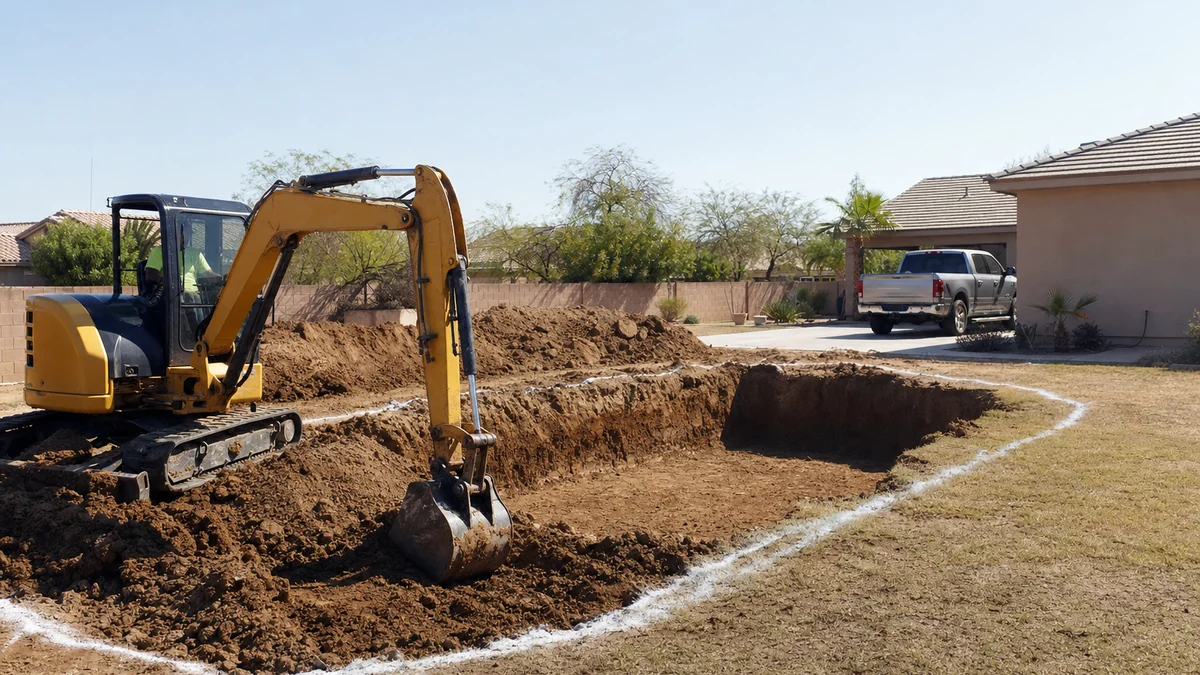
- New construction. Gunite, fiberglass or vinyl pools in a yard that doesn’t have one, plus full tear-outs and rebuilds, which sell like new pools.
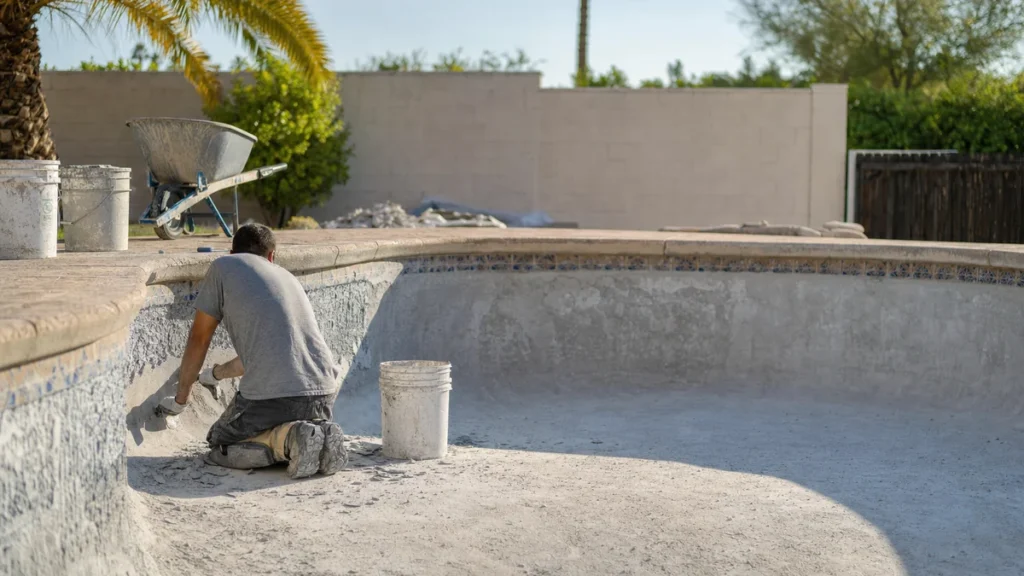
- Remodels and renovations. Resurfacing, new tile and coping, decking, adding a spa or water features, and equipment upgrades sold as part of a bigger job.
- Repairs. Leaks, cracks and one-off equipment swaps.
- Weekly service. Cleaning and maintenance on a route.
Most builders need two budget lines: new pools and remodels. Repairs and service only earn a line of their own if you’re deliberately building them into a business, which comes up further down.
If you sell more than one kind of new pool, the new-build line may split again. Budgeting for custom versus fiberglass pools covers that second split. The logic is the same: every line that sells differently gets its own number.
How do I work out what each line can afford per job?
Do the same backward math for each line. Take the average contract for that kind of work and subtract materials, labor, subcontractors and permits to get gross profit. Set aside that job’s share of overhead and the profit you want to keep. What’s left is the most you can spend in marketing to win one job of that kind. How much you can afford to spend to win one pool customer walks through each step.
You’ll get two very different ceilings. A new pool almost always leaves more profit in dollars, so it can carry a much higher marketing cost per signed contract. A remodel needs a tighter number. Don’t assume remodels are thin, though. A full remodel with a new surface, tile, coping and equipment can be a strong job for its size, and some builders find their best margin there.
Use your own job costing from recent jobs of each kind, not someone else’s rule of thumb.
How do my crews cap each budget?
Multiply each line’s ceiling by the jobs your crews can actually take on, not the jobs you’d like to sell. That’s the most the line should spend, and you should plan to spend comfortably under it.
The crews behind each line are often different people. Excavation, steel and shell work on new builds might be your own crew or subs booked months out, while remodels might run on a smaller crew or a plaster sub with a different calendar. Each line’s budget should follow its own capacity.
The two lines also handle a full calendar differently:
- New pools can wait. A homeowner who signs in winter for a spring dig is a good lead even if your crews are busy now. A full schedule just pushes new-pool spend toward the season you’re selling into.
- Remodels usually can’t. Most remodel buyers want the work done before swim season, or before the next one. If your remodel crew is booked solid, extra remodel leads mostly turn into apologies.
So turn the remodel budget down fast when the remodel calendar fills, and think harder before cutting the new-pool budget. Whether to pause marketing when the schedule is full goes into the trade-offs.
Curious what your marketing is actually booking?
Get a free visibility audit — no obligation, no sales pitch.
When should each line's money go out?
New-pool money goes out months before it comes back. A buyer might see your ad in fall, visit your site a few times over winter, come in for a design consultation and sign in spring. Google Ads calls this gap the conversion cycle: the amount of time it takes for a click to result in a conversion. When the conversion you care about is a signed pool contract, that cycle is long.
Three things follow for the new-pool line:
- Plan the cash. Budget it from what the business can carry before contracts sign.
- Judge it late. Look at leads by the month they came in, and give each month’s leads time to reach a decision before you call it.
- Don’t cut it at the first quiet month. A slow month of new-pool leads can still turn into contracts later in the year.
Remodel money works on a shorter loop. Spend it close to the crew slots you want to fill, and you’ll see within weeks whether it’s producing signed remodels. That shorter loop is what makes remodels useful for smoothing out the year: when new-build demand dips, a remodel push can keep crews working, as long as those crews can do both kinds of work.
What should the new-pool budget pay for?
Mostly the things that win a big, slow, trust-heavy sale:
- Search ads on the searches homeowners use when they’re ready to talk to a builder, in the towns you actually build in.
- Proof. Professional photos of finished pools, short build videos and project pages that tell the story of each yard. New-pool buyers are buying your taste and your track record, so treat proof as a real budget line, not leftover money.
- Follow-up through a long sale. A CRM or job software that keeps every lead from first call through consultation and proposal, and the time someone spends staying in touch with buyers who aren’t ready yet.
- Your Google profile and reviews, which new-pool buyers read closely before they ever call.
What should the remodel budget pay for?
A different mix, because the buyer is different. Remodel buyers already own the pool, so they search with different words: resurfacing, replastering, pool remodel, tile replacement, new decking. Their budget should favor:
- Search ads on remodel searches, pointing to a remodel page, not your new-build gallery.
- Before-and-after photos. Nothing sells a remodel like a tired pool next to the same pool finished, and they cost almost nothing to collect on every job.
- Past customers. The homeowners whose pools you built years ago are the cheapest remodel leads you’ll ever get. A yearly letter, email or call to your old build list costs little and reaches people who already trust you.
- Reviews that mention the remodel, so the next remodel buyer sees that you do this work, not just new pools.
Should repairs and weekly service get any marketing money?
Usually very little. Listing repairs on your Google profile and website is enough to catch the homeowners who already need one. Small tickets rarely carry the cost of paid clicks, and repair calls can crowd out the bigger jobs you actually want.
The exception is when repairs are a way in the door. A leak or equipment call puts you in the yard of a pool owner who may want a remodel next. If you take repairs for that reason, track how many repair customers go on to sign a remodel, and judge the repair spend on those remodels, not on the repair tickets.
Weekly service is a separate business with its own math: recurring revenue, routes and techs. If you’re thinking about building one, whether a pool builder should offer pool service as a side business covers the decision. If you build it, give it its own budget and numbers.
How do I price each line before I spend?
Check what each line’s clicks cost in your own market before you set the numbers. Google’s Keyword Planner can do this. Its forecasts estimate clicks and cost for a set of keywords, and take your bid, budget, seasonality and historical ad quality into account.
Build one plan with your new-pool keywords and another with your remodel keywords, both set to the towns you really serve. Compare the forecast cost per click and how many clicks each plan can deliver. Then hold each one up against that line’s ceiling per job:
- If remodel clicks are pricey and the remodel ceiling is low, lean that line on past customers, photos and referrals, and keep its ad spend small.
- If new-pool clicks look affordable against a high ceiling, that’s the line where ad spend can carry more of the load.
How do I keep the two lines' ad money apart in Google Ads?
Give each line its own campaign with its own budget, so you decide how much each one gets. Be careful with shared budgets. Google’s page About shared budgets explains that a shared budget lets underused budget move automatically to campaigns that are capped by budget. Inside one line that’s handy. Across new pools and remodels, it means money can drift to whichever campaign spends most easily, which is usually the cheaper remodel clicks, not the line you meant to fund.
You can also tell Google the lines aren’t worth the same. Google’s guidance on conversion values says that if you offer different services at different price points, you should use different values for each conversion. Giving a new-pool consultation request a higher value than a remodel estimate request tells automated bidding which leads matter more.
Then tag every lead with its line, from the first call through the signed contract, so you can divide each line’s spend by the contracts it signed. Tracking which marketing produces signed pool contracts walks through the setup.
Want to see where your company stands?
A free visibility audit shows where you show up on Google, Maps and AI answers, and what it's costing you in calls.
What's different about budgeting new pools and remodels
Today’s new pools are tomorrow’s remodels. Every pool you build adds a name to the list of homeowners who’ll need resurfacing, tile or equipment one day. Keep that list clean in your CRM, because it’s the cheapest remodel marketing you’ll ever have.
Your reputation has to hold both. A builder known for big custom builds can confuse new-pool buyers with bargain resurfacing ads, and a remodel-heavy profile can make new-pool buyers wonder whether you build at all. Separate pages and ads keep each message clean.
Remodels can smooth out the year. New-pool demand rises and falls with the seasons. If your crews can switch between digs and remodels, a remodel push in the slower months can keep them working without discounting new pools.
A worked example: setting two budgets from two ceilings
These numbers are made up to show the math, not a benchmark for your market. Plug in your own job costing.
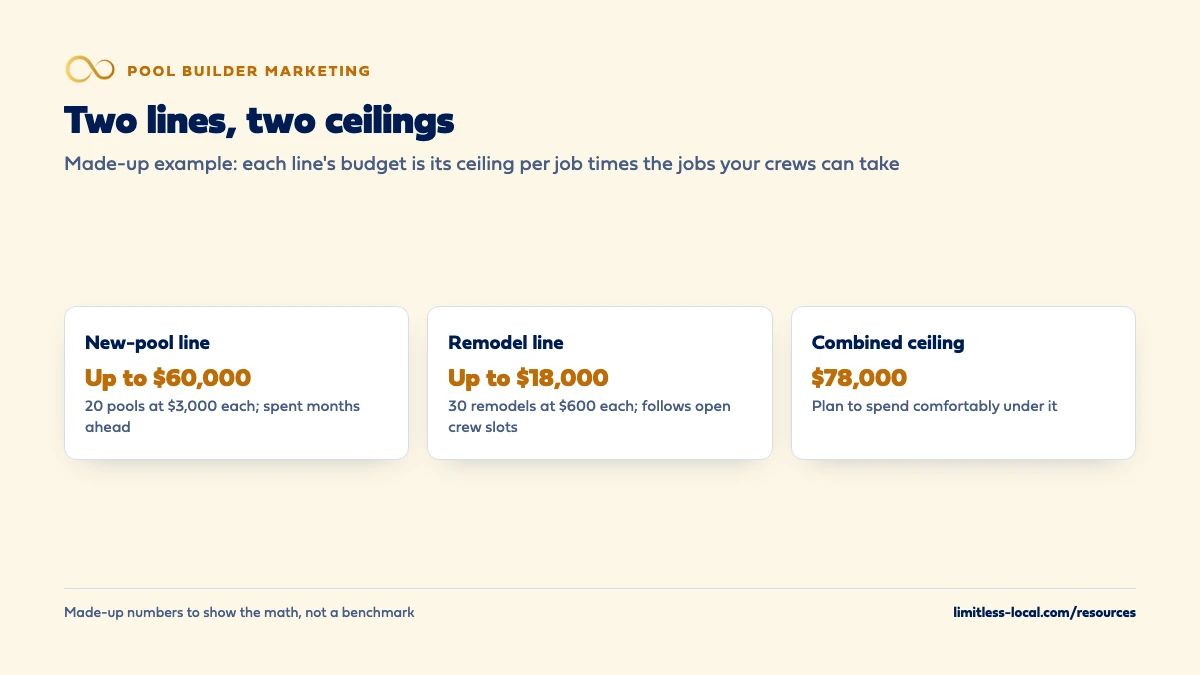
Say a builder wants 20 new pools and 30 remodels from marketing next year, which is what its crews can take on. Job costing says it can spend up to $3,000 in marketing to win one new pool and up to $600 to win one remodel.
- The new-pool line can spend up to $60,000 (20 pools at $3,000 each).
- The remodel line can spend up to $18,000 (30 remodels at $600 each).
- Together that’s a $78,000 ceiling, and the plan is to spend comfortably under it.
Most of the new-pool money goes out in fall, winter and early spring, ahead of the contracts it’s meant to sign. The remodel money follows the remodel crew’s open slots through the year.
After two quarters, the builder checks. New pools are costing $2,400 each to win, under the ceiling, with room on the dig calendar, so that line can grow. Remodels are costing $900 each, over the $600 ceiling. Before cutting the line, the builder looks at why: slow follow-up on remodel calls, ads showing for repair searches, or not enough past-customer outreach. Fixing those is usually cheaper than adding ad spend.
Frequently asked questions
Where do tear-outs and full rebuilds belong?
Usually with new construction. A full tear-out and rebuild has a ticket and sales cycle much closer to a new pool than to a resurfacing job, so budget and judge it alongside new pools.
What if I only want new pools?
List remodels on your Google profile and website so you don’t turn away good work by accident, but put the ad money behind new builds. You can still send the occasional remodel lead to a trusted partner.
How do I budget if I've just started taking remodels?
Treat it as a test: a fixed, modest amount for one season, a remodel page and a few before-and-after projects, judged on signed remodels at the end. Then set a real ceiling from the job costing those first remodels give you.
Do outdoor kitchens, fire features and decks go in the remodel budget?
If you sell them to existing pool owners alongside remodels, yes. If they’re a separate business with their own buyers and crews, give them their own line.
Can a remodel lead turn into a new-pool sale?
Sometimes. A homeowner asking about resurfacing an old pool may decide a full rebuild makes more sense. When that happens, move the lead to the new-pool line in your CRM so each line’s numbers stay accurate.
Key takeaways
- Budget new pools and remodels as separate lines, each with its own ceiling per signed job.
- Size each line by the jobs your crews can take on, then plan to spend under it.
- New-pool money goes out months ahead and is judged late; remodel money follows open crew slots and shows results in weeks.
- Past customers and before-and-after photos carry much of the remodel line.
- Keep the lines in separate Google Ads campaigns and judge each on its own cost per signed job.
Not sure what's working right now?
Start with a free visibility audit: rankings, Google profile, reviews and tracking, checked against your service area.
More in this section
- How should a pool builder budget for custom vs fiberglass pools?
- What does a pool builder budget beyond ad spend?
- Should pool builders market renovations separately from new pools?
- How should a pool builder split its marketing budget?
- How much should a pool builder spend on marketing?
Sources
- Conversion cycle: Definition — Google Ads Help
- About Keyword Planner forecasts — Google Ads Help
- About shared budgets — Google Ads Help
- About conversion values — Google Ads Help