
How do I get more water heater and repipe jobs?
- How can a plumbing company book more water heater replacements and repipes?
- Why do water heater and repipe jobs need their own marketing?
- Where do water heater and repipe jobs actually come from?
- How should I set up Google Ads for water heater jobs?
- How should I advertise repipes?
- Which searches should I keep out of water heater ads?
- Can Local Services Ads bring in water heater work?
- What should my Google profile and website say about these jobs?
- How do I turn service calls into water heater and repipe estimates?
- How should I advertise financing on big plumbing jobs?
- How do I follow up on water heater and repipe estimates?
- How do I track which marketing brings in the big jobs?
- What's different about water heater and repipe jobs for plumbers
- A worked example: why the expensive lead can be the best one
- Frequently asked questions
- Key takeaways
- More in this section
- Sources
The short version
- Give water heaters and repipes their own ads, landing pages and profile services.
- Your own service calls are a source of replacement and repipe estimates; measure how often techs turn them into sold work.
- Block do-it-yourself searches so the budget goes to people hiring a plumber.
- Judge these jobs by profit after ad cost, not by cost per lead.
For plumbing owners whose phones ring with drain calls and small repairs, but who want more of the bigger tickets: water heater replacements and whole-house repipes.
Get a free visibility audit · Book a growth call
How can a plumbing company book more water heater replacements and repipes?
Market water heater and repipe work separately from your everyday service calls: give each its own Google Ads ad group and landing page, list each as a service on your Google Business Profile, and switch on the matching job types in Local Services Ads. Then mine the jobs you already run, since techs on drain and leak calls are the ones who see aging tanks and failing pipes, and follow up on every estimate. Track these jobs by what they’re worth, because a repipe lead can cost far more than a drain lead and still be the most profitable call you get.
That last point is how we set up ads for any high-ticket service: those jobs get their own campaigns and are judged on what each booked job earned, not what each click cost. Google Ads management is part of every package, with Local Services Ads management in Growth and Scale, under our local ads work; see how we approach plumbing marketing. For the rest of the channels, the plumbing marketing questions library goes one question at a time.
Why do water heater and repipe jobs need their own marketing?
Because the people asking for them behave differently from a drain-cleaning caller, and differently from each other:
- A failed water heater is half emergency, half purchase. No hot water or a leaking tank needs someone today, but the homeowner is also choosing a tank size, a brand and maybe tankless, so they want to know you can come fast and that you’ll explain the options.
- A planned water heater swap (an old tank, a remodel, a switch to tankless) is a comparison purchase. They read reviews and get more than one quote.
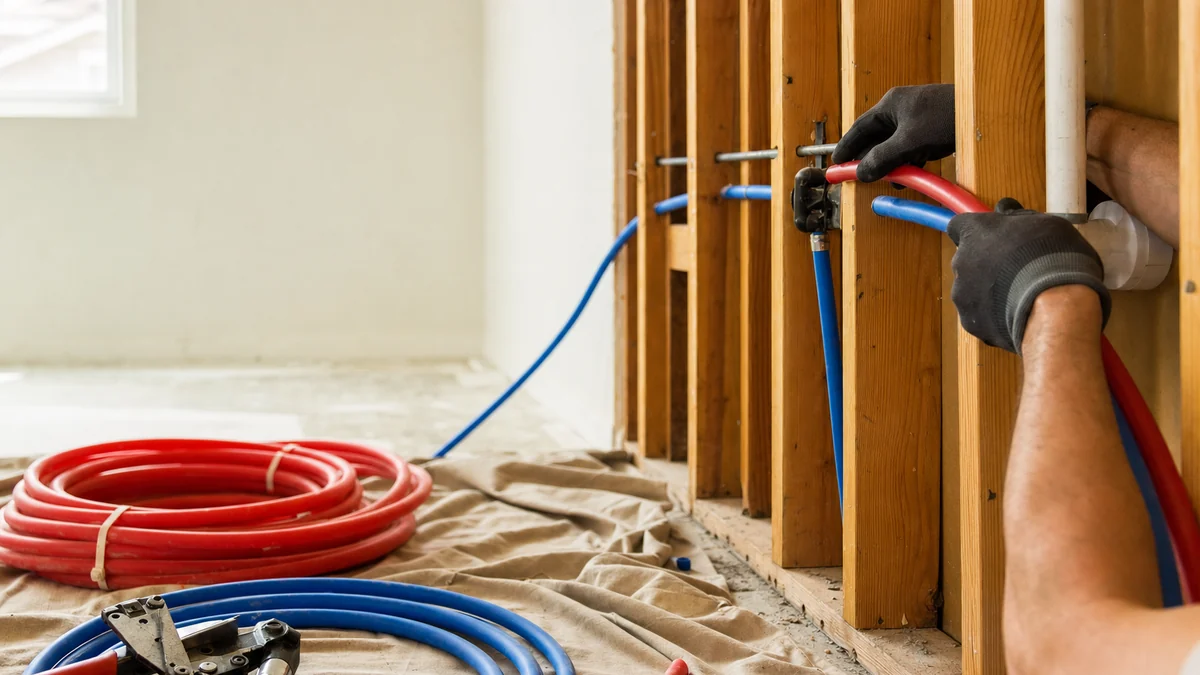
- A repipe is the slowest decision of the three. It’s a big ticket, it means plumbers in the walls of an occupied home, and the homeowner often lives with pinhole leaks for months before deciding. They want to know how long it takes, what happens to the drywall and who they’re letting into the house.
When all of that runs through one generic “plumber near me” ad and a homepage, the urgent caller and the careful researcher both land somewhere that wasn’t written for them. If you’re still working on overall call volume, getting more plumbing leads covers the basics first; this page is about steering more of that volume toward bigger tickets.
Where do water heater and repipe jobs actually come from?
Usually from four places, and most shops only market to the first:
- Search. People typing “water heater replacement” or “repipe house” with a town name. This is where Google Ads, Local Services Ads and your service pages work.
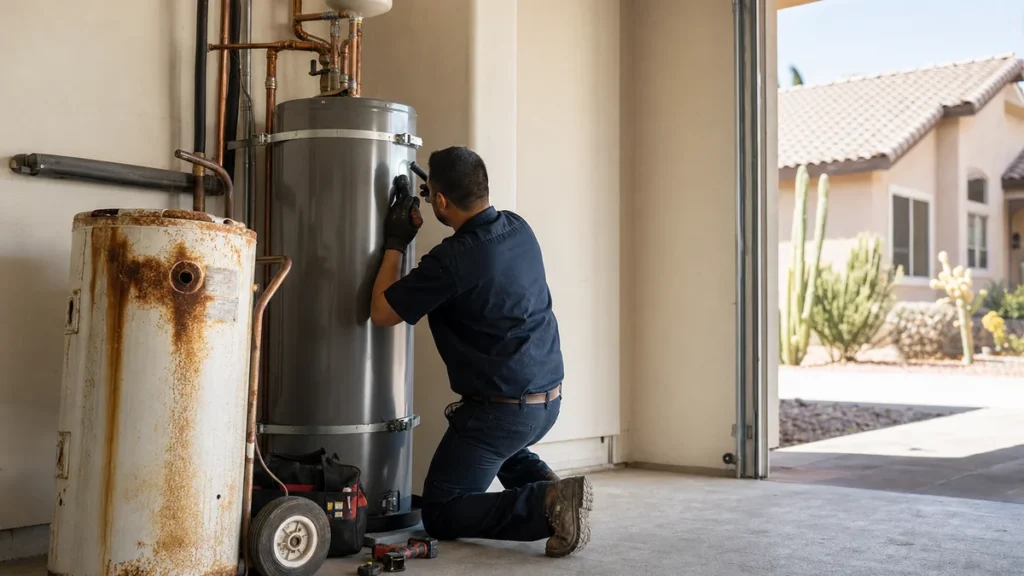
- Your own service calls. The tech clearing a drain or fixing a leak is standing next to a rusty tank or a run of corroded pipe.
- Past customers. Someone you fixed a leak for two years ago is the most likely repipe customer you have, and they already trust you.
- Referrals. Satisfied customers, and people who see houses before they’re bought or remodeled, such as real estate agents and home inspectors.
The cheapest of these is usually the second, because you’ve already paid to get the truck there.
How should I set up Google Ads for water heater jobs?
Give water heater work its own ad group (or its own campaign if you want a separate budget), with its own keywords, ads and landing page. Split the urgent searches (“no hot water”, “water heater leaking”, “emergency water heater replacement”) from the planned ones (“tankless water heater installation”, “water heater replacement cost”) if you have the budget to treat them differently; the urgent group should run when someone can answer the phone.
Before you spend, check demand. Google’s Keyword Planner shows estimates of monthly searches for each keyword and lets you forecast performance by location. Google notes that results also depend on your bid, budget, ad quality and location targeting, so treat it as an estimate.
The landing page should match the search: a water heater page that says you replace tanks and tankless units, how fast you can come out, whether you haul away the old tank, and what warranty you offer, with a phone number at the top. If clicks come in but calls don’t, why plumbing ads get clicks but no calls walks through the usual causes.
How should I advertise repipes?
Repipe searches are usually far fewer than water heater or drain searches, so a repipe campaign tends to be small and steady rather than a big spender. Check Keyword Planner for your own towns before deciding how much to put behind it. What carries a repipe campaign is the landing page, because the buyer is reading, not rushing. It should answer:
- What signs mean a house needs a repipe (repeated leaks, low pressure, discolored water, old pipe material) and when a spot repair is enough.
- How long the job takes and whether the family can stay in the house.
- What happens to walls and ceilings, and who patches them.
- What pipe material you use and why.
- Photos of your own repipe jobs, and reviews from repipe customers.
Expect a longer gap between the click and the signed job than on any service call. That’s normal for a big-ticket decision, and it’s why repipe ads should be judged over months, not days.
Which searches should I keep out of water heater ads?
Plumbing attracts a lot of searches from people planning to fix it themselves. Negative keywords let you exclude search terms that look like yours but come from someone after something else; Google’s example is an optometrist excluding “wine glasses”. For water heater ads, common candidates are words like “how to”, “reset”, “pilot light”, “parts”, “element”, “for sale”, “DIY” and “jobs” (people looking for work as a plumber).
One detail trips owners up. Google says negative keywords don’t match close variants, so you need to add synonyms and singular and plural versions yourself. Excluding “part” won’t automatically block “parts”. Check your search terms weekly at first and keep adding.
Curious what your marketing is actually booking?
Get a free visibility audit — no obligation, no sales pitch.
Can Local Services Ads bring in water heater work?
They can, if your settings point them at it. In the Local Services Ads settings you choose your industries and toggle on job types, and Google automatically opts you into broad “category” searches like “plumber near me”. Google says you can opt out of broad search, which may mean fewer leads, and that this may make sense if you only want leads from people searching for specific services. So check that the water heater work you want is switched on, and decide whether you want the general plumbing searches too.
Plumbing is in the first group moving Local Services Ads into Google Ads, a phase that began in August 2026 for select advertisers. Google says your service types, categories, service areas and budget transfer over automatically. Manual bidding, such as setting a maximum cost per lead, isn’t supported in Google Ads, so after the move your job types and the broad-search setting are the main levers for steering leads toward water heater work. Whether LSAs pay off at all for your shop is covered in whether Local Services Ads are worth it for plumbers.
What should my Google profile and website say about these jobs?
On your Google Business Profile, list them as services. Google’s services editor offers suggested services by business type (its own example is a plumbing business seeing options like “Install faucet”) and lets you add custom services with descriptions. Google says that when someone searches for an offering you provide, that service may be highlighted on your profile. Add water heater replacement, tankless installation and repiping if you do them, and write a short description for each. Keep prices and phone numbers out of custom service names, or Google will reject them.
On your website, give each its own page: one for water heater repair and replacement, one for tankless, one for repipes. A single “Services” page that lists twenty jobs in one paragraph gives Google and a homeowner nothing to go on. For more on the profile itself, see optimizing your plumbing Google profile.
How do I turn service calls into water heater and repipe estimates?
Make it part of every visit. A tech who’s under the sink anyway can note the water heater’s age and condition and the pipe material, and offer a written estimate when it’s near the end of its life. Homeowners take that better from the person who just fixed their problem than from an ad.
Then measure it. ServiceTitan’s legacy Technician Close Rate by Job Type report shows how many of each tech’s jobs converted, meaning the invoice passed a “sold threshold” you set for each job type, plus average ticket and revenue per tech. Other job software has similar reports. If one tech turns service calls into replacement work far more often than the others, find out what they say and teach it.
None of this means pressure. A customer with a fifteen-year-old tank should hear it from you before it floods the garage.
How should I advertise financing on big plumbing jobs?
Financing can help a repipe or a tankless upgrade get a yes, but credit advertising has federal rules. Under Regulation Z § 1026.24, an ad may only state credit terms that are actually available. If an ad mentions certain “triggering terms”, such as a down payment amount, the number of payments, a payment amount or a finance charge, it must also state the down payment, the repayment terms and the annual percentage rate. The CFPB’s interpretation notes that statements like “no downpayment” don’t trigger the extra disclosures.
In practice, “Financing available” is simple to run, while “Only $X a month” brings disclosures with it. This isn’t legal advice; the safest route is usually the approved ad wording from the financing company you work with.
How do I follow up on water heater and repipe estimates?
Treat every unsigned estimate as an open job, not a lost one. A planned water heater swap or a repipe is a decision homeowners talk over, price-check and sleep on, so a single quote left on the counter often loses to the plumber who called back. A simple routine:
- Send the written estimate the same day, with photos of what the tech saw.
- Call or text two or three days later to answer questions.
- Check in again a week or two after that, and once more before you close it out.
- Mark the reason when someone says no (price, timing, went with someone else), so you know what to fix.
The owner’s job is to make sure someone owns the list.
How do I track which marketing brings in the big jobs?
Count these jobs by value, not just by number. Google Ads lets you assign conversion values so you see the business value your campaigns produced, not only how many conversions happened, and Google suggests measuring a different value for each conversion if you offer different services at different price points. A repipe and a drain call shouldn’t count the same in your reports.
The simplest version: tag every booked job with its source in your job software, and once a month add up revenue by source and job type. Tracking which plumbing marketing books jobs covers the setup, including call tracking.
Not sure which of these is costing you jobs?
A free visibility audit checks the Google profile, reviews, site and tracking, and shows what to fix first.
What's different about water heater and repipe jobs for plumbers
The urgent and the planned version of the same job. Few other trades sell the same product both as an emergency and as a considered purchase the way plumbers sell water heaters. That’s why the same keyword list should not get the same ad: “water heater leaking” wants a phone number and a time; “tankless water heater cost” wants options and reviews.
Repipes sell on trust more than speed. The homeowner is letting a crew open walls in the house they live in. Photos of clean job sites, reviews that mention repipes by name and a clear explanation of how long it takes do more than a lower price.
Your best leads may already be in your job history. Every past leak repair, every slab leak and every water heater you serviced but didn’t replace is a list of homes more likely than average to need the bigger job. Most shops never market to it.
A worked example: why the expensive lead can be the best one
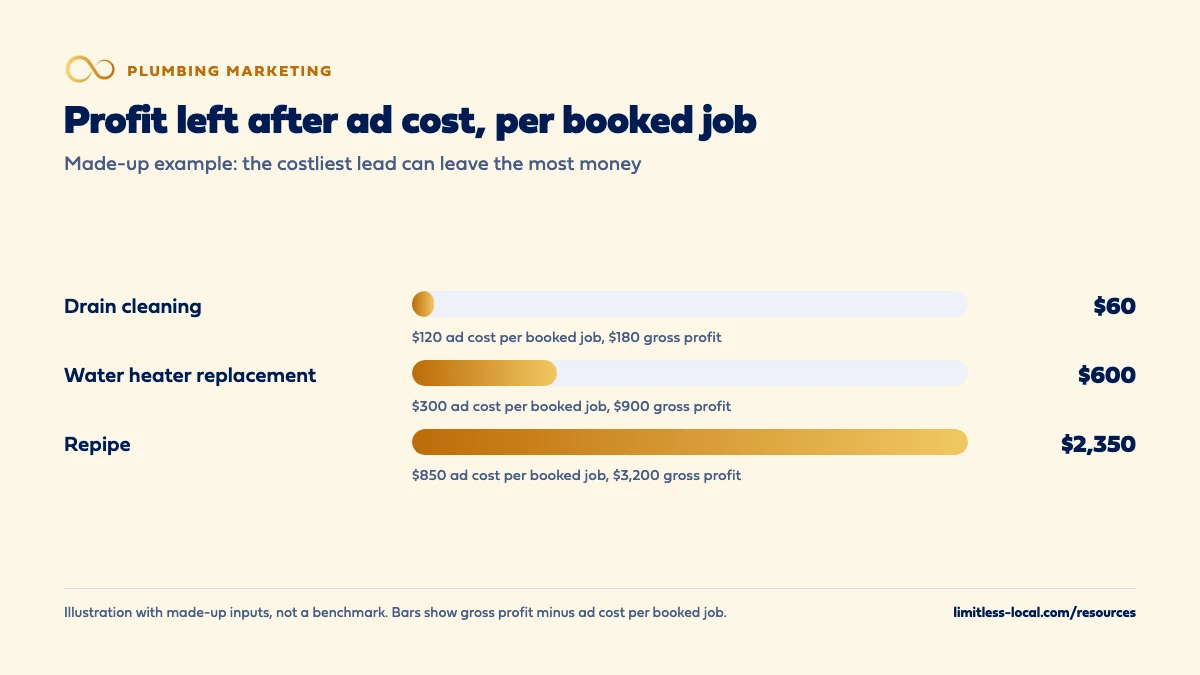
These numbers are made up to show the math, not a benchmark for your market. Say your ads produce these results:
- Drain cleaning: each booked job costs $120 in ads and leaves $180 in gross profit, so $60 is left after ad cost.
- Water heater replacement: leads cost $75 each and about 1 in 4 books, so each booked job costs $300 in ads. Each leaves $900 in gross profit, so $600 is left.
- Repipe: leads cost $170 each and about 1 in 5 books, so each booked job costs $850 in ads. Each leaves $3,200 in gross profit, so $2,350 is left.
Judged by cost per lead, the repipe campaign looks like the worst performer. Judged by what’s left after ad cost, it’s the best by a wide margin, and the drain ads barely pay their way. That’s the case for separate campaigns and value-based tracking: without them, a budget cut aimed at “expensive leads” would cut the most profitable work first. A free visibility audit can show where your own numbers stand.
Frequently asked questions
Should I advertise tankless water heaters separately?
If you install a meaningful number of them, yes. Tankless buyers usually research longer and ask different questions than someone whose tank just failed, so a separate ad group and page lets you answer them directly.
Do I need a separate website page for slab leak repair and repipes?
If you offer both, separate pages are clearer. A slab leak is often urgent and a repipe usually isn’t, so each page should answer the questions that buyer has at that moment.
Can I put water heater prices on my Google Business Profile?
You can add a price in a service’s details, but not in a custom service’s name; Google rejects custom service names that include prices or phone numbers. Whether to show a price at all is a sales decision for your market.
How long does it take for repipe ads to pay off?
Longer than service-call ads, because the decision takes longer. Ads can start bringing leads within days, but judge a repipe campaign on signed jobs over a few months, not on the first week’s calls.
Are past customers worth marketing to for repipes?
Usually, yes. Homes where you’ve already fixed leaks are more likely to need a repipe, and those owners already know your work. A short, honest note or call when you see a pattern is often enough.
Key takeaways
- Give water heater, tankless and repipe work their own ads, landing pages and profile services.
- Split urgent water heater searches from planned ones, and run the urgent ads when someone answers.
- Block do-it-yourself searches with negative keywords, including plurals and synonyms.
- Your techs and your past-customer list are a source of big jobs most shops never market to.
- Follow up on every unsigned estimate, and record why people say no.
- Track these jobs by value: the costliest lead can leave the most profit.
Want a second set of eyes on your setup?
We'll look at how you show up locally and where calls are leaking, then send you a plain-English breakdown.
More in this section
- How do I get more plumbing leads?
- How should a new plumbing company get its first customers?
- How do I get more Google reviews for my plumbing company?
- How do I stop losing after-hours plumbing calls?
- How do I track which plumbing marketing books jobs?
Sources
- Use Keyword Planner — Google Ads Help
- About negative keywords — Google Ads Help
- Edit your industries, service areas, and job types — Google Local Services Help
- Local Services Ads transition to Performance Max campaigns with pay-per-lead goals — Google Ads Help
- Manage your services on your Business Profile — Google Business Profile Help
- About conversion values — Google Ads Help
- § 1026.24 Advertising (Regulation Z) — Consumer Financial Protection Bureau
- Technician Close Rate by Job Type Legacy Report — ServiceTitan Help