
How do I get more repeat customers and referrals for plumbing?
- How do plumbers get past customers to call back and send their friends?
- Why don't plumbing customers come back on their own?
- How do I make sure past customers call me first next time?
- How often should I stay in touch with past customers?
- Can I text past customers instead of emailing them?
- How do memberships turn one-time customers into repeat ones?
- When should I ask a plumbing customer for a referral?
- How do I ask for referrals without sounding desperate?
- Should I pay customers or other businesses for referrals?
- How do I get referrals from realtors, inspectors and property managers?
- Can I ask for a referral and a Google review at the same time?
- How do I track repeat and referral jobs?
- What's different about repeat business for plumbing companies
- A worked example: what referrals are worth next to ads
- Frequently asked questions
- Key takeaways
- More in this section
- Sources
The short version
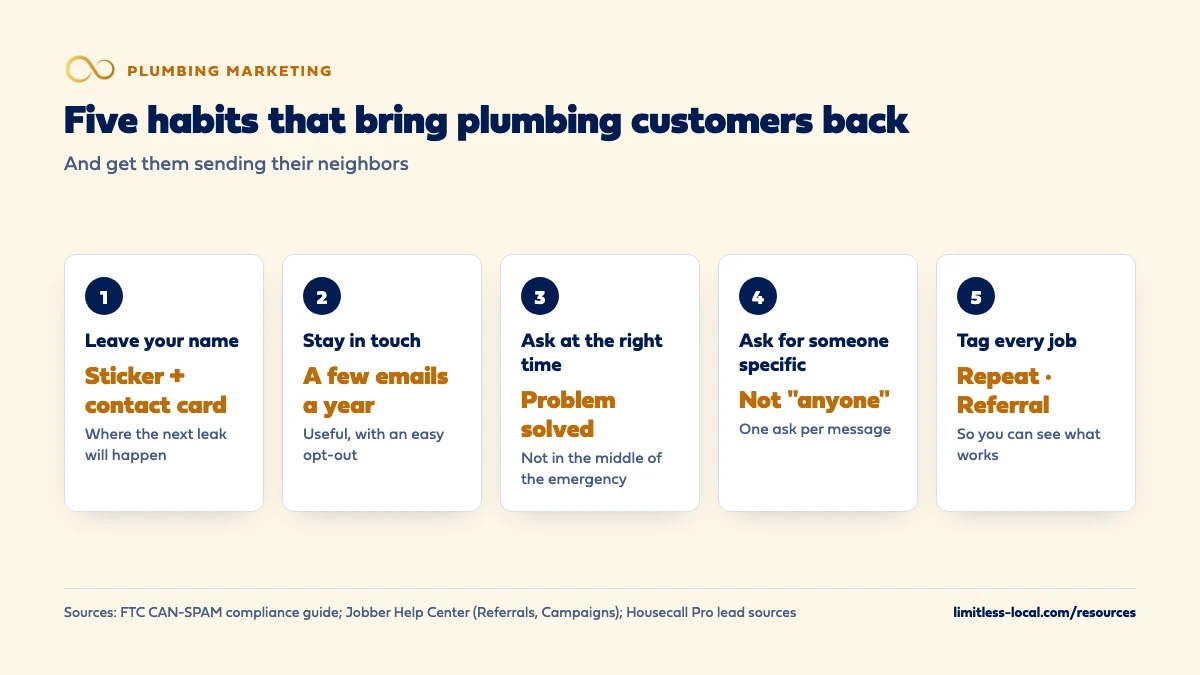
- Leave your name where customers will find it when the next leak happens.
- Email past customers a few times a year, with an easy way to opt out.
- Ask for referrals when the problem is solved, and ask for someone specific.
- Thank referrers personally instead of paying them, and tag every referral job.
For plumbing owners who do good work but find that most customers search Google again the next time something breaks.
Get a free visibility audit · Book a growth call
How do plumbers get past customers to call back and send their friends?
Get more repeat plumbing customers by making sure every customer can find your name the next time something breaks, staying in touch a few times a year by email, and offering a maintenance plan so the next visit is already booked. Get more referrals by asking at the moment the problem is clearly solved, asking for someone specific instead of “anyone”, and making it one tap to pass your name along. You don’t need to pay for referrals; a personal thank-you and fast, reliable service for the people they send do more, and every repeat and referral job should be tagged in your software so you can see what’s working.
Repeat and referral jobs are usually the cheapest work a plumbing company books, but only if the follow-up actually happens. That’s what our automation add-ons handle: a lead tracking dashboard, unified messaging, and calendar and reminders that plug into any tier of our plumbing marketing packages, alongside the review generation every package includes. The rest of the plumbing marketing questions library covers the paid channels these jobs sit next to.
Why don't plumbing customers come back on their own?
Because most homeowners only need a plumber every so often, and by the time they do, they’ve forgotten your name. A furnace or AC unit gets serviced every year; a drain, a water heater or a sewer line usually gets attention only when it fails. When it does, the customer is stressed, the water is running, and the fastest thing to do is search Google, where they’ll find whoever shows up first.
In our judgement, that’s the whole problem in one sentence: the customer liked you, but you weren’t in their head or their phone when it mattered. Everything below is about fixing that, and about turning a good job into a name passed along to a neighbor.
How do I make sure past customers call me first next time?
Put your name where the next emergency will happen. A few habits cost almost nothing:
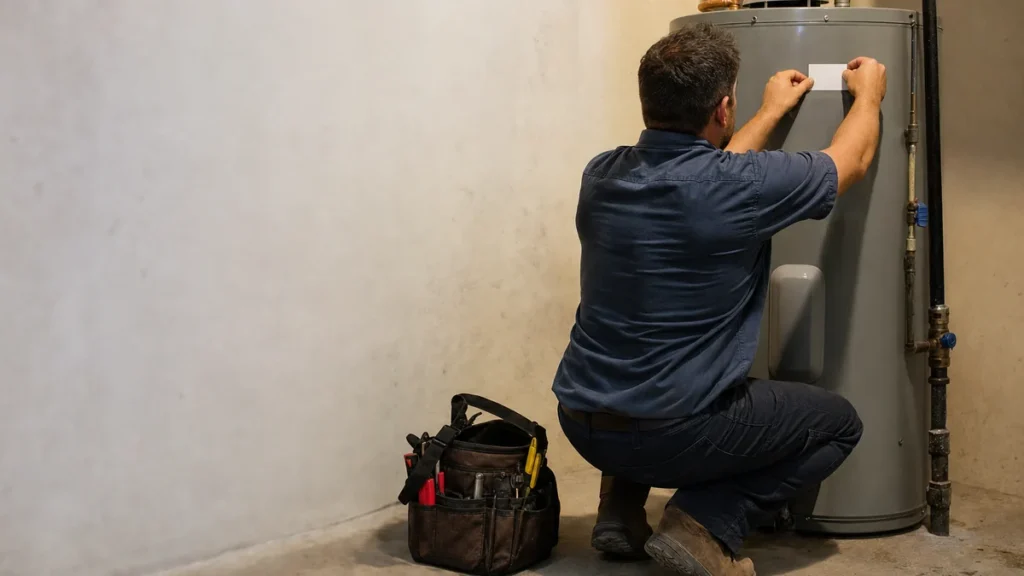
- A sticker with your number on the water heater and under the kitchen sink, with the customer’s permission. That’s where they’ll be looking when something leaks.
- A contact card in the thank-you text. Send your business as a contact the customer can save in one tap, so your number is in their phone under “plumber”.
- The invoice. Your number, your website and what you’d want them to call about next, such as a water heater check or a drain cleaning.
- A short note about the shutoff. Show the customer where the main shutoff is and leave your number next to it. They’ll remember who showed them.
The second habit is answering when they call. A past customer who gets voicemail at 9 p.m. will call the next plumber on Google, which is why stopping lost after-hours calls matters for repeat business as much as for new leads.
How often should I stay in touch with past customers?
A few times a year is enough for most plumbing companies, as long as each message gives the customer something useful: a reminder before the first freeze, a water heater check, a heads-up that you’re booking ahead for a busy season. Weekly promotions train people to ignore you.
Field software makes this easy to set and forget. Jobber’s campaign tools include an automated campaign that emails clients who haven’t booked with you in a while, and can filter by the services on their past jobs, so water heater customers can get a different message from drain customers.
Marketing email has rules, and they’re simple to follow. The FTC’s CAN-SPAM guide says commercial email must include your valid physical postal address and a clear way to opt out, and opt-out requests must be honored within 10 business days. The FTC also says members of a membership program can still opt out of marketing email. This is general guidance, not legal advice.
Can I text past customers instead of emailing them?
Only the ones who agreed to it. The FCC says texts sent to a mobile phone with an autodialer need the owner’s prior consent, that commercial texts need written consent, and that people can opt out in any reasonable way, even after giving consent. A text about a job the customer booked is a different thing from a marketing text to your whole list.
The practical fix is to ask at booking or on the invoice whether customers want texts about offers and reminders, record the answer in your software, and text only those who said yes. Everyone else gets email. This is general guidance, not legal advice.
How do memberships turn one-time customers into repeat ones?
A maintenance plan books the next visit before the tech leaves the driveway, and it gives the customer a reason to call you first when something breaks, because members get priority. That makes it the most direct way to turn a one-time plumbing customer into a repeat one.
What to put in the plan, how to price it and when to offer it are covered in selling more maintenance memberships. The short version for this page: offer it on every residential call, especially after an emergency fix and with every water heater install.
Curious what your marketing is actually booking?
Get a free visibility audit — no obligation, no sales pitch.
When should I ask a plumbing customer for a referral?
When the customer can see the problem is solved and feels relieved: the water’s back on, the drain runs clear, the new water heater is making hot water. In plumbing, that’s often a few hours after a stressful call, not during it.
- In person, at the end of the job: the tech mentions that most of your work comes from people telling their neighbors, and leaves a card.
- In writing, later that day or the next morning: a thank-you text or email with a referral link. Jobber, for example, can run automated referral campaigns that ask clients for referrals after a job is completed, and gives each client a unique referral link.
- Once a year to past customers: Jobber’s referral campaigns can target past clients whose last job was more than 12 months ago with nothing scheduled.
How do I ask for referrals without sounding desperate?
Ask once, ask specifically, and make it easy. Desperate sounds like “please tell everyone you know” on every invoice. Confident sounds like this:
- “Glad we got that sorted. If a neighbor ever has a water heater going out, we’d be glad to help them the same way.”
- “A lot of our work comes from customers sending friends our way. If anyone you know is buying an older house, we do sewer camera inspections.”
A few things help, in our experience:
- Name a situation, not “anyone”. A specific job (an older house, a slow drain, a water heater past its prime) is easier for a customer to match to a person they know.
- One ask per message. A message that asks for a review, a referral and a plan sign-up at once tends to get none of them.
- Give them something to pass on. A link or a card does the work; “tell them to Google us” sends the friend back to the search results.
Should I pay customers or other businesses for referrals?
We don’t recommend it. In our judgement, a cash reward turns a recommendation into a transaction, which is exactly what makes a referral ask feel desperate, and plumbing referrals run on trust: the customer is vouching that you’ll show up, be honest and fix it right. Paying doesn’t add to that.
What works instead costs nothing but attention:
- Thank the person who sent the job, personally, with a call or a handwritten note once the referred job is done.
- Take care of the people they send. Answer fast, show up on time and tell the referrer it went well. That’s what makes them send the next one.
- With other trades and professionals, send work back. Recommending a good remodeler or electrician to your customers builds the relationship better than a fee.
If your field software’s referral tool offers a credit, it’s a setting you control. Jobber’s tool, for example, gives each client a unique referral link and tracks referred leads, jobs and revenue, and the credit is a separate toggle.
How do I get referrals from realtors, inspectors and property managers?
These are repeat referrers: one good property manager can send more work in a year than dozens of homeowners. In our view, they care about three things more than price:
- Speed. A realtor with a closing date or a property manager with a tenant calling wants a call back today.
- Clear reports. Photos, a short written finding and a price they can pass on. A sewer camera inspection with a clear write-up is something a home inspector can recommend with confidence.
- Not making them look bad. The person who referred you owns the result. Showing up on time and keeping them posted protects that.
Start with the people you already work with: the property managers whose tenants call you, the inspectors whose reports send buyers your way. A short visit to ask how you can make their job easier goes further than a mailer. Commercial and property-management accounts need a different approach from homeowners, which marketing to commercial customers covers.
Can I ask for a referral and a Google review at the same time?
You can ask for both, but don’t tie anything to the review. Google’s help page on review links says offering incentives, like free or discounted goods or services, in exchange for reviews is considered fake engagement and is strictly prohibited. Google does make asking easy: you can create a review link or QR code from your Business Profile to share with customers.
Asking for both in person at the end of the job is fine. In writing, in our judgement, most plumbing companies do better keeping them apart: the review request goes out with the thank-you, and the referral ask comes later or in person. Ask everyone for a review the same way. How to get the asking to happen on every job is covered in getting more Google reviews.
How do I track repeat and referral jobs?
Tag where every job came from, and make “Repeat customer” and “Referral” two of the options. Housecall Pro’s lead source field can be tracked on customers, jobs and estimates, so you can report on which sources bring you good jobs. Jobber’s referral dashboard shows the leads, jobs and job revenue that came from referrals, broken down by the customer who referred them, which tells you who your best referrers are.
Watch three numbers: the share of booked jobs from past customers, referral jobs and their revenue, and how many past customers you contacted this year. Keep these jobs separate from your ad results, or your ads will get credit for calls that would have come anyway. Tracking which marketing books jobs covers how.
Want to see where your company stands?
A free visibility audit shows where you show up on Google, Maps and AI answers, and what it's costing you in calls.
What's different about repeat business for plumbing companies
Long gaps between jobs. A plumbing customer may not need you again for years, so your name has to survive the wait. Stickers, saved contacts and a few useful emails a year do that job; a one-time thank-you doesn’t.
The next call is usually an emergency. When it comes, the customer calls whoever they can reach fastest. Being answerable at night matters as much as being remembered.
Some referrals come from other professionals. Realtors, home inspectors, property managers and remodelers see plumbing problems every week. A handful of those relationships can matter more than a referral program aimed at homeowners.
Big jobs come from small ones. A drain call is often the first time a customer meets you; a repipe or water heater replacement may follow years later. The repeat customer you keep today is where those jobs come from.
A worked example: what referrals are worth next to ads
These numbers are made up to show the math, not a benchmark for your market. Say you complete 900 residential jobs a year. If one in every thirty of those customers sends someone who books, that’s 30 referred jobs.
Say your average ticket on those jobs is $450. That’s $13,500 in referred revenue, with no ad spend and no fee paid to anyone. Now say your ads cost you about $150 per booked job. Booking those same 30 jobs through ads would cost around $4,500.
The point isn’t the exact figures; it’s the comparison. Put your own referral jobs and repeat jobs next to your cost per booked job from ads, and you’ll see in your own numbers whether time spent on past customers is paying off.
Frequently asked questions
What's the best way to thank someone for a referral?
Personally. A call or a handwritten note once the referred job is done, and good service for the person they sent, does more than a payment.
Should my techs ask for referrals, or the office?
Both, at different times. The tech asks in person at the end of the job; the office or your software follows up in writing the next day with a link.
Do I need permission to email past customers?
For email, the FTC’s CAN-SPAM guide lists what every marketing message needs, including your physical postal address and a clear opt-out honored within 10 business days. It also says members of a membership program keep the right to opt out of marketing email, even though you don’t need their consent to send it. Texting is stricter: the FCC says commercial texts need written consent. This is general guidance, not legal advice.
Can I offer a past customer a discount on their next service?
Yes, as a thank-you for coming back, as long as it isn’t tied to leaving a Google review. Google prohibits offering discounts or anything else in exchange for reviews.
How do I find my best past customers to contact first?
Start with water heater, repipe and sewer customers and anyone who called more than once. Field software can filter past clients by the services on their jobs and how long since their last visit.
What if a referred customer isn't a good fit?
Treat them well and refer them on. Being honest that a job isn’t yours protects the person who sent them, which keeps the referrals coming.
Key takeaways
- Plumbing customers forget you between jobs, so leave your name where the next leak will happen.
- Email past customers a few useful times a year, with a postal address and an easy opt-out.
- Ask for referrals when the problem is solved, name a specific situation and ask for one thing at a time.
- Don’t pay for referrals; thank people personally and take care of who they send.
- Tag repeat and referral jobs so they don’t get counted as ad results.
Not sure what's working right now?
Start with a free visibility audit: rankings, Google profile, reviews and tracking, checked against your service area.
More in this section
- How do I get more plumbing leads?
- How should a new plumbing company get its first customers?
- How do I get more Google reviews for my plumbing company?
- How do I sell more plumbing maintenance memberships?
- How do I get my plumbing techs to ask for reviews on every job?
Sources
- Referrals | Marketing Tools — Jobber Help Center
- Campaigns | Marketing Tools — Jobber Help Center
- How to Use Lead Sources — Housecall Pro Help Center
- CAN-SPAM Act: A Compliance Guide for Business — Federal Trade Commission
- Stop Unwanted Robocalls and Texts — Federal Communications Commission
- Create a Google link or QR code to request reviews — Google Business Profile Help