
When is a roofing company ready for a full-time marketing hire?
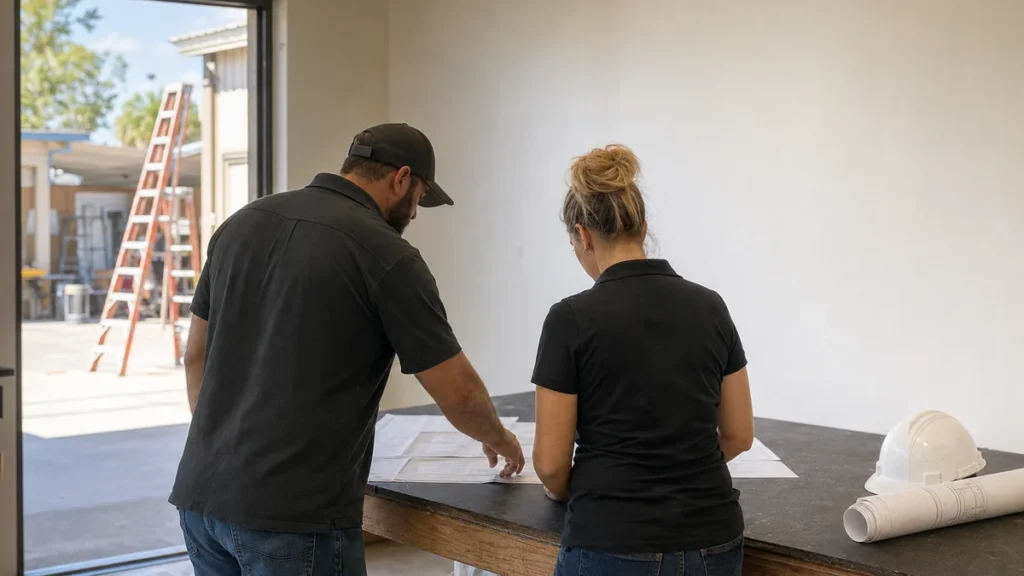
- Is my roofing business big enough to hire a full-time marketer?
- What does a full-time marketing hire really cost a roofing company?
- What workload signs say a roofer needs someone in-house?
- How much revenue or how many leads does a roofer need before hiring?
- What can one marketing hire realistically do for a roofer?
- Is an in-house marketer cheaper than an agency for a roofing company?
- When does it make sense to have both an in-house marketer and an agency?
- Should a roofer hire a marketing coordinator or a marketing manager first?
- What should be in place before the hire starts?
- How do I know if the marketing hire is working?
- Should the marketer be an employee or an independent contractor?
- What's different about a marketing hire for roofers
- A worked example: can this roofer carry a full-time marketer?
- Frequently asked questions
- Key takeaways
- More in this section
- Sources
The short version
- Count the full cost: salary plus benefits, payroll setup, tools and training, with ad spend still on top.
- The clearest sign is workload: marketing tasks that matter and aren't getting done every week.
- One hire is a generalist; ads, SEO and web work usually still need specialists.
- Keep every account in the company's name and judge the hire by cost per signed roof.
For roofing owners weighing an in-house marketer against an agency, a freelancer or doing it themselves.
Get a free visibility audit · Book a growth call
Is my roofing business big enough to hire a full-time marketer?
A roofing company is usually ready for a full-time marketing hire when there’s a full week of marketing work nobody has time to do, enough leads and channels that someone has to manage them every day, and enough margin to carry the full cost of an employee, not just the salary. Benefits made up 31.5% of employer costs for full-time private-industry workers in June 2026, according to the Bureau of Labor Statistics. Before that point, an agency, a freelancer or a part-time coordinator usually covers the work for less, and later on, an in-house person plus outside specialists is often the better fit than either alone.
Whichever way you go, the test is the same: what each signed roof cost. Our marketing packages are priced in the open, so you can put them next to the cost of a hire, and ad spend is paid to Google separately either way. Our roofing marketing page covers how we work with roofers, the roofing marketing guide covers doing it yourself versus hiring outside help, and the rest of the roofing marketing questions library goes question by question.
What does a full-time marketing hire really cost a roofing company?
More than the salary. Start with pay. The Bureau of Labor Statistics puts the median annual wage for market research analysts, the occupation group that includes marketing specialists, at $78,760 in May 2025 (Market Research Analysts), and the median for marketing managers at $166,790 (Advertising, Promotions, and Marketing Managers). Those are national medians; pay in your area and for your candidate will differ.
Then add benefits. For full-time private-industry workers in June 2026, wages and salaries were 68.5% of employer compensation costs and benefits the other 31.5% (Employer Costs for Employee Compensation). If a salary is 68.5% of the total, a $78,760 salary works out to roughly $115,000 a year in total compensation cost.
On top of that sit things the BLS figure doesn’t cover: the payroll setup the SBA lists for any new employee, such as an Employer Identification Number, W-4 forms, tax withholding and quarterly payroll tax reports (Hire and manage employees); software and tools; training; and the time it takes you to manage someone. Ad spend is separate again.
What workload signs say a roofer needs someone in-house?
In our judgement, the strongest signs are about work not getting done, not about revenue:
- You’re doing marketing at night and on weekends, and it’s still slipping.
- Job-site photos, review requests and Google profile posts happen in bursts, then stop for weeks.
- Leads wait hours for a callback because nobody owns them. How fast to call back a new lead shows why that costs jobs.
- You’re coordinating several outside vendors, such as an ads person, a web designer and a print shop, and nobody checks their work.
- Storm weeks overwhelm everyone, and marketing is the first thing dropped.
If most of these are true and the list of undone work would fill a forty-hour week, you’re close. If they’d fill a day or two, a part-time person or outside help fits better.
How much revenue or how many leads does a roofer need before hiring?
There’s no honest single threshold, so do the math for your own business instead. The SBA notes that many businesses use a percentage of revenue as a guide for their marketing budget, with a wide range from business to business (How to Get the Most From Your Marketing Budget). Two checks help:
- Share of revenue. Divide the full cost of the hire by your annual revenue. That’s what you’d be spending on one person before a dollar of ad spend.
- Signed roofs to break even. Divide the full cost by the gross profit on a typical signed job. That’s how many extra signed roofs a year the hire has to help produce just to pay for themselves.
If the second number looks reachable given your current lead flow and close rate, the hire can pay. If it would mean doubling your signed jobs, it probably can’t yet. The worked example below runs both checks.
What can one marketing hire realistically do for a roofer?
One person is a generalist. In our judgement, a good in-house marketer can own the day-to-day: collecting job-site photos, sending review requests, keeping your Google profile current, following up on leads, managing print and vendors, and pulling a monthly report on where signed roofs came from.
What one person usually can’t do well is everything else at an expert level: running Google Ads and Local Services Ads, technical SEO, website development, design and call tracking setup. Expecting one hire to be all of those at once is where many in-house hires disappoint. Hire for the work that has to happen every day and on site, and buy the specialist work.
Curious what your marketing is actually booking?
Get a free visibility audit — no obligation, no sales pitch.
Is an in-house marketer cheaper than an agency for a roofing company?
Usually not at the start, because you’re comparing one person with a team. Using the BLS figures above, a generalist at the median wage costs roughly $115,000 a year once benefits are counted. For comparison, our Essentials package is $3,500 a month, or $42,000 a year, and Growth is $4,500 a month, or $54,000 a year, with ad spend paid to Google separately in every case.
Cheaper isn’t the whole question, though. An employee is in your office every day, knows your crews and can walk a job site; an agency brings specialists you’d otherwise have to hire one by one. The fair comparison is what each costs per signed roof, which you can only see if the leads are tracked to signed jobs either way. Knowing if your marketing agency is getting results covers how to measure an outside team on that basis.
When does it make sense to have both an in-house marketer and an agency?
When there’s daily on-site work and specialist work at the same time. In our judgement, that’s often the next step after outgrowing an agency-only setup: the in-house person collects photos, chases reviews, follows up on leads and holds the outside team to its numbers, while the specialists run ads, SEO and the website.
This setup also protects you. If you ever change agencies, the person who knows your accounts and your history is on your payroll. Switching agencies without losing leads covers that handover.
Should a roofer hire a marketing coordinator or a marketing manager first?
For most roofers, a coordinator first, in our judgement. If the gap is execution, meaning photos, reviews, posts, follow-up and vendor wrangling, you need someone to do the work, not someone to plan it. The BLS median for marketing managers, $166,790, is about twice the median for market research analysts and marketing specialists, which tells you what you’d be paying for strategy and management.
A manager starts to make sense when you have several people or vendors to direct, several locations, or a budget large enough that planning mistakes are expensive.

What should be in place before the hire starts?
- Accounts in the company’s name. Give the hire their own access rather than your login. Google Ads lets you assign each user an access level (About access levels in your Google Ads account), and a Google Business Profile can have several owners and managers but only one primary owner (Manage your Business Profile owners & managers). That primary owner should be you or the company.
- Tracking from lead to signed roof. Without it, the hire can only report activity. Tracking which leads become signed jobs covers the setup.
- One place for leads. A shared system where every lead and its follow-up lives. Whether a roofer needs a CRM covers when that’s worth it.
- A written goal. Cost per signed roof and the number of signed roofs, reviewed monthly.
How do I know if the marketing hire is working?
Judge them the way you’d judge any outside agency: signed roofs, cost per signed roof, and whether the basics happen every week without you chasing them. Activity counts like posts made and calls taken are a means, not the result.
Give it time. Some of the work, like reviews and photos, shows up quickly; anything that depends on SEO is a ramp that typically takes 3 to 6 months to show meaningful organic growth. Set a review at a fixed point and decide then, not after one bad month.
Should the marketer be an employee or an independent contractor?
That depends on how the work is set up, and it’s a legal and tax question as much as a marketing one. The SBA notes that an independent contractor operates under a separate business name and invoices for completed work, that contractors can sometimes qualify as employees in a legal sense, and that if a contractor meets the legal definition of an employee you may owe back taxes and penalties, benefits and wages (Hire and manage employees).
A freelancer on a defined project, like a set of service pages, is a common way to test whether you need more help before committing to a salary. Check the classification with your accountant before you start; this isn’t legal or tax advice.
Not sure which of these is costing you jobs?
A free visibility audit checks the Google profile, reviews, site and tracking, and shows what to fix first.
What's different about a marketing hire for roofers
The best material is on the roof. Before-and-after photos, short crew videos and finished-job details come from job sites. An in-house person who visits jobs, or trains crew leads to capture them, gets material an outside team never sees.
Storm weeks change the job overnight. After a big storm, the marketing role can turn into answering phones, scheduling inspections and managing a surge of leads. Decide in advance what the hire drops when that happens.
Marketing and sales blur. In roofing, a marketing hire can drift into canvassing, inspections or selling. That may be useful, but it isn’t marketing; write down which job you’re paying for.
Slow months need a plan. When storm work dries up, the hire’s time should go to reviews, the website, past-customer follow-up and preparing for the next season, not waiting for the phone.
A worked example: can this roofer carry a full-time marketer?
The revenue and job figures here are made up to show the math; the wage and benefit figures are from the BLS. Say a roofing company does $3 million a year and is considering a marketing generalist at the BLS median wage of $78,760.
- Full cost: $78,760 divided by 68.5% is roughly $115,000 a year, before tools, training and ad spend.
- Share of revenue: $115,000 divided by $3 million is about 3.8% of revenue, for one person.
- Signed roofs to break even: if a typical signed job leaves $5,000 in gross profit, the hire needs to help produce about 23 extra signed roofs a year, roughly two a month, just to pay for themselves.
For comparison, a $54,000-a-year Growth package would need about 11 extra signed roofs a year on the same assumption, with ad spend separate in both cases. Neither number decides it alone: an employee does work an agency can’t, and the reverse. The question is whether two extra signed roofs a month is realistic for your lead flow and close rate. A free visibility audit is one way to see where those roofs could come from.

Frequently asked questions
Can my office manager handle marketing instead of a new hire?
For a while, if the work is mostly reviews, photos and posts and they have real hours for it. Once leads wait for callbacks or vendors go unchecked, the role has outgrown a side job.
Should a marketing hire run our Google Ads?
Only if they have real experience with it. Paid search wastes money quickly in untrained hands, so in our judgement it often makes sense to keep ads with a specialist and have the in-house person hold them to cost per signed roof.
What should I look for when hiring a roofing marketer?
Someone who talks about leads and signed jobs rather than likes and impressions, can show work they did themselves, and is comfortable on a job site with a phone camera.
Does a marketing hire replace the need for tracking?
No. Without call tracking and a way to tie leads to signed roofs, the hire can only report activity, and you can’t tell whether the salary is paying for itself.
Is a part-time marketer a good middle step?
Often, yes. A part-time coordinator handles the weekly basics at a lower cost and shows you how much work really exists before you commit to a full-time salary.
Key takeaways
- A full-time marketer costs well beyond salary: benefits were 31.5% of employer costs for full-time private-industry workers in June 2026.
- The clearest sign you’re ready is a full week of undone marketing work, not a revenue number.
- Work out how many extra signed roofs a year the hire must help produce to break even.
- One hire is a generalist; plan to buy specialist work for ads, SEO and the website.
- Keep accounts in the company’s name, track leads to signed roofs, and judge the hire on cost per signed roof.
Want a second set of eyes on your setup?
We'll look at how you show up locally and where calls are leaking, then send you a plain-English breakdown.
More in this section
- How should a roofing company market commercial roofing?
- How do I know if my roofing marketing agency is getting results?
- How do I market a roofing company in the slow season?
- Is $1,000 a month enough for roofing marketing?
- Should my roofing marketing go after repairs or replacements?
Sources
- Market Research Analysts — U.S. Bureau of Labor Statistics, Occupational Outlook Handbook
- Advertising, Promotions, and Marketing Managers — U.S. Bureau of Labor Statistics, Occupational Outlook Handbook
- Employer Costs for Employee Compensation Summary — U.S. Bureau of Labor Statistics
- Hire and manage employees — U.S. Small Business Administration
- How to Get the Most From Your Marketing Budget — U.S. Small Business Administration
- About access levels in your Google Ads account — Google Ads Help
- Manage your Business Profile owners & managers — Google Business Profile Help