
How do I market water softeners and filtration as a plumber?
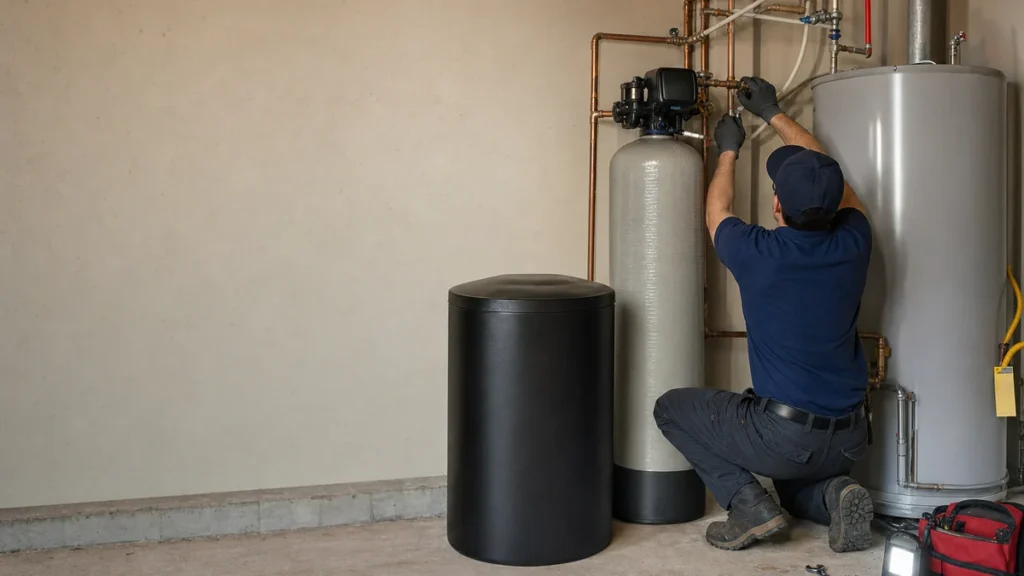
- How can a plumbing company sell more water softener and water filtration installs?
- Is water treatment worth marketing for a plumbing company?
- Step 1: What water problem does my market actually have?
- Step 2: What should I say each system does?
- Step 3: Why should I lead with a water test instead of a warning?
- Step 4: What health claims can I make in my ads?
- Step 5: What should my water treatment pages say?
- Step 6: Can I test water treatment with Google Ads on a fixed budget?
- Step 7: How do I sell water treatment to customers I already have?
- Step 8: How do I turn installs into recurring revenue?
- How do I know if water treatment marketing is working?
- What's different about water treatment for plumbers
- A worked example: a fixed-budget water treatment test
- Frequently asked questions
- Key takeaways
- More in this section
- Sources
The short version
- Check what your area's water problem really is: hardness, private wells, or something in the utility's report.
- Lead with a water test, not a fear message, and only claim what the CDC, the EPA or the product's certification says.
- Give softeners and filtration their own pages, profile services and a Google Ads campaign with a fixed budget.
- Sell to the customers your techs already visit, and sell the maintenance plan with every install.
For plumbing owners adding water treatment to their services, or trying to sell more of it, without sounding like a door-to-door water salesman.
Get a free visibility audit · Book a growth call
How can a plumbing company sell more water softener and water filtration installs?
Start with the problem your market actually has, such as hard water or private wells, and lead your marketing with a water test rather than a scare, because the CDC says to test your water and choose a system that removes what you’re concerned about. Give softeners and filtration their own pages, Google profile services and a separately budgeted Google Ads campaign, and offer them to the customers your techs already see. Keep every health or contaminant claim to what the EPA, the CDC or the product’s certification actually says, and sell the maintenance plan with the install.
A new service line is where clear budgets and honest tracking matter most, and it’s how we run ad campaigns: each service gets its own campaign and is judged on booked jobs, not clicks. Google Ads management is part of every package, and ad spend is paid directly to Google, so you set the budget. See how we approach plumbing marketing, and the plumbing marketing questions library for the rest, one question at a time.
Is water treatment worth marketing for a plumbing company?
Often, yes, for three reasons. You’re already in the house, under the sink and next to the water heater, so the install fits work you do every day. A homeowner trusts the plumber who fixed their leak more than a stranger knocking on the door. And softeners and filters need ongoing service, which turns one sale into repeat visits.
It isn’t a fit everywhere. If your area has soft city water and few wells, demand may be small, and money spent advertising it might do more on drains or water heaters. Which plumbing services to advertise first covers how to rank services by what they’re worth to you. The steps below assume your market has a real water problem worth solving.
Step 1: What water problem does my market actually have?
Find out before you write a word of marketing, because it decides what you sell and what you can say.
- Hardness. The USGS describes water hardness as the amount of dissolved calcium and magnesium in water. Homeowners notice it as soap that leaves hands feeling slimy and spots or film on glasses, which the USGS calls “not dangerous, but unsightly”, and over time as scale inside pipes that can lower water pressure. Its general guidelines classify 0 to 60 mg/L as calcium carbonate as soft, 61 to 120 as moderately hard, 121 to 180 as hard, and more than 180 as very hard.
- City water. The EPA requires community water systems to send customers an annual drinking water quality report, also called a Consumer Confidence Report, each year by July 1. Read the reports for the utilities in your service area: they list the source of the water and the regulated contaminants found.
- Private wells. The EPA says private well owners are responsible for delivering safe drinking water to their households, and that private well water isn’t regulated by the federal government under the Safe Drinking Water Act, nor by most states. If your service area has many wells, well owners are a natural audience for testing and treatment.
Step 2: What should I say each system does?
Say what the CDC says, and nothing bigger. Its page about home water treatment systems states that:
- Water softeners remove minerals, primarily calcium and magnesium; hard water can leave scaly buildup and stop soap from lathering. Softeners do not remove parasites, bacteria or viruses.
- Reverse osmosis removes parasites, bacteria and viruses, and some chemicals, including lead, copper, chromium, chloride and sodium. It may also reduce others, so the CDC says to check the system’s label for the specific chemicals it removes.
- Ultraviolet treatment with pre-filtration removes parasites, bacteria and viruses, but not chemicals.
- Different systems remove different things, and more than one type can be combined.
The CDC’s guide to choosing home water filters adds that most home filters, like pitcher or fridge filters, aren’t designed to remove germs, and that filters can also remove useful chemicals such as chlorine and fluoride. A plumber who explains this plainly sounds like an expert. One who says “this system makes your water safe” is making a claim the product may not support.
Step 3: Why should I lead with a water test instead of a warning?
Because it’s what the CDC tells homeowners to do, and because it’s the honest way to sell. The CDC’s filter guidance says to test your water and choose a filter that removes the harmful germs or chemicals you’re concerned about, that if your tap water doesn’t contain harmful germs or chemicals you may not need a filter, and that taste, smell and appearance aren’t always good indicators of water safety. For well or rainwater, it says to test at least once each year; on public water, to review the utility’s annual water quality report.
So build the offer around the test:
- For hardness, a simple hardness test at the kitchen sink is quick, and the result is easy to show.
- For wells or a specific health concern, a certified lab test is the stronger answer. Say on your page which kind of test you do and what it measures.
- For city water, walk the homeowner through their utility’s report instead of guessing.
A test that sometimes says “you don’t need this” is what makes the next recommendation believable.
Curious what your marketing is actually booking?
Get a free visibility audit — no obligation, no sales pitch.
Step 4: What health claims can I make in my ads?
Only the ones you can back up before the ad runs. The FTC’s advertising guide for small business says ads must be truthful and non-deceptive, advertisers must have evidence for their claims, and the FTC pays closest attention to health and safety claims. Its own example of one is a water filter that “removes harmful chemicals from tap water”. The same guide says letters from satisfied customers usually aren’t enough to support a health or safety claim.
In practice:
- Tie any “removes” claim to the product’s certification. The CDC says to look for an NSF certification on the label to see what a filter will remove, and lists NSF Standard 42 (taste and odor), 53 (cyst reduction), 58 (reverse osmosis) and 62 (distillation) among the water treatment standards.
- For softeners, sell what they do: less scale, better lather, no film on the glasses. Don’t imply they make water safer.
- If you quote a health effect, quote the EPA or CDC, and link it.
This is general guidance, not legal advice; your equipment supplier’s approved claims are a sensible starting point.
Step 5: What should my water treatment pages say?
Give softeners and filtration separate pages; they solve different problems and attract different searches. Each page should cover:
- The problem in the homeowner’s words: spots on dishes, scale on fixtures, well water that smells, worry about what’s in the water.
- How you find out: the test you do, what it costs if anything, and what you do with the result.
- What you install, described the way the CDC and the product’s certification describe it.
- What maintenance it needs. The CDC says any filter must be maintained, including changing filters as the manufacturer recommends, and warns that a whole-home filter that removes chlorine can let more germs grow in the plumbing. Saying that upfront is honest, and it sets up the service plan.
- Who installs it: your own licensed plumbers, with photos of real installs and reviews from water treatment customers.
Then add both as services on your Google Business Profile. Optimizing your plumbing Google profile covers how services work there.
Step 6: Can I test water treatment with Google Ads on a fixed budget?
Yes, and a fixed budget is one of the better reasons to start with Google Ads. You set an average daily budget per campaign, and Google’s page on average daily budgets explains that spend can vary by day, up to two times the daily budget on a given day for most campaigns, but the monthly limit is 30.4 times the average daily budget. So a $1,200 monthly test works out to a daily budget of about $39, and the month won’t run past that limit.
Set it up as its own campaign so it doesn’t compete with your emergency ads for money, with ad groups for softeners, whole-home filtration, reverse osmosis and well water if you serve wells. Water treatment searches attract shoppers looking for products, salt and parts, so build a negative keyword list early; negative keywords for plumbing ads covers how. Run the test for a few months before judging it: people researching a system take longer to decide than someone with a burst pipe.

Step 7: How do I sell water treatment to customers I already have?
Your techs are your best channel. A plumber replacing a water heater full of scale, or descaling a fixture, is looking at the evidence of hard water. In our judgement, a short, consistent habit works better than a pitch:
- Note signs of hardness or well water on the job.
- Offer a free or low-cost test, with the result written down.
- Leave a short sheet explaining what a softener or filter does and doesn’t do, in the CDC’s terms.
Past customers are the next list. Homes where you replaced a water heater or worked on a well pump are the ones most likely to care. The same thinking applies to other big tickets; see getting more water heater and repipe jobs.
Step 8: How do I turn installs into recurring revenue?
Sell the maintenance with the system. The CDC is clear that filters have to be maintained to keep working and to keep germs from growing in them, which gives every install a built-in reason for scheduled visits: filter and cartridge changes, reverse osmosis membrane replacement, softener checks and salt. A service plan written into the install quote turns a one-time sale into a customer you see every year.
How to price and sell plans like that is covered in selling more plumbing maintenance memberships.
How do I know if water treatment marketing is working?
Track it as a funnel with four counts each month: leads (calls and forms from water treatment ads and pages), water tests done, systems installed, and maintenance plans sold. Then divide ad spend by systems installed to get your cost per installed system, and compare it with the gross profit on an install.
Tag each job with its source in your job software so the softener sold off a water heater call counts for the techs, and the one sold off an ad counts for the ad. Tracking which plumbing marketing books jobs covers call tracking and that setup.
Not sure which of these is costing you jobs?
A free visibility audit checks the Google profile, reviews, site and tracking, and shows what to fix first.
What's different about water treatment for plumbers
You’re the trusted one in the room. In-home water treatment sales has a reputation, fairly or not, for fear-based pitches. A licensed plumber who tests first, explains plainly and sometimes says “you don’t need it” stands out for exactly that reason.
Water treatment protects your other work. Hard water shows up in your trade as scaled water heaters, worn fixtures and lower pressure. Softening is a natural recommendation from the plumber who sees that damage, not a separate product line bolted on.
Where your customers get water changes the pitch. City water customers have an annual report from their utility; well owners are responsible for their own water. A plumbing company serving both needs two messages, and should know which neighborhoods are which.
A worked example: a fixed-budget water treatment test
These numbers are made up to show the math, not a benchmark or a forecast. Say you set a $1,200 monthly budget for a water treatment campaign and run it for three months, so $3,600 in ad spend. Over those three months it brings 24 leads. Half book a water test, so 12 tests, and 5 of those homeowners buy a system.
Your cost per installed system is $3,600 divided by 5, or $720. If each install leaves $1,100 in gross profit, the 5 installs leave $5,500, or $1,900 after ad cost, before counting a single maintenance visit. If most of those customers also take a service plan, the test has added recurring work as well.
If the numbers come out the other way, three months and a fixed budget mean you learned it for a known cost. A free visibility audit can show how your current pages and profile present water treatment before you spend anything.

Frequently asked questions
Should I offer free water testing?
That’s a pricing decision for your market. A free hardness test is cheap to run and easy to explain; a certified lab test costs real money, so many shops charge for it or credit it toward an install. Either way, say on the page what the test measures.
Can I say a softener makes water healthier?
Not without evidence to back it up, and the CDC’s description doesn’t support it. The CDC says softeners remove minerals, mainly calcium and magnesium, and do not remove parasites, bacteria or viruses. Sell what they actually do: less scale, better lather and no film on the dishes.
Do I need special certification to sell water treatment?
Licensing and certification rules vary by state and sometimes by city, so check yours. Separately, the products you install should carry certifications, such as NSF standards, for the claims you make about them.
Should I sell one brand or several?
Fewer brands make training, stocking and service simpler, and a supplier with clear certifications and approved marketing wording makes your claims easier to back up. The right brand is the one your techs can install and service well.
Is water treatment a good fit for a one-truck plumbing shop?
It can be, mainly through existing customers rather than paid ads. Offering a test on jobs where you see scale or well water costs little, and the maintenance visits fill slow days.
What about bottled water or salt delivery?
Some shops add salt delivery as part of a softener service plan. Whether it pays depends on your route density and margins; treat it as a service to keep customers, not a profit center, until your own numbers say otherwise.
Key takeaways
- Check your market’s real water problem first: hardness, wells, or what the utility’s annual report shows.
- Lead with a water test, as the CDC advises, and be willing to say “you don’t need this”.
- Keep health claims to what the EPA, the CDC or the product’s NSF certification states.
- Give softeners and filtration their own pages, profile services and a separately budgeted campaign.
- Your techs and past customers are the cheapest channel, and maintenance plans make each install recurring.
- Judge it by cost per installed system over a few months, not by clicks.
Want a second set of eyes on your setup?
We'll look at how you show up locally and where calls are leaking, then send you a plain-English breakdown.
More in this section
- How should a plumbing company market to commercial customers?
- Should I market harder before or after hiring another plumber?
- Which plumbing services should I advertise first?
- How do I get more repeat customers and referrals for plumbing?
- How do I get more plumbing leads?
Sources
- About Home Water Treatment Systems — Centers for Disease Control and Prevention
- About Choosing Home Water Filters — Centers for Disease Control and Prevention
- CCR Information for Consumers — US Environmental Protection Agency
- Private Drinking Water Wells — US Environmental Protection Agency
- Hardness of Water — U.S. Geological Survey
- Advertising FAQ's: A Guide for Small Business — Federal Trade Commission
- About average daily budgets — Google Ads Help