
Why does pool builder marketing take so long to produce jobs?
- What makes pool builder marketing slow to turn into signed contracts?
- What actually happens between a lead and a signed pool contract?
- Why does SEO take months before it brings pool leads?
- Does a newer website or Google profile take longer?
- How does the pool season stretch the wait?
- Does competition in my area make it take longer?
- Why don't ads produce signed pools right away either?
- How much does slow follow-up add to the wait?
- Can the way I track results make marketing look slower than it is?
- What should I see before the first contracts arrive?
- Which parts of the wait can I actually shorten?
- When is slow a sign that something's wrong?
- What's different about the wait for pool builders
- A worked example: same spend, two very different reports
- Frequently asked questions
- Key takeaways
- More in this section
- Sources
The short version
- The sales cycle: design, proposals, financing and timing take months.
- The ramp: SEO and Maps typically take 3-6 months to show meaningful growth.
- The starting point: a new site, few reviews or a crowded market add time.
- The leaks: slow follow-up and month-by-month reports make it look slower.
For pool builders who’ve been paying for marketing for a few months, see some calls but few signed pools, and want to know whether that’s normal or a problem.
Get a free visibility audit · Book a growth call
What makes pool builder marketing slow to turn into signed contracts?
Pool builder marketing takes a while because a pool is a big, planned purchase: homeowners research for months, compare builders, go through design and financing, and often wait for the right season, so a lead that comes in today can sign much later. The marketing has its own ramp too, since SEO and Google Maps typically take 3-6 months to show meaningful organic growth, and a newer website, a thin review count or a crowded market can stretch that. Slow follow-up and reports that only credit this month’s contracts make it look slower still, and while ads can bring calls within days, they can’t speed up the homeowner’s decision.
We can’t shorten a homeowner’s decision, but we can make sure no part of the wait is self-inflicted. Onboarding takes your team about 2-3 hours, and campaigns go live in weeks 1-2, starting with tracking, follow-up and a clean online presence, then local SEO and ads around the towns and pools you want. Our pool builder marketing page covers how that works for pool companies, and the pool builder marketing questions library goes question by question.
What actually happens between a lead and a signed pool contract?
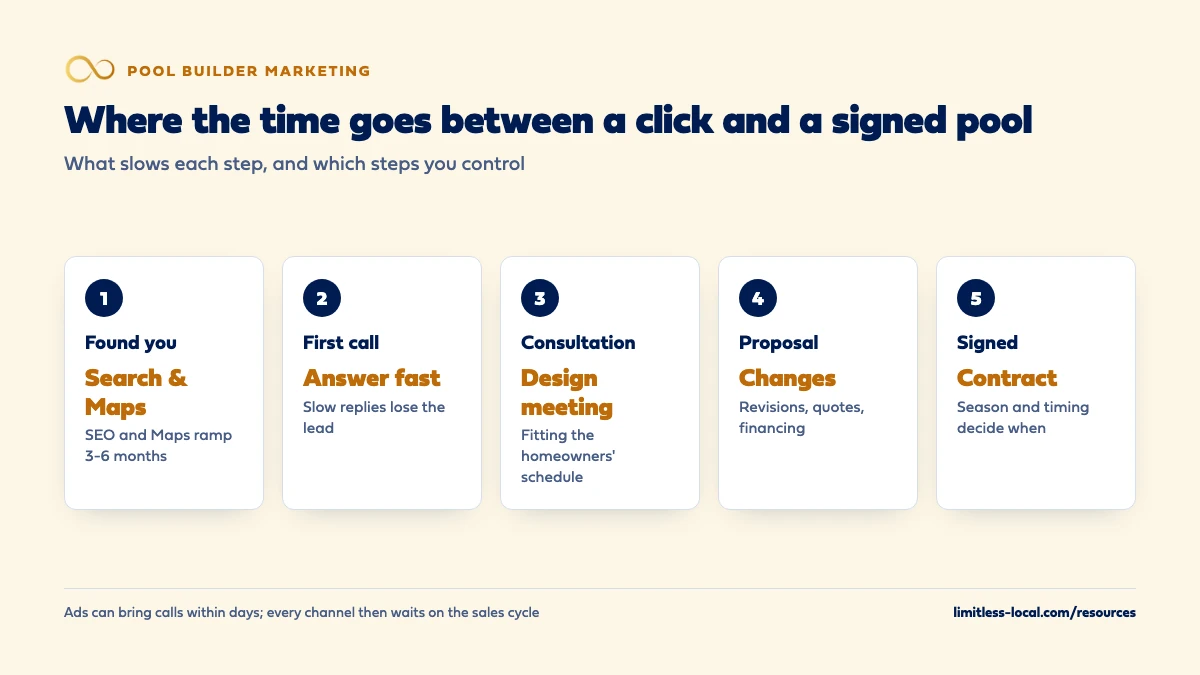
A lot. A homeowner who calls you about a pool usually still has to:
- Book and sit through a design consultation, often with both spouses there.
- Wait for a design and proposal, then ask for changes.
- Compare your proposal with one or two other builders.
- Sort out financing, or decide how much of their savings to use.
- Check HOA rules, setbacks and the yard itself.
- Pick the right time to tear up the backyard.
Every one of those steps happens after your marketing did its job. So when you look at a month with plenty of calls and no contracts, the marketing may be working fine; the homeowners just aren’t done yet. How a long pool sales cycle changes when SEO pays off goes deeper on what that does to the numbers.
Why does SEO take months before it brings pool leads?
SEO typically takes 3-6 months to show meaningful organic growth. Google has to find and understand your pages, then decide they’re a better answer than what it already shows. Google’s SEO Starter Guide says some changes might take effect in a few hours and others could take several months, and suggests waiting a few weeks before judging whether a change helped.
The early months go into work that doesn’t make the phone ring by itself: pages for each pool type and the towns you build in, galleries of finished pools, cleaning up your business listings and fixing what’s slowing the site down. That groundwork is what later months build on. Then every lead SEO brings still has to go through the sales cycle above, which is why the first SEO contracts often land well after the first SEO calls.
Does a newer website or Google profile take longer?
Usually, yes. A brand-new Google Business Profile has to be verified first; Google’s verification page says to allow up to 5 business days once you’ve finished the steps. That part is quick. The slower part is what Google calls prominence. Its help page Tips to improve your local ranking on Google says prominence is based on things like how many websites link to your business and how many reviews you have.
A builder with ten years of finished pools, reviews and local links starts the race far ahead of one with a new site and a handful of reviews. That doesn’t mean you can’t catch up. It means the first months go into building what the established builders already have. How long a new pool builder website takes to rank covers that ramp.
How does the pool season stretch the wait?
When you start matters as much as what you do. If you start marketing in late spring, SEO is still ramping when the busiest search months pass, and homeowners who call in summer often want a pool next year, not this one. Start in the fall and the work is in place before searches pick back up.
Winter leads are a special case. A homeowner planning next summer’s pool can take a long time to sign, and that’s fine. Those are often the contracts that fill your spring calendar.
To see your own area’s pattern, Google Trends can help, as long as you read it right. Its FAQ about Google Trends data explains that the numbers are relative interest, scaled from 0 to 100, not counts of searches. Whether people search for pool builders in winter covers the off-season in more detail.
Does competition in my area make it take longer?
It can. In a market with a lot of established pool builders, the ones at the top of Maps and the regular results have years of reviews, pages and links behind them. Getting in front of them takes longer than in a town where nobody’s put much work into it.
The fix isn’t to go wider. It’s usually to go narrower first: the towns closest to you and the pool types you’re best at, where the gap is smallest. Win those, then move outward. How competitive local SEO is for a pool builder in your city shows how to size up the competition yourself.
Curious what your marketing is actually booking?
Get a free visibility audit — no obligation, no sales pitch.
Why don't ads produce signed pools right away either?
Ads can generate leads within days of launch. They don’t change how long a homeowner takes to decide. A search ad can put you in front of someone ready to talk this week, but they’ll still go through design, proposals and financing.
Ad platforms aren’t built around that kind of wait. Google defines a conversion cycle as the time it takes for a click to result in a conversion, and Google’s page on conversion windows says the default window is 30 days, with longer windows meant for businesses whose buying cycle doesn’t fit that default. A pool contract that signs months after the click never shows up in Google Ads unless you bring it back in yourself, so judge ads on calls and consultations in the first months, and on contracts in your own records. How SEO, paid ads and social differ in timeline compares the channels side by side.
How much does slow follow-up add to the wait?
More than most owners think, and it’s the part you control. When a lead isn’t called back the same day, the homeowner calls the next builder, and that lead never turns into a contract at all. When a consultation ends without a set follow-up, the proposal sits while the homeowner gets busy, and a pool that could have signed in spring slips to fall or to someone else.
A long sales cycle needs a steady, polite follow-up plan: a quick answer to every new inquiry, a date for the next conversation after every consultation, and regular check-ins with homeowners who said “next year”. Following up with leads through a long sales cycle lays out a schedule.
Can the way I track results make marketing look slower than it is?
Yes, and it’s very common. Most owners look at a simple monthly report: what they spent this month and what they signed this month. With pool buyers, those are different people. This month’s contracts came from leads you paid for months ago, and this month’s spend will sign contracts months from now.
The fix is to track each lead from the month it came in. Write down the source and date on the first call, and when a contract signs, credit it back to that lead month. After a season, you’ll see which months of spend produced which contracts, and the marketing usually looks a lot less slow. The worked example below shows the difference.

What should I see before the first contracts arrive?
Contracts are the last thing to show up, so watch the steps before them. If these are moving in the right direction, the contracts usually follow:
- Your Google profile: Google’s Business Profile performance report shows views, the searches people used to find you, calls from the profile and website clicks.
- Inquiries: calls and forms from homeowners in your area about pools you build.
- Consultations booked and held, by source.
- Proposals out and how many are still in play.
Check these monthly. One slow month doesn’t mean much; a steady trend over a season does.
Which parts of the wait can I actually shorten?
You can’t make a homeowner decide faster, but you can take your own delays out of the process:
- Run ads while SEO ramps up, so you’re not waiting months for the first inquiries.
- Start before the season, not in the middle of it.
- Answer every new inquiry fast and make booking a consultation easy.
- Ask for a review after every build, so your profile grows as fast as your crews allow.
- Call back old proposals and past consultations. They’re the closest thing to a contract you already have.
- Qualify early, so your time goes to homeowners who can build this year.
When is slow a sign that something's wrong?
Slow is normal. Stuck isn’t. Look harder if you see any of these:
- Nothing moves after the ramp. Several months in, your profile views, searches and calls haven’t grown at all.
- Leads, but no consultations. That points to lead quality or how fast and well the calls are handled.
- Consultations, but no contracts. That points to the proposal, the price or the follow-up, not the marketing.
- The wrong leads. Cleaning, repairs, above-ground pools or out-of-area calls mean the targeting needs work.
Each problem has a different fix, so find where the leads stop before changing the budget.
Want to see where your company stands?
A free visibility audit shows where you show up on Google, Maps and AI answers, and what it's costing you in calls.
What's different about the wait for pool builders
A booked job is a signed contract. For a plumber, a lead can be a paid job the same day. For a pool builder, it’s the start of a process that can run for months.
Few jobs, so slow feedback. With a handful of contracts a season, it takes longer to see a pattern, and one late signer changes the picture.
The calendar is seasonal. Starting at the wrong time of year can push results into the next season.
Reviews come one build at a time. The thing that helps most in Maps grows only as fast as your crews finish pools.
A worked example: same spend, two very different reports
These numbers are made up to show the math, not a benchmark or a typical timeline. Say a pool builder spends $2,500 a month on ads from January through March, $7,500 in all. Those three months bring a steady flow of inquiries, and after consultations, designs and financing, 4 of those homeowners sign between April and June.
- Month-by-month report: January, February and March each show $2,500 spent and no contracts. April through June show 4 contracts with no matching spend. It looks like the ads did nothing for three months, then something else worked.
- By lead month: the $7,500 spent in the first three months produced 4 contracts, or $1,875 per signed pool.
Same marketing, same contracts. The first report would have tempted the owner to cut the ads in March, right before they paid off. The second shows what the spend actually bought. That’s why we track every lead’s source and date, and why every package includes a monthly report with a cost-per-lead breakdown and source tagging.
Frequently asked questions
How many months should I give marketing before judging it on contracts?
At least one full selling season. Judge the early months on inquiries and consultations, and judge contracts once most of the homeowners from those months have decided.
Is it normal to get calls but no signed pools at first?
Yes. Calls are the first thing marketing produces, and contracts follow the sales cycle. If calls turn into consultations, you’re on track; if they don’t, look at lead quality and how calls are handled.
Would switching agencies make results come faster?
Not by itself. A switch often restarts parts of the ramp, like new pages and new ad accounts learning. Switch if the work is poor or the reporting is unclear, not just because contracts haven’t arrived yet.
Can I speed things up by spending more?
More ad spend can bring more inquiries sooner, but it can’t make homeowners sign faster, and it doesn’t speed up SEO much. Spend more only if your follow-up can handle the extra leads.
Does marketing work faster for pool renovations?
Often a bit, because renovation buyers already have a pool and usually decide faster than first-time buyers. Track them separately so one doesn’t hide the other.
Why did a contract come from a lead I'd forgotten about?
Pool buyers often come back months later, after the timing works out. That’s why every lead should have a source and date recorded, and a follow-up schedule.
Key takeaways
- Most of the wait is the homeowner’s decision: design, proposals, financing and timing.
- SEO and Google Maps typically take 3-6 months to show meaningful organic growth, and a new site or few reviews stretch that.
- Ads bring calls within days, but contracts still follow the sales cycle.
- Slow follow-up and month-by-month reports make marketing look slower than it is.
- Track each lead from the month it came in, and watch inquiries and consultations before contracts arrive.
Not sure what's working right now?
Start with a free visibility audit: rankings, Google profile, reviews and tracking, checked against your service area.
More in this section
- How long does pool builder SEO take to bring in leads?
- How should a pool builder prepare marketing before peak season?
- How much should a pool builder spend on marketing?
- Which marketing channels get pool builders jobs fastest?
- How do I grow a pool construction business with marketing?
Sources
- SEO Starter Guide: The Basics — Google Search Central
- Tips to improve your local ranking on Google — Google Business Profile Help
- Verify your business on Google — Google Business Profile Help
- Understand your Business Profile performance & insights — Google Business Profile Help
- Conversion cycle: Definition — Google Ads Help
- About conversion windows — Google Ads Help
- FAQ about Google Trends data — Trends Help