
How can a restoration company market itself to attract good techs?

- How do restoration companies use their marketing to recruit better technicians?
- Why does a restoration company need to market itself to techs at all?
- What do good restoration techs look for in a company?
- What should the careers page on my restoration website say?
- Can my restoration job openings show up in Google's job search?
- How do my Google reviews affect who applies?
- What photos help recruit restoration techs?
- Should my trucks and job sites do recruiting work too?
- Where should I post restoration tech jobs?
- What should I avoid when marketing to techs?
- How do I know if my recruiting marketing is working?
- What's different about recruiting techs for a restoration company
- A worked example: what one hire really costs by source
- Frequently asked questions
- Key takeaways
- More in this section
- Sources
The short version
- Good techs check your Google profile, reviews and website before they apply.
- A careers page with pay, on-call schedule, training and a short form beats a vague job ad.
- Real crew photos and calm review replies show how you treat people.
- Keep recruiting separate from customer ads, and track applicants by source like leads.
For restoration owners who keep losing good applicants to other shops, and want the same Google profile, reviews and website that win jobs to win techs too.
Get a free visibility audit · Book a growth call
How do restoration companies use their marketing to recruit better technicians?
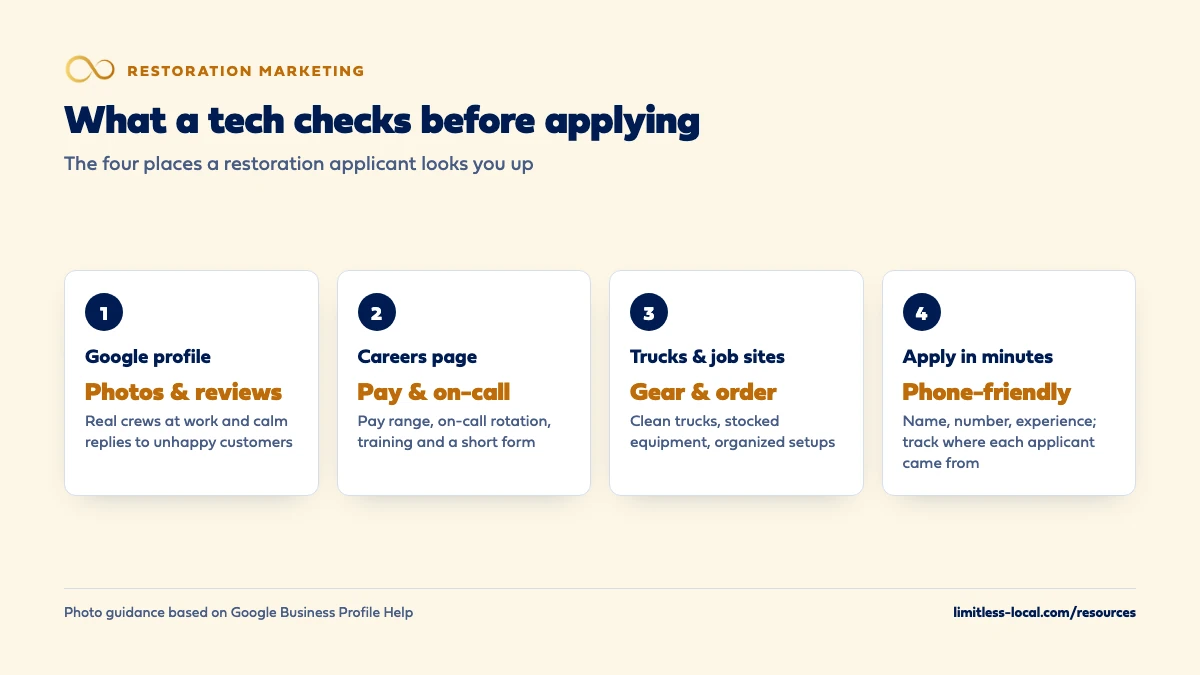
Market to techs the way you market to homeowners: make the company look steady, organized and fair everywhere a tech checks before applying, which is your Google profile, your reviews, your website and your trucks. Give them a real careers page that states the pay range, the on-call rotation, the training you pay for and a quick way to apply, then point every job post back to it. Show your actual crews at work, answer every review well, and tell applicants plainly what nights, storms and sewage jobs are like.
Most of this rides on marketing you already need for customers: a Google profile that looks alive, reviews you answer, and a website that says clearly who you are. That’s the core of our restoration marketing, and a careers page can be one of the pages on a website we build for you. For the bigger picture, the restoration marketing guide covers every channel, and the restoration marketing questions library takes the rest one question at a time.
Why does a restoration company need to market itself to techs at all?
Because good techs shop for an employer the same way a homeowner shops for a restoration company. Before they answer your job post, they look you up. They read your Google reviews, scroll your photos, open your website and ask a buddy who used to work for you. If what they find looks thin, dated or chaotic, the strong ones keep scrolling and you hear from the people nobody else hired.
The good news is you don’t need a separate recruiting budget to fix most of it. The same things that make a flooded homeowner trust you at 2 a.m., like a complete Google profile, real photos, honest reviews and a clear website, make a tech trust you too. Recruiting marketing is mostly about pointing that work at a second audience and adding a few pieces only applicants need.
What do good restoration techs look for in a company?
Pay matters, but it’s rarely the only thing. Techs who are good at this work tend to ask the same questions, and your marketing should answer them before they have to ask:
- Is the work steady? A company that only gets busy after storms means feast-or-famine hours.
- How does on-call work? How often they’re on call, what it pays, and whether the rotation is fair.
- Will I get trained? Which certifications you pay for, and whether they’re paid to sit the class.
- Is the equipment any good? Enough air movers, dehumidifiers and extraction gear, and trucks that start.
- Is there somewhere to go? A path from tech to crew lead to project manager.
- How do they treat people? Customers, crews and the techs who left.
Write those answers down in your own words first. They become your careers page, your job posts and the captions on your crew photos.
What should the careers page on my restoration website say?
One page on your own site, linked from the main menu and the footer, that every job post points back to. Job boards change; your careers page is the one place you control. It should cover:
- The roles you hire for, named the way techs search: water damage technician, mitigation tech, mold remediation technician, crew lead.
- A pay range for each role, plus how on-call and overtime pay work.
- A plain picture of the job: a typical week, how nights and weekends rotate, and what happens during a storm surge.
- Training and certifications you pay for, and the path from tech to crew lead.
- Benefits you actually offer, listed plainly.
- Real photos of your crews, trucks and shop, not stock images.
- A short application that works on a phone: name, number, experience and a resume upload that’s optional. Many good techs won’t fill out a long form after a ten-hour shift.
Your careers page should read like the rest of your site. If you’re tightening up how the site describes your services, the same rules apply here; what your restoration website should say about services and areas covers that side.
Can my restoration job openings show up in Google's job search?
They can. Google runs a job search experience in its results, and job pages on your own site can be eligible if they carry the right job posting structured data, a code snippet your web developer adds to each opening. Google says those listings can feature your logo, reviews, ratings and job details, and that job seekers can filter by things like location or job title.
A few of Google’s rules are worth knowing before you set it up:
- Salary is the real number. The base salary field is the actual base pay as the employer provides it, not an estimate.
- Each opening needs a way to apply. Google doesn’t allow job postings without one.
- Expired jobs come down. When a role is filled, remove the posting or mark its expiry date so it isn’t still showing months later.
- No fees from applicants. Google doesn’t allow job postings that require payment from applicants.
- The job title is just the title. “Water Damage Technician”, not “Now hiring, top pay, water tech, Phoenix”.
If you only hire once or twice a year, this is a nice extra, not a priority. If you’re hiring most months, it’s worth doing once and reusing.
Curious what your marketing is actually booking?
Get a free visibility audit — no obligation, no sales pitch.
How do my Google reviews affect who applies?
More than most owners think. A tech reading your reviews is checking two things: whether customers are happy, and how you act when one isn’t. A calm, specific reply to an angry customer tells an applicant you won’t throw your crew under the bus. A defensive reply tells them you might.
So the review work you do for customers also does recruiting work. Ask for reviews on finished jobs, answer every one, and keep the tone steady. How a restoration company should reply to Google reviews walks through the hard ones.
One thing not to do: ask your techs to post Google reviews of the company. Google’s content policy for Maps treats reviews based on a conflict of interest, including current or former employment, as content it doesn’t allow. Those reviews can be removed, and they don’t help applicants trust you anyway. If you want your crew’s voice out there, put it on your careers page and in captions, clearly as your team.
What photos help recruit restoration techs?
Photos of real people doing real work, with their OK. Google’s tips for business-specific photos suggest adding at least three photos at work showing your team providing different types of service, and at least three team photos showing management and employees, with something a little less formal to humanize the business. Google also asks that photos be in focus, well lit and represent reality, without heavy filters or AI edits.
For recruiting, the photos that land best are the ones that answer a tech’s questions:
- A crew setting up drying equipment, so they can see you have the gear.
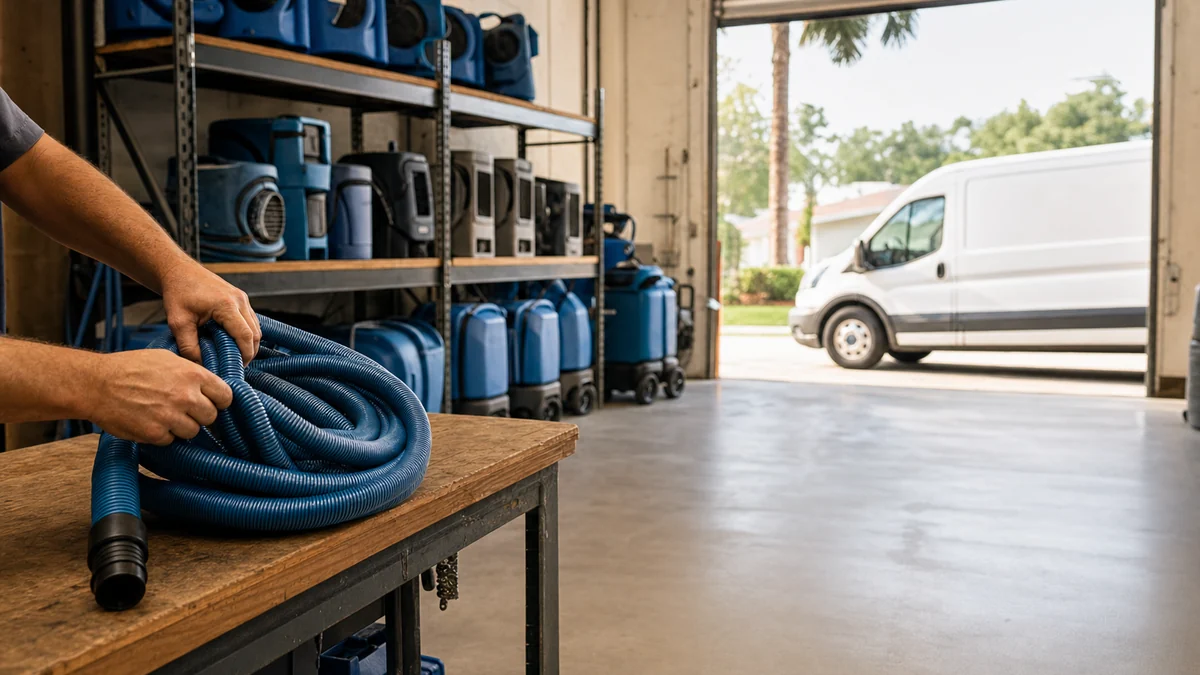
- The shop or warehouse, organized, with trucks stocked.
- A training day or a certification class.
- A crew lunch or a quick group shot after a long storm week.
Keep homeowners’ faces, house numbers and personal belongings out of frame, and ask before you post a tech’s face. Photos you add for customers do double duty here; whether job photos on Google help a restoration company rank covers the customer side.
Should my trucks and job sites do recruiting work too?
Yes, quietly. Your trucks are parked in neighborhoods for days on a big water job, and the techs who see them are often working for someone else nearby. A clean, wrapped truck with a short line like “Now hiring techs” and your website address points them to the careers page. A beat-up truck with a cracked bumper tells them something too.
The same goes for how your crews look and act on site: uniforms, organized equipment, cones out, a tidy setup. Other trades notice, and plumbers and HVAC techs who are tired of their own shop are some of the best restoration hires you’ll find.
Where should I post restoration tech jobs?
Post where techs look, but always point back to your own careers page so the story is consistent:
- The big job boards, with the pay range in the post.
- Local trade schools and community colleges, especially programs for HVAC, plumbing and construction.
- Apprenticeship programs. The Department of Labor’s apprenticeship site lists benefits for employers that include recruiting and developing a skilled workforce, increasing retention, and tax credits and tuition benefits in participating states.
- Your current techs. Ask them to share the post with people they’d actually want on their crew.
Keep recruiting out of your customer ads. Job seekers who click a water damage ad cost you money and never book, which is why negative keywords for restoration Google Ads start with blocking job and training searches. If you run paid recruiting ads, give them their own campaign and budget; keeping marketing steady while you hire techs covers how the two fit together.
What should I avoid when marketing to techs?
- Promising pay you don’t pay. If the ad says up to a number almost nobody reaches, the first paycheck undoes the marketing.
- Hiding on-call. Restoration runs nights and weekends. Say how often and what it pays. Techs who can’t live with it should know before they start, not in week two.
- Stock photos. A tech can spot a stock photo of a smiling worker from across the street.
- Old postings. A careers page listing a role you filled last spring looks like nobody’s paying attention.
- A long, clunky application. If it doesn’t work on a phone in two minutes, you’ll lose the people who are working right now, which are usually the ones you want.
- Badmouthing past employees. In review replies, on social media or in interviews. Applicants read it as a preview.
How do I know if my recruiting marketing is working?
Track applicants the way you track leads. Ask every applicant where they heard about you, and keep a simple sheet or a column in your hiring tool with the source, whether they interviewed, whether you hired them, and whether they were still with you after 90 days.
After a few hiring rounds, three numbers tell you most of what you need:
- Applicants by source: which boards, schools and referrals send anyone at all.
- Hires by source: which ones send people you actually hire.
- 90-day keepers by source: which ones send people who stay.
That last one matters most. A board that sends 30 applicants and no keepers is worth less than a trade school that sends four and two of them stay. If you already track which marketing brings in booked restoration jobs, it’s the same habit pointed at hiring.
Want to see where your company stands?
A free visibility audit shows where you show up on Google, Maps and AI answers, and what it's costing you in calls.
What's different about recruiting techs for a restoration company
The hours aren’t normal. Water doesn’t wait for Monday, so most restoration techs will be on call. The companies that recruit well say so up front and show the rotation is fair, rather than hoping nobody asks.
The work is hard and sometimes gross. Sewage, burned-out kitchens and soaked crawl spaces aren’t for everyone. Being straight about it filters out the people who’d quit in a month and attracts the ones who take pride in it.
Storms change your hiring math. A big storm can double the work in a week, and the techs you bring on then need to be worth keeping when it quiets down. Marketing that shows steady, year-round work, like commercial accounts and referral partners, helps you keep them.
Training is a selling point. Restoration skills are learned on the job and in certification classes. A clear training path is one of the few things you can offer that a general labor job can’t.
A worked example: what one hire really costs by source
These numbers are made up to show the math, not a benchmark for your market. Over three months, a restoration company hires through two sources. It spends $1,500 on job board posts and gets 40 applicants, 6 interviews and 2 hires. Only one of those hires is still there after 90 days. It also spends $300 on a booth at a local trade school’s career day and gets 5 applicants, 3 interviews and 2 hires, and both are still there after 90 days.
- Job boards: $1,500 for one tech who stayed = $1,500 per keeper.
- Trade school: $300 for two techs who stayed = $150 per keeper.
The job boards looked busier, but the trade school was ten times cheaper for each tech who stuck. Without the source column, the owner would have kept paying for applicants instead of keepers.
Frequently asked questions
Should I put the pay range in restoration job posts?
Yes. Techs compare shops on pay first, and posts without a range get skipped. Put the base range, how on-call is paid and any overtime rules, and make sure the number matches what you’ll actually offer.
Can I ask my techs to leave the company a Google review?
No. Google’s Maps content policy lists reviews based on current or former employment as a conflict of interest, and those reviews can be removed. Share your crew’s words on your careers page instead.
Does a careers page help my restoration website rank for customer searches?
Not directly. It’s there for applicants. It does show Google and visitors that you’re a real, active company with real people, which fits everything else your site is doing.
Should I hire from other trades?
Often, yes. Plumbers, HVAC techs and carpenters already know buildings and tools, and many are used to service calls. Market the training you provide so they know they don’t need restoration experience on day one.
How long should a restoration job post stay up?
Until the role is filled. Then take it down or mark it expired, on the job boards and on your own site. Old postings make the company look like nobody’s paying attention.
How often should I update the careers page?
Every time a role opens or closes, and at least every few months to swap in fresh photos and check that pay and benefits are still right.
Key takeaways
- Good techs look you up before applying, so your Google profile, reviews, website and trucks are recruiting tools.
- A careers page with pay, on-call, training and a short phone-friendly form beats any job ad on its own.
- Show real crews at work, answer every review calmly, and never ask employees to review the company.
- Keep recruiting separate from customer ads and block job searches from your water damage campaigns.
- Track applicants, hires and 90-day keepers by source, and spend more where techs stay.
Not sure what's working right now?
Start with a free visibility audit: rankings, Google profile, reviews and tracking, checked against your service area.
More in this section
- How do I keep marketing steady while hiring restoration techs?
- How should a restoration company market to real estate agents?
- How should a restoration company market to commercial properties?
- How should a restoration company get more customer referrals?
- How do restoration companies stay top of mind with insurance agents?
Sources
- Job posting (JobPosting) structured data for Job Search — Google Search Central
- Prohibited & restricted content — Google Business Profile Help
- Tips for business-specific photos on your Business Profile — Google Business Profile Help
- What are the benefits of apprenticeships for employers? — Apprenticeship.gov