
How do I keep restoration work coming in between storms?
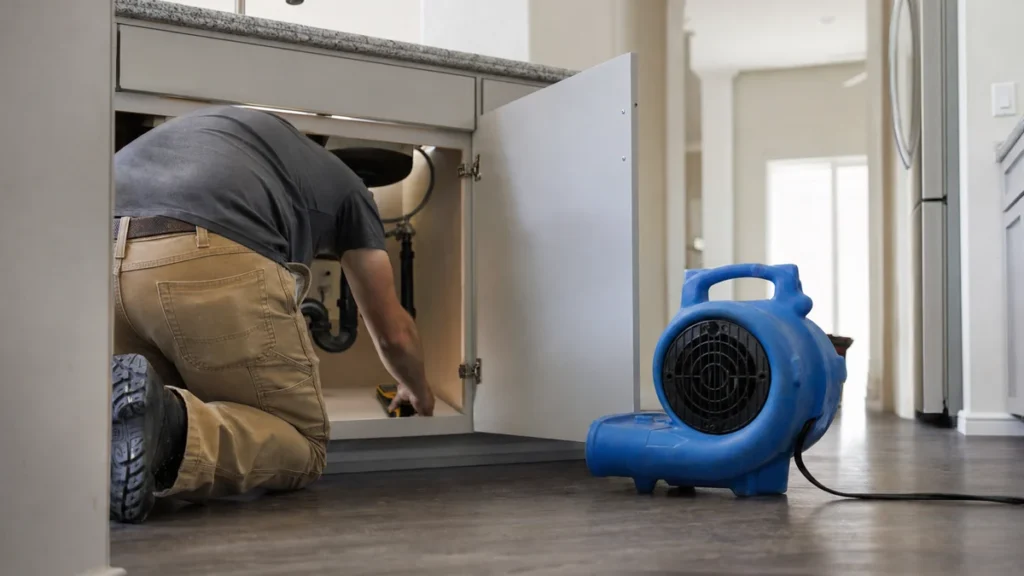
- How can a restoration company get steady work when there's no storm?
- Where does restoration work come from when there's no storm?
- Step 1: Should I keep ads running between storms?
- Step 2: How do I win the everyday burst-pipe and leak calls?
- Step 3: How do I turn water jobs into mold work without overselling?
- Step 4: How do I build referrals from plumbers and property managers?
- Step 5: Should I go after commercial work?
- Step 6: How do I stay in touch with past customers?
- Step 7: What should I build during the quiet months?
- Step 8: How do I know which steady-work sources pay off?
- How much of my business should depend on storms?
- What's different for restoration companies between storms
- A worked example: what steady sources can add up to
- Frequently asked questions
- Key takeaways
- More in this section
- Sources
The short version
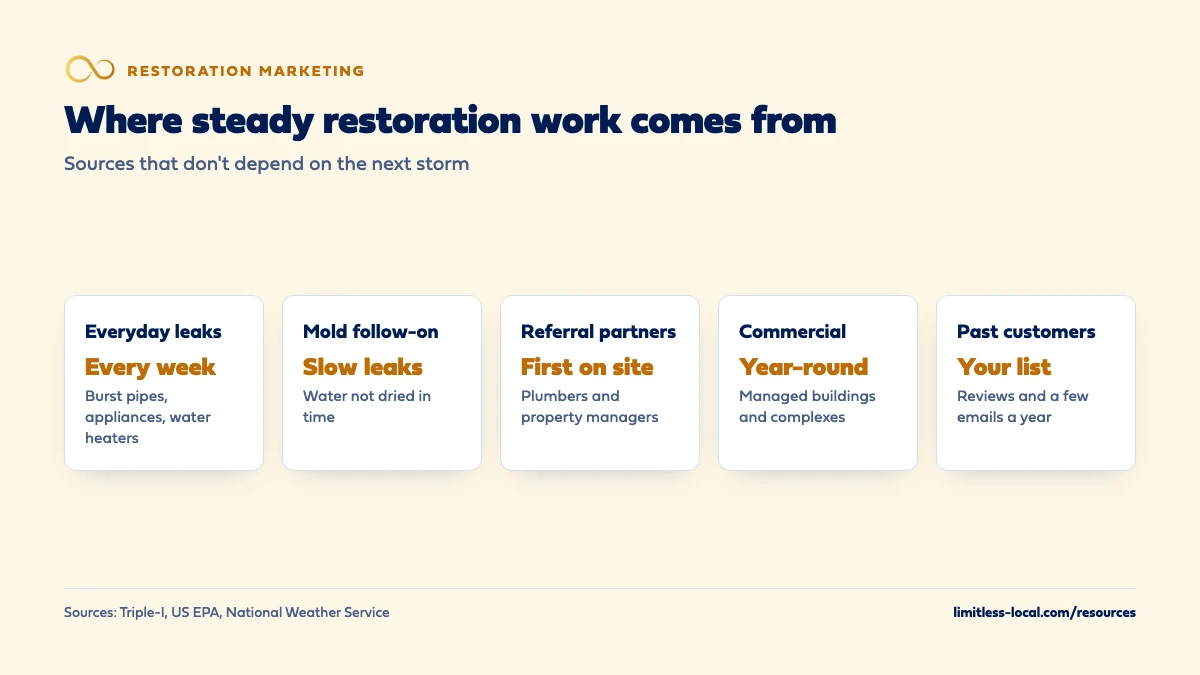
- Water damage happens every week, not just in storms: burst pipes, appliance leaks, slow leaks that turn into mold.
- Keep ads on at a lower budget instead of switching them off.
- Plumbers, property managers, commercial accounts and past customers are the steadiest sources.
- Use quiet months for pages, reviews and relationships, and track which source books jobs.
For restoration owners who want the schedule to hold up in the quiet months, not just after the next big storm.
Get a free visibility audit · Book a growth call
How can a restoration company get steady work when there's no storm?
Build the work that doesn’t need a storm: everyday water damage from burst pipes and leaking appliances, mold work that follows slow leaks, referrals from plumbers and property managers, commercial accounts and past customers. Keep search ads and Local Services Ads running on a smaller budget so you still show up for the leaks that happen every week, and use the quiet stretch to build the pages, reviews and relationships that storm season leaves no time for. Then track which of those sources books jobs, so the next dollar goes where the work actually comes from.
The follow-up, review requests and reminders that keep past customers and partners close are what our automation work covers, alongside local search and ads for restoration companies. For the lead sources you can own instead of renting, the water damage leads guide lays them out, and the restoration marketing questions library goes one question at a time.
Where does restoration work come from when there's no storm?
From the house itself. Insurance data puts water damage in its own category, separate from wind and hail: Triple-I calculates, from ISO data, that each year about one in 60 insured homes has a property damage claim caused by water damage or freezing, compared with about one in 35 for wind or hail. Triple-I notes the water damage and freezing category includes damage caused by mold, if the policy covers it.
Those figures only count insured claims. In our judgement, a lot of steady restoration work never becomes a claim at all: a washing machine hose, a slow leak under a sink, a water heater that lets go on a Tuesday. That work doesn’t make the news, so it goes to whoever the homeowner, the plumber or the property manager thinks of first. Storm weeks are a separate problem with their own playbook, covered in handling marketing during storm season. Source: Facts + Statistics: Homeowners and renters insurance.
Step 1: Should I keep ads running between storms?
In our judgement, yes, at a lower budget rather than switched off. Everyday leaks keep happening, and the homeowner with a burst pipe searches the same way in a quiet month as in a busy one. Pausing entirely means starting cold when the next rush comes, and gives your spot to whoever kept running.
The practical version: keep search ads on your core job keywords (water extraction, burst pipe cleanup, flooded basement) and trim the broader ones; keep Local Services Ads on with a smaller budget. Once your LSA account has moved into Google Ads, budgets are set as a daily average, and you can switch a campaign to Paused and back to Enabled whenever you need to. Which Google Ads keywords to target covers the core list. Source: Local Services Ads transition to Performance Max campaigns with pay-per-lead goals.
Step 2: How do I win the everyday burst-pipe and leak calls?
Make sure your website and Google profile talk about everyday water damage, not only floods and storms. In our judgement, that means a page or clear section for burst pipes, appliance and water heater leaks, toilet and sewage overflows, and ceiling leaks, written in the words homeowners use.
Cold snaps deserve their own plan. The National Weather Service says pipes on exterior walls and in places exposed to cold, such as basements, attics and under kitchen cabinets, freeze most often, and that water expands as it freezes, causing pipes to burst. Before the first hard freeze, a Google Business Profile update with freeze-prevention tips and how to reach you keeps you in front of homeowners at the right moment. Google lets you schedule posts ahead and set them to repeat, and notes that posts older than six months are archived unless they have a date range. Sources: Essential Tasks After it Warms Up and Create & manage posts on your Business Profile.
Step 3: How do I turn water jobs into mold work without overselling?
Mold work often follows water that wasn’t dried in time. The EPA says it’s important to dry water-damaged areas and items within 24-48 hours to prevent mold growth, and to fix plumbing leaks and other water problems as soon as possible. It also notes mold can hide on the back of drywall, the top of ceiling tiles and the underside of carpets and pads.
For larger problems, the EPA says that if there’s been a lot of water damage or mold covers more than about 10 square feet, homeowners should consult its guidance on mold remediation, and that anyone hiring a contractor should make sure the contractor has experience cleaning up mold and check references. In our judgement, that’s the honest pitch: explain your experience, your process and your references. Don’t make health claims or scare people; the EPA itself points homeowners with health concerns to a health professional. What your mold and fire damage pages should say covers the page. Source: A Brief Guide to Mold, Moisture and Your Home.
Curious what your marketing is actually booking?
Get a free visibility audit — no obligation, no sales pitch.
Step 4: How do I build referrals from plumbers and property managers?
Plumbers, property managers, insurance agents and HVAC companies often see water damage before anyone calls a restoration company. In our judgement, a referral relationship with a handful of them is worth more in a quiet month than any ad: they call you because you showed up fast last time, communicated well and made them look good to their customer.
Keep it to service and relationships: visit, answer their calls quickly, send them updates on the jobs they referred, and thank them. If you’re thinking about paying anyone for referrals, check your state’s rules and any insurance program agreements first; that’s a legal question, not a marketing one. Building a referral network with plumbers and property managers goes step by step.
Step 5: Should I go after commercial work?
If you have the crews and equipment for it, commercial work is one of the steadier sources, in our judgement. Apartment complexes, office buildings, schools and other managed properties have leaks year-round, and the people who manage them want a company they already know when something goes wrong at night.
The marketing is different from homeowner emergencies: fewer, larger relationships, often built by meeting property and facility managers before anything happens. Marketing a restoration company to commercial properties covers how to approach it.
Step 6: How do I stay in touch with past customers?
Past customers already trust you, and they have neighbors, family and landlords. In our judgement, two habits keep them close: asking for a review when the job is done, and a few useful emails a year, such as a freeze-prevention reminder before winter.
Google’s tips for reviews are to ask customers to leave one through a Google link or QR code and to reply to reviews; offering incentives in exchange for reviews isn’t allowed. For email, the FTC says the CAN-SPAM Act covers all commercial email, not just bulk email. Its main requirements include accurate sender details, honest subject lines, identifying the message as an ad, your valid physical postal address, a clear way to opt out, and honoring opt-outs within ten business days. Hiring someone else to send it doesn’t move the responsibility off you. This is general information, not legal advice. Sources: Tips to get more reviews and CAN-SPAM Act: A Compliance Guide for Business.
Step 7: What should I build during the quiet months?
The work storm season leaves no time for. In our judgement, a quiet-month list for a restoration company looks like this:
- Write or fix the pages for everyday jobs, mold and fire damage.
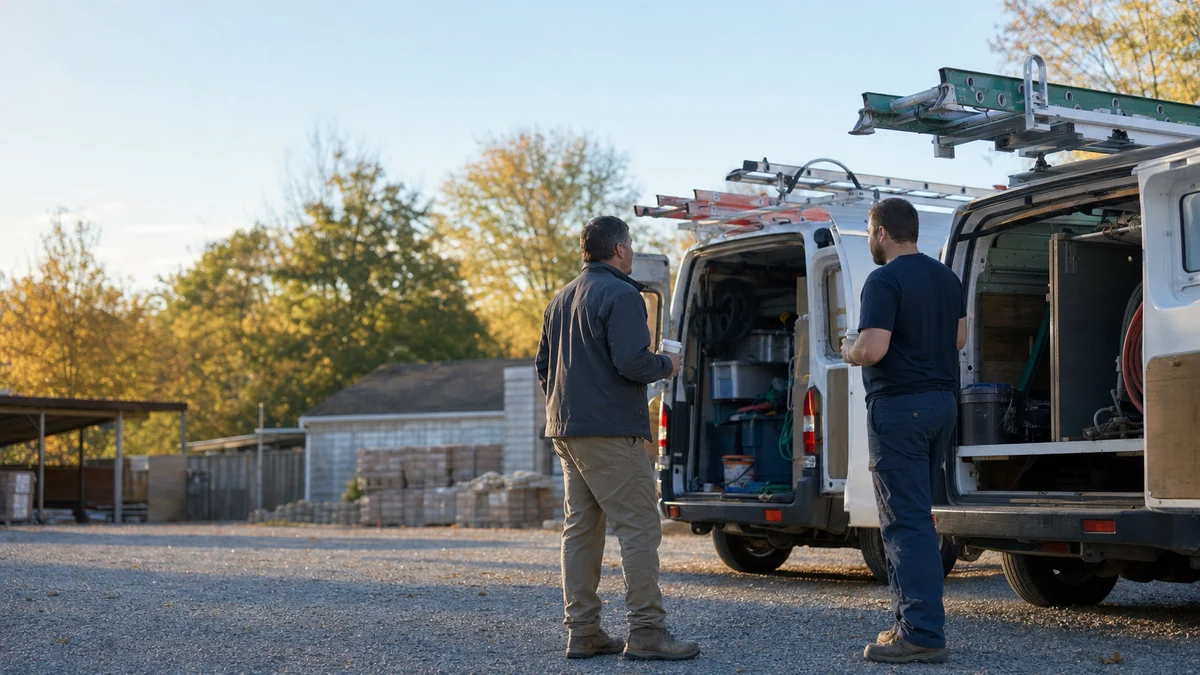
- Add recent photos of crews, vans and drying equipment to your Google profile, with nothing that identifies a customer’s home.
- Ask recent customers for reviews, and reply to the ones you have.
- Visit referral partners and property managers in person.
- Clean up your past-customer list and plan the next few emails.
- Schedule Google profile updates ahead of the cold season.
None of these brings a call tomorrow. All of them make the next call more likely to come to you.
Step 8: How do I know which steady-work sources pay off?
Mark where every job came from: search ads, Local Services Ads, your Google profile, a plumber, a property manager, a past customer. Then look at booked jobs and job value by source every month. In our judgement, restoration owners are often surprised by this, because the source that feels busiest isn’t always the one that books the bigger jobs.
Insurance-paid jobs can take a while to close, so judge sources over a few months rather than one. Tracking which marketing brings in booked restoration jobs covers how to set that up.
How much of my business should depend on storms?
There’s no right percentage, but in our judgement the safer plan is to cover your crews, trucks and overhead from everyday work, and treat storm weeks as the upside. A business that only breaks even in storm months has to hope for weather; one that covers its costs from leaks, mold, referrals and commercial accounts can grow on purpose.
The bigger the company, the more this matters. More trucks means more payroll to cover in a quiet month, and more capacity sitting idle if the only plan is to wait for the next storm.
Not sure which of these is costing you jobs?
A free visibility audit checks the Google profile, reviews, site and tracking, and shows what to fix first.
What's different for restoration companies between storms
Nobody plans to need you. Homeowners don’t shop for a restoration company until water is on the floor. In our judgement, that’s why the people who see damage first (plumbers, property managers, agents) matter so much in quiet months: they’re already in the house when it happens.
One job leads to another. Water that isn’t dried fast can turn into mold, and the EPA’s 24-48 hour drying guidance is a plain way to explain why fast response matters, without scaring anyone.
Cold weather is its own season. Freezing pipes are a predictable cause of water damage in colder regions, so a freeze-prep push before winter is one of the few times you can market ahead of the damage.
Payment is slow. Many jobs are insurance-paid, so in our judgement it’s worth planning cash flow around steady base work rather than storm-month revenue.
A worked example: what steady sources can add up to
These numbers are made up to show the math, not a benchmark for any market. Say you have 400 past customers from the last three years. Before the first hard freeze, you send them one email with freeze-prevention tips and how to reach you, and post the same update on your Google profile. If 1 in 50 of those customers calls about a leak, a referral or a question that turns into a visit, that’s 8 calls from a list you already own.
Now add referral partners. Say you build relationships with 20 plumbers and property managers, and each sends you one job a year. That’s twenty jobs a year, or more than one a month, that didn’t depend on the weather or an ad budget.
On our side, Essentials ($3,500 a month) includes review response and basic review generation, a weekly Google profile post and a short welcome email flow. Growth ($4,500 a month) adds advanced review generation, profile posts three times a week and Meta remarketing. Automated follow-up, reminders and after-hours answering are automation add-ons that plug into any tier, priced on the discovery call. A free visibility audit shows where your quiet months are leaking calls.
Frequently asked questions
Is water damage really steady outside storm season?
Insurance data suggests so. Triple-I calculates that each year about one in 60 insured homes has a property damage claim from water damage or freezing, a category it lists separately from wind and hail.
When should I send freeze-prevention reminders?
In our judgement, a week or two before the first hard freeze in your area, by email and as a scheduled Google profile update. Google lets you schedule profile posts ahead of time.
Can I email past customers who never signed up for a newsletter?
That’s a legal question for your situation. The FTC’s CAN-SPAM guide covers what any commercial email must include, such as a postal address and a working opt-out. This isn’t legal advice; check with someone who knows the rules where you work.
Should I offer discounts to fill slow months?
In our judgement, rarely. Discounts don’t create water damage; they mostly lower the price of jobs you’d have gotten anyway. Relationships and visibility usually do more.
I have more than ten trucks and storm season is coming. How do I keep lead volume steady?
In our judgement, build the base before the storms: referral partners, commercial accounts and always-on ads for everyday leaks. Storm weeks then add to a schedule that’s already covering its costs.
Can I offer a gift card for a Google review?
No. Google says offering incentives such as free or discounted goods or services in exchange for reviews counts as fake and misleading content.
Key takeaways
- Water damage happens every week, from burst pipes, appliances and slow leaks, not only after storms.
- Keep search ads and Local Services Ads running on a smaller budget between storms.
- Plumbers, property managers, commercial accounts and past customers are the steadiest sources.
- Market ahead of cold snaps with freeze-prevention updates, and explain mold follow-on work without health claims.
- Track booked jobs and job value by source over a few months, then put money where the work comes from.
Want a second set of eyes on your setup?
We'll look at how you show up locally and where calls are leaking, then send you a plain-English breakdown.
More in this section
- How should a restoration company handle marketing during storm season?
- How do restoration companies get insurance-related water damage jobs?
- How do I track which marketing brings in booked restoration jobs?
- How fast does a restoration company need to answer emergency calls?
- How should a restoration company market to commercial properties?
Sources
- Facts + Statistics: Homeowners and renters insurance — Insurance Information Institute (Triple-I)
- Essential Tasks After it Warms Up — National Weather Service
- A Brief Guide to Mold, Moisture and Your Home — US EPA
- Create & manage posts on your Business Profile — Google Business Profile Help
- Tips to get more reviews — Google Business Profile Help
- CAN-SPAM Act: A Compliance Guide for Business — Federal Trade Commission
- Local Services Ads transition to Performance Max campaigns with pay-per-lead goals — Google Ads Help