
How do I keep plumbing calls coming in during slow months?
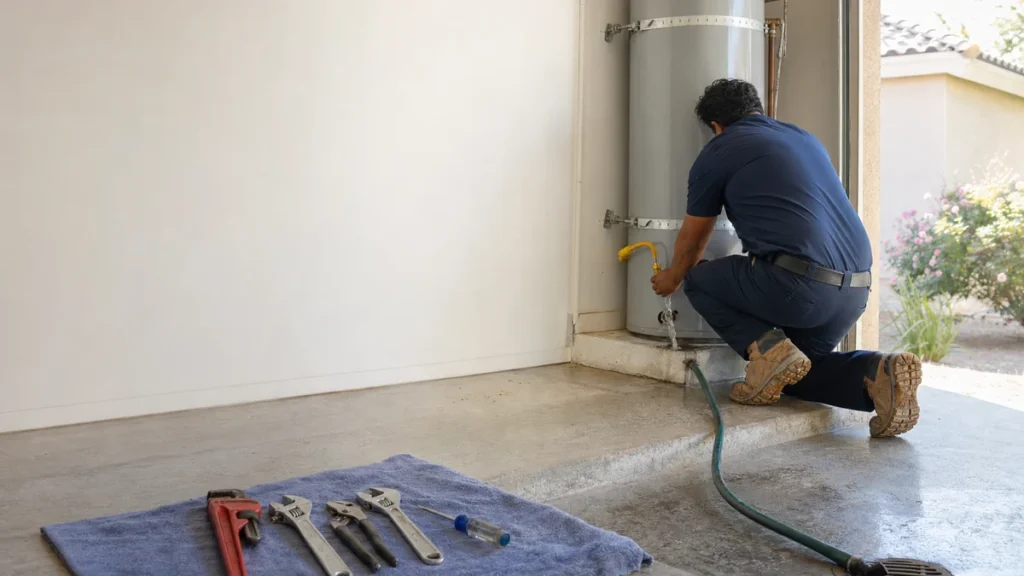
- What should a plumbing company do to fill the schedule when calls slow down?
- When are a plumbing company's slow months?
- Who should I call first when the phone goes quiet?
- What planned plumbing work can fill the slow weeks?
- Can maintenance memberships smooth out the slow months?
- Is there a good reason to reach out in the spring?
- What rules apply to emailing and texting past customers?
- Should I lower or pause my ads in the slow months?
- How should I use my Google Business Profile when it's slow?
- Should I discount plumbing work to fill slow weeks?
- Can commercial work steady out the slow months?
- How do I know if the slow-month plan worked?
- What's different about slow months for plumbing companies
- A worked example: filling a slow-month gap from your own list
- Frequently asked questions
- Key takeaways
- More in this section
- Sources
The short version
- Follow up on open estimates first, then past customers and members.
- Give people a reason to book, like a leak check or water heater inspection.
- Lower emergency ad budgets instead of turning them off.
- Shift spend toward planned, high-ticket work, and start a month early.
For plumbing owners who watch the schedule thin out at the same time every year and want a plan that starts before the phone goes quiet.
Get a free visibility audit · Book a growth call
What should a plumbing company do to fill the schedule when calls slow down?
Start with the people who already know you: follow up on every open estimate from the busy months, then give past customers and maintenance members a specific reason to book, such as a leak check or a water heater inspection. Keep your emergency ads running on a lower budget rather than switching them off, because burst pipes and clogs don’t stop, and shift some spend toward planned work like water heater replacements, repipes and sewer lines. Find your own slow weeks in your job history and start the plan about a month before they arrive.
Slow months are where the gap between a busy phone and a full schedule shows up, so the number to watch is what each booked job costs, from your list and from your ads. Our marketing packages include Google Ads management, Google Business Profile posts and an email welcome flow, with ad spend paid to Google separately. See how we work with plumbing companies, or browse the rest of the plumbing marketing questions library.
When are a plumbing company's slow months?
It depends on your market and your mix of work, so find yours in your own numbers instead of borrowing someone else’s calendar. Plumbing has emergency demand all year, but in our judgement most shops still see stretches where the drain and leak calls thin out and the schedule develops gaps, often between the winter freeze rush and the next busy stretch.
Pull two years of booked jobs from ServiceTitan, Housecall Pro or Jobber and count them by week. Mark the weeks that ran well below average. Those are your slow months, and the plan below should start about a month before them, not when the phone has already gone quiet.
Who should I call first when the phone goes quiet?
The people who already know you, in this order: customers with open estimates, then past customers, then everyone else. They cost little or nothing to reach and they already trust your crew.
- Open estimates. Every water heater, repipe or sewer quote that didn’t close in the busy months is a slow-month job waiting for a nudge. ServiceTitan’s Marketing Pro can run unsold estimate campaigns by text that reach customers with an open estimate and let them accept it from the message.
- Past customers. Jobber’s Campaigns tool suggests automated emails to re-engage past clients who haven’t booked in a while, win back leads that didn’t convert, and follow up on pending quotes. Housecall Pro and ServiceTitan have their own versions.
Set these up while you’re busy, so they’re already running when the slow weeks arrive.
What planned plumbing work can fill the slow weeks?
Work the homeowner can schedule, rather than work that has to happen tonight. In our judgement, the slow months suit:
- Water heater replacements for customers whose tank is aging or whose technician noted problems on a past visit.
- Repipes and water line replacements that were quoted and put off.
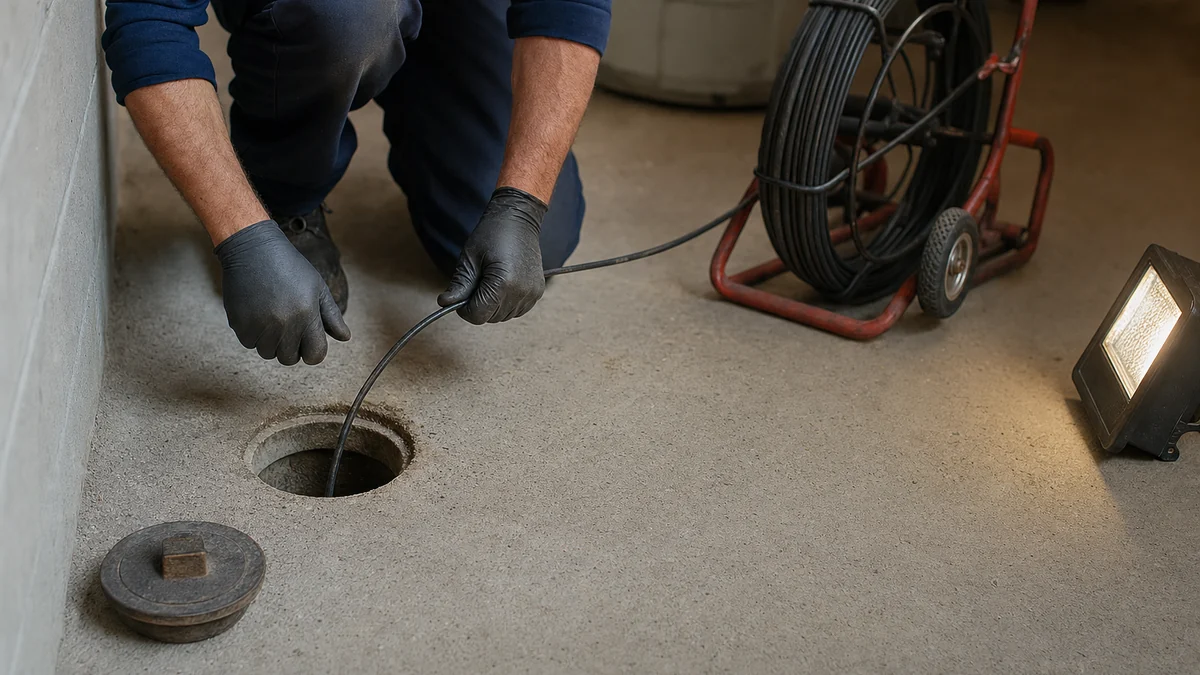
- Drain and sewer camera inspections, especially for older homes with a history of backups.
- Fixture and filtration upgrades, which many homeowners prefer to do when they’re not in a hurry.
These are also the jobs with the biggest tickets, so a few of them fill more of the calendar’s value than a dozen small calls. Getting more water heater and repipe jobs covers how to market them on their own pages and campaigns.
Can maintenance memberships smooth out the slow months?
Yes, and that’s one of the best reasons to sell them. A membership gives you a list of customers who expect a visit each year, and you decide when that visit happens. In our judgement, booking member inspections into your known slow weeks, rather than wherever they happen to fall, turns the quiet stretch into scheduled work, and each visit is a chance to spot the water heater or drain problem that becomes a planned job.
The catch is that it only helps once the list is big enough to matter, so this is a lever you build during the busy months. Selling more maintenance memberships covers how.
Is there a good reason to reach out in the spring?
The EPA hands plumbers one. Its WaterSense program runs Fix a Leak Week each March (March 16-22 in 2026) to get households hunting down leaks. EPA says household leaks can waste nearly 1 trillion gallons of water a year nationwide and that nine percent of homes have leaks wasting 50 gallons or more a day. It points to worn toilet flappers, dripping faucets and leaking valves as common culprits, and suggests checking irrigation systems each spring for freeze damage.
That gives you a timely, non-salesy reason to email past customers, post on your Google profile and run a small campaign: a leak check, with the EPA’s facts as the hook. In our judgement it works best as a booked visit with a clear scope, not a discount, and it often turns up the planned work from the section above.
Curious what your marketing is actually booking?
Get a free visibility audit — no obligation, no sales pitch.
What rules apply to emailing and texting past customers?
Marketing email falls under the CAN-SPAM Act, and the FTC’s compliance guide for business lists the basics: accurate sender information, a subject line that matches the content, a clear disclosure that the message is an advertisement, your valid physical postal address, and a clear way to opt out. Opt-outs have to keep working for at least 30 days after you send, and you must honor them within 10 business days.
Two points catch plumbing companies. The FTC says members of a membership program can opt out of marketing email too, so a promotion to your members still needs the opt-out. And an email that mixes an appointment reminder with an offer can count as commercial depending on its subject line and what comes first in the body. Texting has its own consent rules, so check your software’s marketing settings before you text an offer. Most email tools add the unsubscribe link and address for you once they’re set up. This is a summary of the FTC’s guide, not legal advice.
Should I lower or pause my ads in the slow months?
In our judgement, lower them rather than switching everything off. Burst pipes, clogs and no-hot-water calls slow down but don’t stop, and those calls still need to find you.
Google Ads gives you both tools. Your average daily budget can be changed at any time, and Google spends more on days it expects more clicks and conversions and less on others. Pausing a campaign stops its ads from showing, according to Google’s page on enabling, pausing and removing campaigns; if you also paused ad groups or keywords, each has to be turned back on when you resume. Don’t remove a campaign you plan to use again: Google says a removed campaign can’t be resumed or restored.
A setup that fits most slow months: keep the emergency campaign on at a budget sized to the calls you can still expect, and move some of the money to campaigns for the planned work above. If you’re not sure what the right baseline is, what to spend on Google Ads covers it.
How should I use my Google Business Profile when it's slow?
Keep it busy. Google’s page on Business Profile posts says posts can share updates, offers and events with customers on Search and Maps. An offer post needs a title and dates, and posts older than six months are archived unless you set a date range. A slow month is a good time for a few posts with photos of real jobs: a water heater swap, a camera inspection, a leak check offer during Fix a Leak Week.
It’s also the time for the profile chores that get skipped in busy weeks: updating services, adding photos and replying to every review. Optimizing your plumbing Google profile has the full checklist.
Should I discount plumbing work to fill slow weeks?
Carefully, if at all. A discount can fill a week, but it also tells customers what your work is “really” worth and tends to attract the people who shop on price. In our judgement, a better slow-month offer adds value instead of cutting price: a free camera inspection with a drain cleaning, a leak check bundled with a water heater flush, or priority scheduling for members.
If you do run a price offer, give it an end date and aim it at past customers rather than the whole internet. Whether coupons attract good customers goes deeper on which offers backfire.
Can commercial work steady out the slow months?
It can, over time. Property managers, restaurants and other businesses need plumbing on their own schedules, and in our judgement a few steady commercial accounts make the residential dips matter less. But commercial relationships take months to build, so start them in a busy season, not when you need the work next week. Marketing to commercial customers covers where to begin.
How do I know if the slow-month plan worked?
Compare booked jobs and revenue in the slow weeks with the same weeks last year, not with your busiest month. Then check where the jobs came from: open estimates, past-customer emails, members, ads or new calls. ServiceTitan, for one, can attribute revenue to its unsold estimate campaigns, which makes this easier.
For the ads, divide what you spent by the jobs they booked to get cost per booked job, and compare it with a normal month. If the past-customer work filled most of the gap for very little money, put more effort there next year; if ads did the heavy lifting, plan the budget before the slowdown starts.
Want to see where your company stands?
A free visibility audit shows where you show up on Google, Maps and AI answers, and what it's costing you in calls.
What's different about slow months for plumbing companies
Emergencies never stop entirely. Unlike trades with a true off-season, a plumber’s phone keeps ringing for clogs, leaks and water heaters in every month. That’s why turning ads off completely usually costs more than it saves: the calls still come, they just go to someone else.
The biggest jobs are the most schedulable. Water heater replacements, repipes and sewer lines are the high-ticket work and also the work a homeowner can plan. A slow month is when those customers have your full attention and an open calendar, which is an easy thing to say on a call.
Your technicians already know where the next job is. Notes from past visits, like an aging tank, a corroded line or a slow main drain, are the best slow-month list you have. Make sure they’re recorded in your job software where the office can find them.
A worked example: filling a slow-month gap from your own list
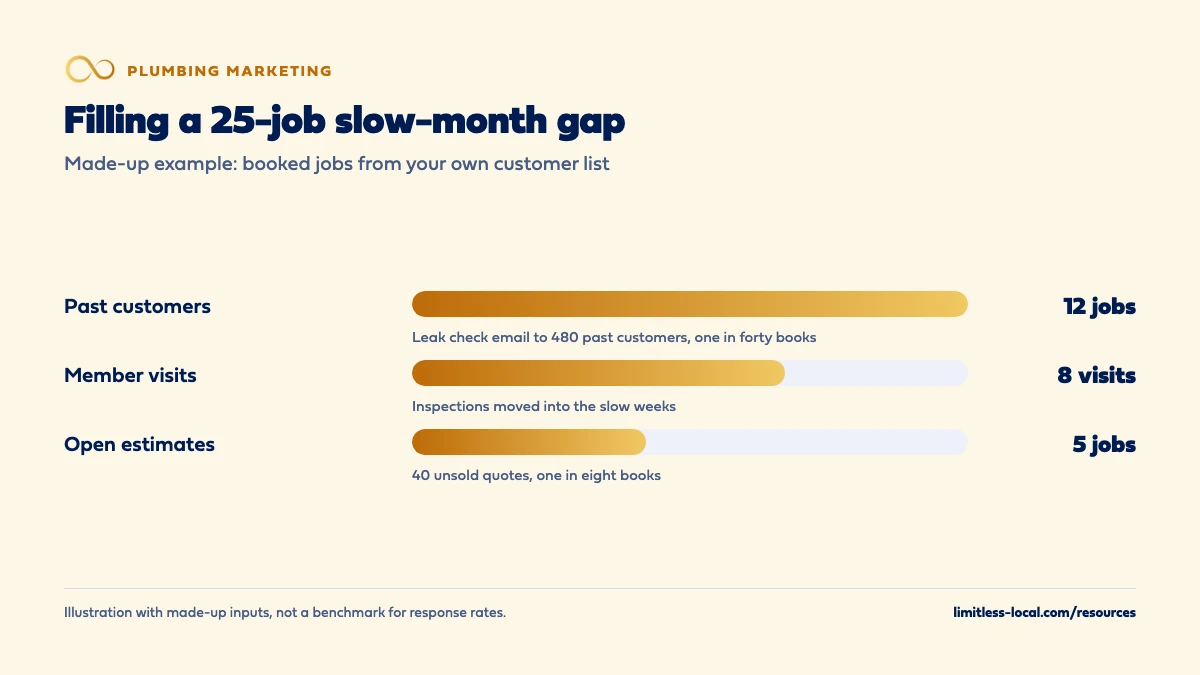
These numbers are made up to show the math, not a benchmark for response rates. Say a plumbing company’s job history shows a slow month runs about 25 booked jobs short of a normal month. Before raising ad spend, the owner works the list:
- Open estimates: 40 unsold water heater, repipe and sewer quotes from the busy months. If one in eight books, that’s 5 jobs.
- Past customers: a leak check email to 480 past customers. If one in forty books, that’s 12 jobs.
- Members: member inspections moved into the slow weeks fill 8 visits.
That’s 25 jobs, the whole gap, mostly from people who already know the company and at little cost beyond the office’s time. Your own response rates will differ; the point is to count what the list can do before deciding how much the ads need to carry.
Frequently asked questions
Should I lay off a tech during the slow months?
That’s a staffing decision only you can make, but try the cheaper levers first: open estimates, past customers and member visits. Losing a good tech in a slow month can cost you more when the next freeze or busy stretch arrives.
Does SEO help with slow months?
It helps over time, not on short notice. SEO typically takes 3-6 months to show meaningful growth, so pages for water heater, repipe and sewer work should be built well before the slow stretch they’re meant to fill. Ads can bring calls within days.
Should I use slow months to rebuild my website?
It’s a sensible time to plan and review one, because you can answer questions and approve pages without stealing hours from jobs. Just don’t let a rebuild take your current site offline in the middle of it.
How often should I email past customers?
Often enough to be remembered, rarely enough to stay welcome. In our judgement, a few useful messages a year, timed to real reasons like a freeze warning or Fix a Leak Week, beat a monthly sales email.
Can I text past customers about a slow-month offer?
Only with the right consent. Texting has its own rules, separate from email, and most field service software has marketing consent settings for each customer. Check them before you send an offer by text.
Key takeaways
- Find your own slow weeks in two years of booked jobs, and start the plan a month before them.
- Work your list first: open estimates, past customers, then members.
- Push schedulable, high-ticket work like water heaters, repipes and sewer inspections.
- Use real reasons to reach out, such as EPA’s Fix a Leak Week each March, and follow CAN-SPAM.
- Lower ad budgets rather than switching off, and never remove a campaign you’ll want back.
- Judge the plan against the same weeks last year, in booked jobs and cost per booked job.
Not sure what's working right now?
Start with a free visibility audit: rankings, Google profile, reviews and tracking, checked against your service area.
More in this section
- How do I stop losing after-hours plumbing calls?
- How do I get more plumbing leads?
- How do I get more repeat customers and referrals for plumbing?
- How long does plumbing SEO take to bring in calls?
- How fast should my plumbing office answer a new call?
Sources
- Create Unsold Estimates Campaigns using SMS — ServiceTitan Help Center
- Campaigns | Marketing Tools — Jobber Help Center
- Fix a Leak Week — U.S. Environmental Protection Agency
- CAN-SPAM Act: A Compliance Guide for Business — Federal Trade Commission
- About average daily budgets — Google Ads Help
- Enable, pause, or remove a campaign — Google Ads Help
- Create & manage posts on your Business Profile — Google Business Profile Help